Colorado’s Proposition 134 Remains Too Close to Call
As of Tuesday night, Colorado voters remain split over a ballot measure that would ban transgender athletes from competing in gendered sports from kindergarten through college. With 73% of ballots tallied, the results for Proposition 134 show 52.2% of voters in favor of the measure and 47.8% opposed, according to data reported by The Colorado Sun. The outcome will determine whether transgender students are required to compete on sports teams aligned with their sex assigned at birth rather than their gender identity.
The measure, which applies to every school or sports association receiving state funding—from kindergarten through the collegiate level—changes how Colorado manages athletic eligibility. If it passes, the state legislature would retain the power to amend or repeal the law, as the proposition impacts state statute rather than the state constitution. The current tally suggests a margin that could shift as remaining precincts report their final numbers.
Defining Eligibility Through Biological Sex
Proposition 134 introduces specific definitions for athletic participation. Under its language, “girls” are defined as people with female reproductive organs, and “boys” are defined as those with male reproductive organs. Schools would be required to classify all teams as male, female, or co-ed. While transgender students would still be permitted to participate in co-ed sports, the measure prohibits students assigned male at birth from competing on girls’ teams. Conversely, females would be barred from boys’ teams unless no corresponding female team exists for that specific sport.
This initiative is one of three brought to the ballot by Protect Kids Colorado, a group led by Erin Lee, a parent from Wellington. Lee and her organization have framed these measures as a defense of parental rights and a response to what they describe as the “sexualization of children.” The committee raised approximately $300,000 to support the triad of measures, which also include Proposition 133, aimed at increasing prison sentences for child sex trafficking, and Proposition 135, which seeks to ban sex-change surgeries for minors.
The Debate Over Fairness and Inclusion
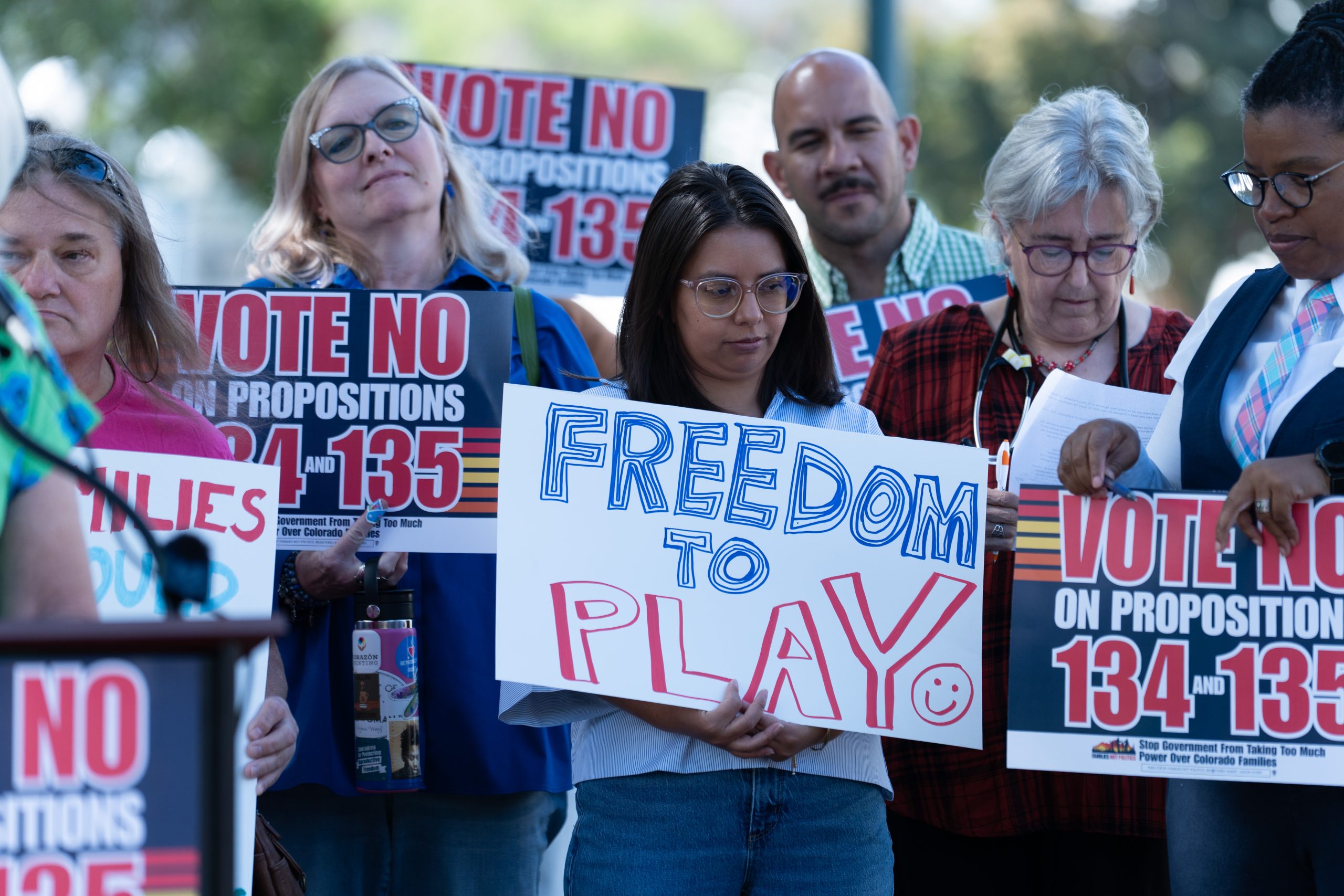
The push for Proposition 134 has drawn significant opposition from LGBTQ rights and anti-discrimination organizations. Groups such as Families Not Politics, One Colorado, and the ACLU have mobilized against the measure, arguing that it would lead to genital checks of student-athletes. Opponents have expressed concern that the measure could lead to the questioning of students based on their physical appearance or athletic performance.
“Testing kids for what sex, what gender they are? I think that’s invasive,” said Anita Williams, an 80-year-old Denver voter who spoke with The Colorado Sun. “You don’t stick a needle in my kid because you want to know if they’re male or female. You’re not going to do that.”
The financial backing for the opposition has been substantial. Families Not Politics, the primary committee fighting the measures, reported raising $3.5 million, with significant contributions from organizations like Planned Parenthood, the ACLU, and Cobalt Advocates. Vote Common Sense, a committee focused on defeating several conservative ballot measures, raised $1.1 million, including support from the Colorado Fund for Children and Public Education, which is affiliated with the state’s largest teachers union.
Current Procedures vs. Proposed Changes
Colorado sports are currently governed by the Colorado High School Activities Association, which maintains a process for transgender athletes. Under existing rules, students must disclose their transgender status to their school, which then conducts a confidential evaluation. This process involves written statements from the student, parents, and medical professionals to determine the appropriate team placement. Proposition 134 would effectively dismantle this evaluation framework, replacing it with a mandate that ties team eligibility strictly to sex assigned at birth, enforced by the state education commissioner.
As the count continues, the tension between these two approaches—one based on individual evaluation and the other on categorical mandates—remains unresolved. While 27 states have already enacted similar bans on transgender girls competing in girls’ sports, Colorado’s narrow vote reflects a deep divide over how to reconcile competitive integrity with the rights of transgender youth. With the results currently sitting at 52.04% in favor and 47.96% opposed according to Colorado Politics, the final outcome remains a point of intense civic uncertainty for schools and families alike.

Stocks and dollar fluctuate after Democrats’ midterm Sweep
Democrats seized control of both the Senate and the House in the November 3, 2026 midterm elections, a...

Democrat Ben Brist Defeats Bob Donovan to Help Flip Wisconsin Assembly
Ben Brist, a Democrat and seven-year Army veteran, defeated longtime Republican politician Bob Donovan on Tuesday night in...

Charleston parking and rental taxes can increase visit costs
Charleston can be expensive, but the total depends on your dates, group size, cars, and dining. City-operated garages...

Washington Manor opens its doors at $3,540 per month
Washington Manor Opens at $3,540, $2,795 Below Area Care Costs Washington Manor opens its doors at $3,540 per...