
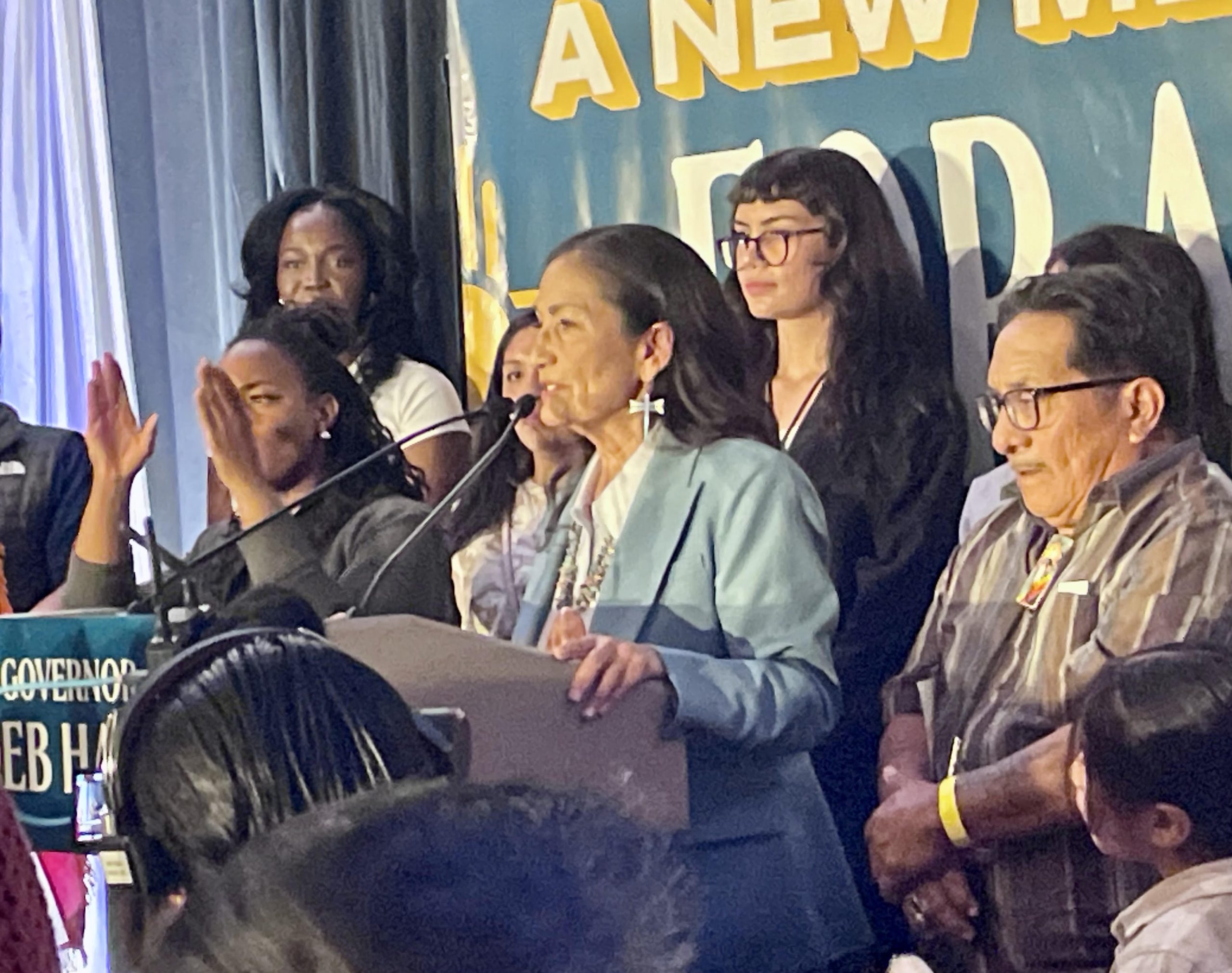
Standing before a packed crowd at the Route 66 Casino Hotel on Laguna Pueblo land west of Albuquerque, Deb Haaland heard supporters chanting “Deb, Deb, Deb!” and knew the wait was over. The Associated Press declared her the projected winner less than two hours after polls closed Tuesday, making the Democrat and former congresswoman the first Native American woman elected governor in U.S. history, the Albuquerque Journal reported.
This wasn’t just another election night in New Mexico. Haaland’s victory shattered a 40-plus-year pattern of the state alternating between Democratic and Republican governors. Before her, the last Democrat to win election as governor while a fellow Democrat held the office was Toney Anaya in 1982.
A Victory Rooted in Generations
Haaland, a member of Laguna Pueblo and a 35th-generation New Mexican, will be sworn in as the 33rd governor on January 1, 2027, succeeding term-limited Gov. Michelle Lujan Grisham, Native News Online reported. Born December 2, 1960, in Winslow, Arizona, she grew up in a military family—her mother served in the U.S. Navy and her father was a U.S. Marine Corps veteran—before earning a bachelor’s degree in English and a law degree from the University of New Mexico.
Her path to the Governor’s Office traces a series of historic firsts. In 2015, she became the first Native American woman to lead a state political party when elected chair of the New Mexico Democratic Party. In 2018, she and Rep. Sharice Davids became the first two Native American women elected to Congress. She became the first woman to preside over the House during a 2019 debate on voting rights, and in 2021, President Joe Biden appointed her the first Native American to serve as U.S. Cabinet secretary when she became Interior Secretary.
Deb Haaland has made history by becoming the first Native American woman elected governor of a US state. The Democrat defeated Republican opponent Greg Hull in New Mexico’s gubernatorial election. A 35th-generation New Mexican, Haaland will take office as the state’s 33rd… pic.twitter.com/6MvbO8AB8X
“New Mexico’s brightest days are ahead of us, because I believe in a New Mexico that works for all New Mexicans,” Haaland told the crowd, taking a subtle jab at President Donald Trump’s call to rename the state “New America”—a proposal many Republican candidates had repudiated.
Breaking the Cycle, Facing a Quick Turnaround
The win ends decades of partisan seesaw in Santa Fe. Haaland defeated Republican Gregg Hull, the former mayor of Rio Rancho who served from 2014 until April 2026. Hull, who relied on his municipal experience and called for a phased repeal of the state’s personal income tax, initially refused to concede late Tuesday, telling supporters to “keep the faith” while citing long lines at Albuquerque’s West Side polling sites. But he eventually conceded after 10 p.m.
Haaland faces a compressed timeline. She must assemble a cabinet and prepare a budget recommendation before the 60-day legislative session begins in January, just weeks after her New Year’s Day swearing-in. During the campaign, she raised a record-shattering $20.5 million, with donations pouring in from across the country.
“They said I was naive for keeping it clean, but you know what? At the end of the day, my integrity is worth far more than trying to tear somebody down to get into a political position,” Hull said to applause after conceding, adding that he had congratulated Haaland by telephone.
Pledges and Open Questions
Haaland used her victory speech to outline an ambitious agenda. She pledged to establish universal healthcare in New Mexico and vowed to put reading coaches in schools statewide. She also committed to maintaining Lujan Grisham’s universal childcare initiative while protecting residents against Trump’s policies.
Yet the campaign wasn’t without controversy. Haaland faced criticism for skipping a televised debate with Hull—the first time gubernatorial candidates in New Mexico hadn’t debated in 20 years. She insisted she had tried to find a compromise date for the event.
As she prepares to take office, Haaland carries the weight of her family’s history, including her grandmother’s forced attendance at a Native American boarding school—a legacy that informed her work at the Interior Department, where she established the Federal Indian Boarding School Initiative in 2021 to investigate the federal government’s role in those institutions.
“Tonight isn’t just about history—it’s about our future,” Haaland said.
The election marks a turning point for Native representation at the state level, coming years after Haaland helped advance legislation like the Not Invisible Act of 2020 addressing violence against Indigenous people. What happens in the 60-day session starting in January will test whether that historic mandate translates into the universal healthcare and education investments she promised on election night.
🇺🇸 Congratulations to Deb Haaland! I want to congratulate Deb Haaland, a member of the Laguna Pueblo tribe, on her historic election as Governor of New Mexico. Haaland has already made American history more than once. In 2018, she became one of the first two Native American… pic.twitter.com/v0ETwjpqoV
More on Native American
🇺🇸 New Mexico’s Deb Haaland just became the first Native American woman ever elected governor in the U. S. Biden's former interior secretary beat Republican Gregg Hull, and the AP called it less than 2 hours after polls closed. Her grandmother was forced to attend a boarding… pic.twitter.com/EDf6R3k761
Worth a look

Jim Elliott Argues for Trust in Election Officials and Voters
Former Montana Lawmaker Urges Renewed Trust in Election Workers, Drawing on 1964 Memory In a column for the...
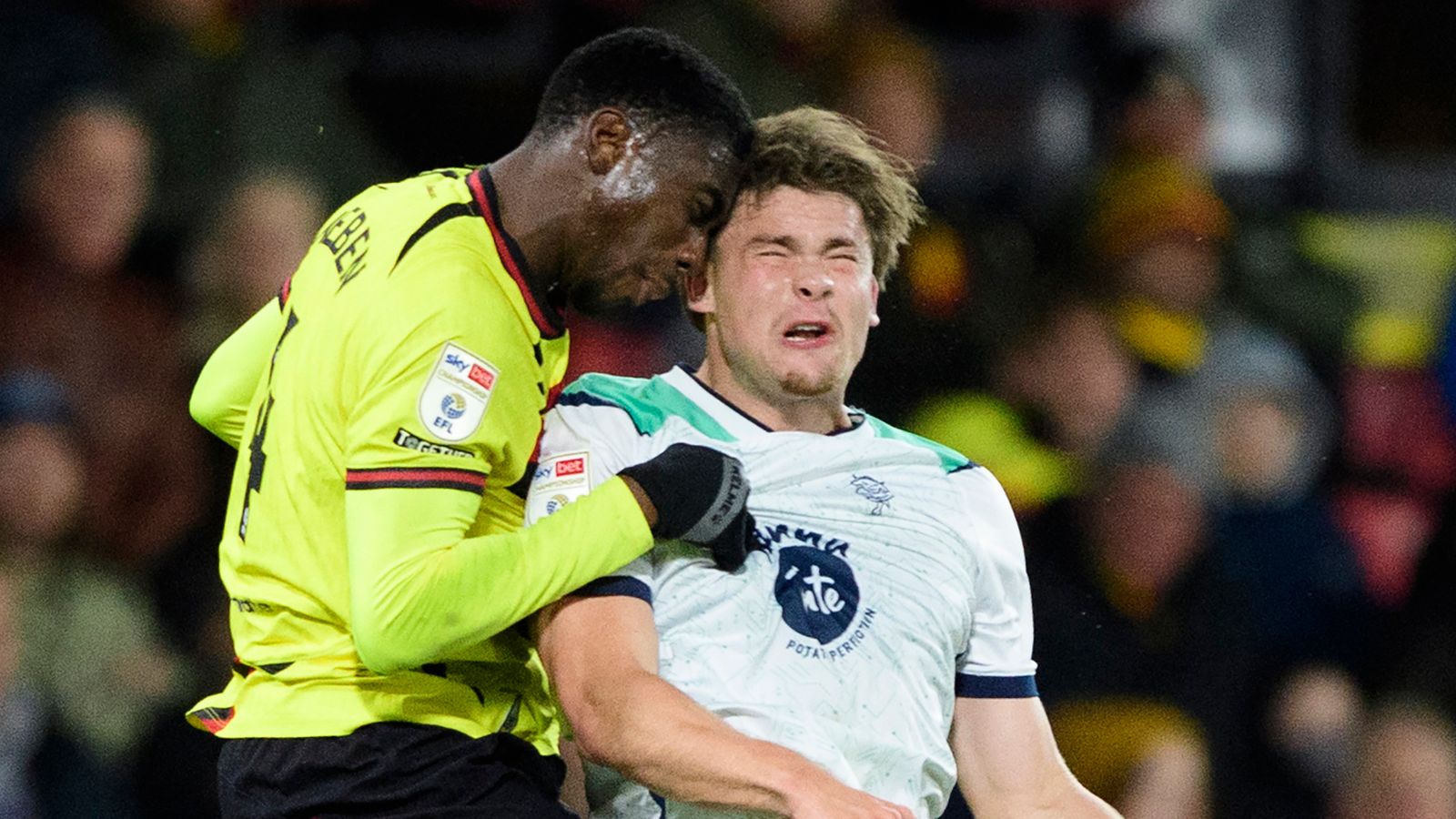
Watford 1-0 Lincoln: Mavididi scores as Hornets secure key win
Stephy Mavididi's maiden strike for Watford gave head coach Alessio Dionisi much-needed relief with a tense 1-0 win...
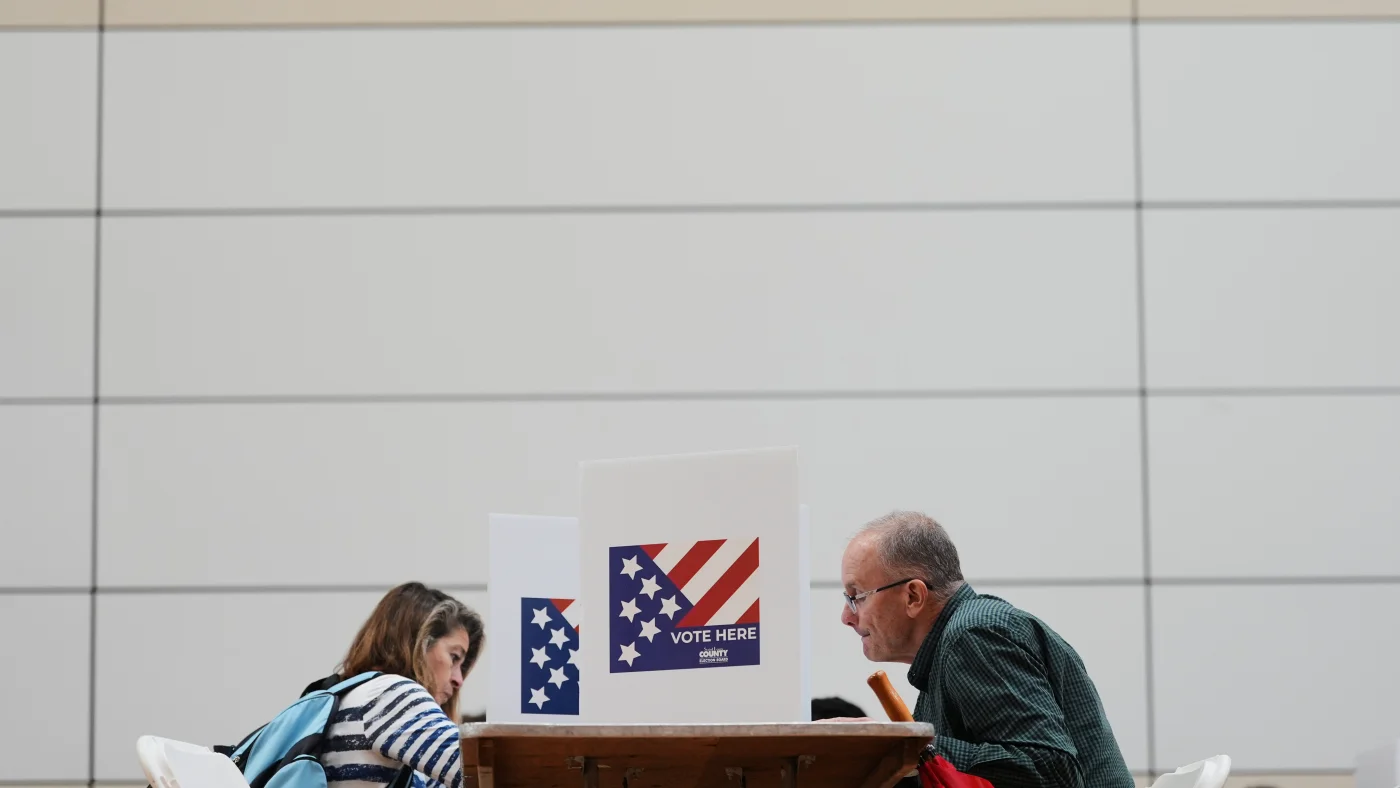
Missouri Voters Reject Republican-Backed Congressional Map
Voters Antonia Loomis and Carl Jacobs filled out their ballots on Tuesday's Election Day in Clayton, Mo., and...

William Lawrence Declares Victory Over Incumbent Tom Barrett in Michigan’s 7th District
"We built an unprecedented movement here in Mid-Michigan, powered by thousands of volunteers, and we showed that you...