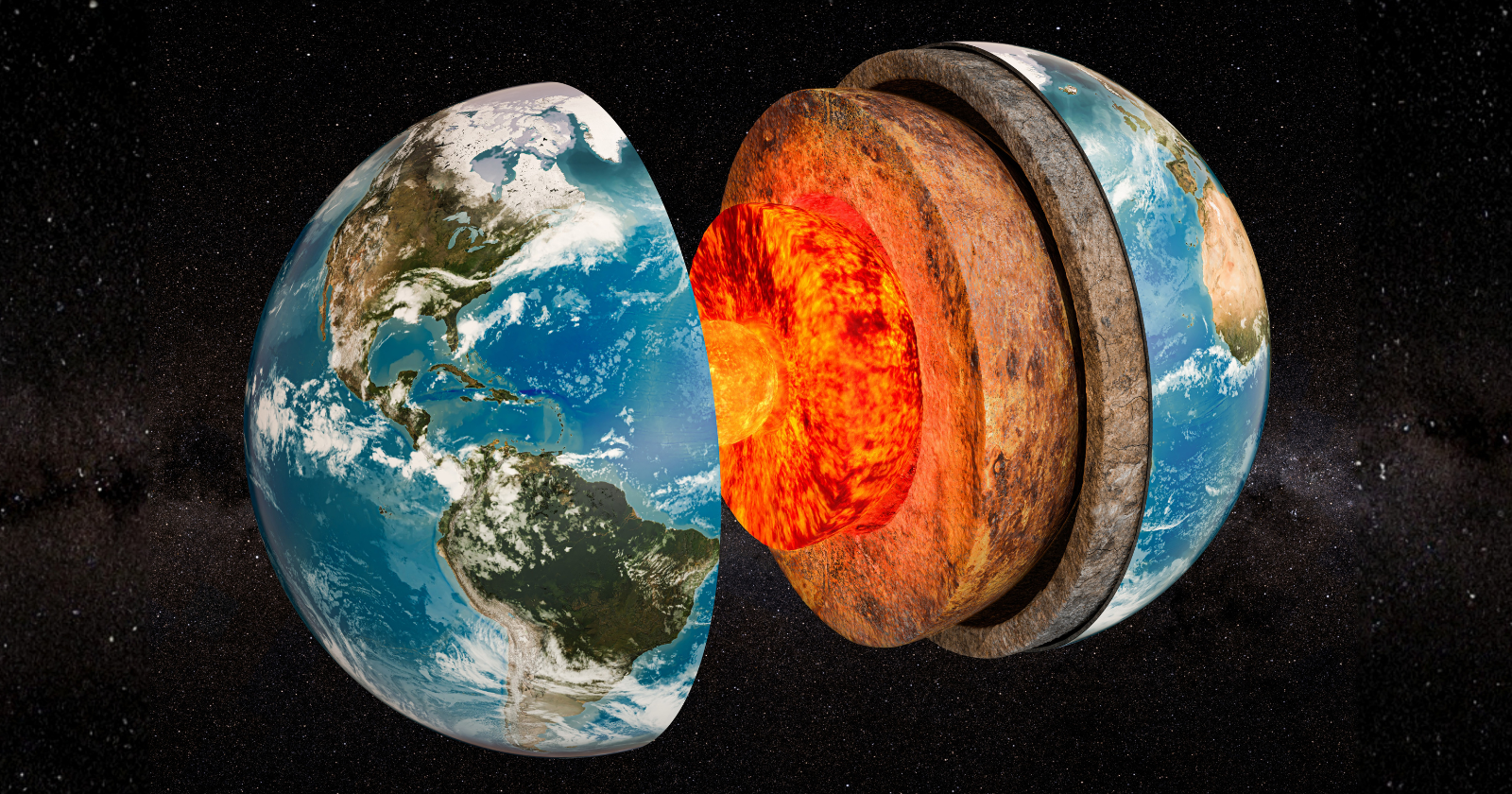
This “innermost inner core,” hidden within the planet’s solid inner core, exhibits unique crystal alignment, offering new evidence for geologists studying the planet’s deepest, unreachable layers.
Decoding Earth’s Deepest Interior
For a century, the standard model of Earth was taught as four distinct layers: the crust, the mantle, the liquid outer core, and the solid inner core. This innermost inner core
is a sphere of iron roughly 1,300 kilometres across, tucked inside the planet like a pit inside a peach.

From Inge Lehmann to Modern Seismic Echoes
The discovery of the inner core dates back to 1936, when Danish seismologist Inge Lehmann analyzed P-waves from a New Zealand earthquake. She noticed that the waves behaved in a way that suggested a dense, solid inner sphere rather than a liquid center. By the 1980s, researchers had confirmed this sphere was made of iron and nickel, though it possessed a strange property called anisotropy: P-waves traveled faster between the poles than across the equator, indicating that the iron crystals were aligned along the planet’s rotation axis.
The theory of an innermost inner core
first surfaced in 2002, proposed by Harvard researchers Miaki Ishii and Adam Dziewoński. For years, the idea remained a subject of debate.
- 2015: Tao Wang and Xiaodong Song, working at the University of Illinois and Nanjing University, reported that iron crystals in the innermost region aligned east-west, contrasting with the north-south alignment of the surrounding shell.
- 2023: Thanh-Son Phạm and Hrvoje Tkalčić used a method involving seismic waves that bounce through the entire planet like a struck bell, confirming the distinct nature of the innermost 650 kilometres of the core.
Composition and Growth of the Inner Core
While the inner core is often imagined as a furnace, it is actually a solid, iron-rich metal sphere. According to the Preliminary Reference Earth Model (PREM) published in 1981, the inner core begins about 5,150 kilometres below the surface and has a radius of roughly 1,220 kilometres. Though smaller than the Moon, it is significantly denser, with a mass estimated at roughly 9 times 10 to the 22 kilograms.
The core is not a static relic. As Earth loses heat, liquid metal from the outer core crystallizes and freezes onto the surface of the inner core. This process, occurring at an estimated rate of roughly one millimetre per year, is essential to the planet’s magnetic life.
The Limits of Current Geological Models
Despite these discoveries, the exact composition of the core remains a subject of ongoing scientific inquiry. Because the core is less dense than pure laboratory iron would be under similar pressures, researchers believe it must contain nickel and lighter elements such as silicon, oxygen, sulfur, or carbon. A 2014 paper in PNAS by James Badro, Alexander Cote, and John Brodholt highlighted that even small changes in these lighter elements can significantly alter the core’s melting behavior and seismic velocities.
The discovery of the innermost core serves as a reminder of how much of the planet remains hidden from direct observation. While seismologists have used the echoes of massive earthquakes—like the 2004 Sumatra event and the 2011 Tohoku quake—to map the center of the Earth, the deepest secrets of our planet’s iron-rich engine continue to be inferred rather than seen, leaving the precise recipe of the center of the Earth a subject for future study.
Find more reporting in our Science section.
Worth a look

President Daniel Chapo Urges Global Action on Climate Justice
Mozambican President Daniel Chapo called for strengthened international climate justice measures at a Maputo conference on October 14.
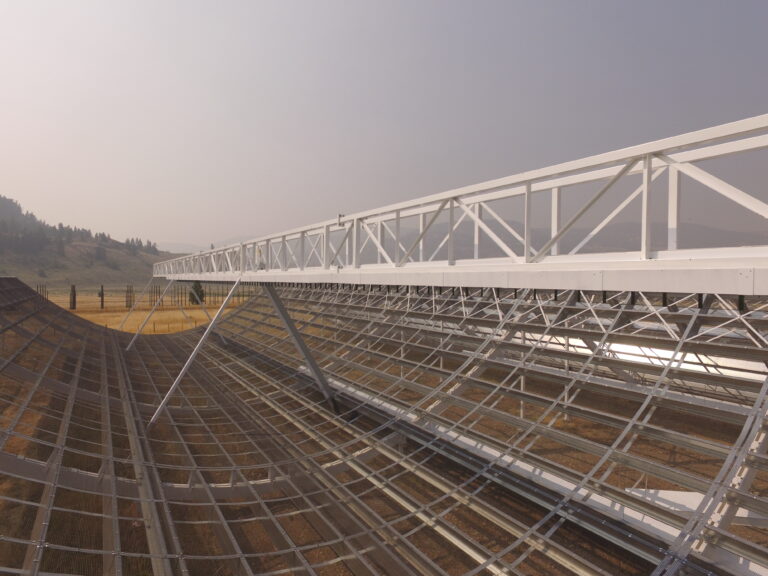
CHIME Telescope Detects Early Universe Hydrogen Signal Independently
Using only its own data, the Canadian Hydrogen Intensity Mapping Experiment (CHIME) telescope in British Columbia detected a...
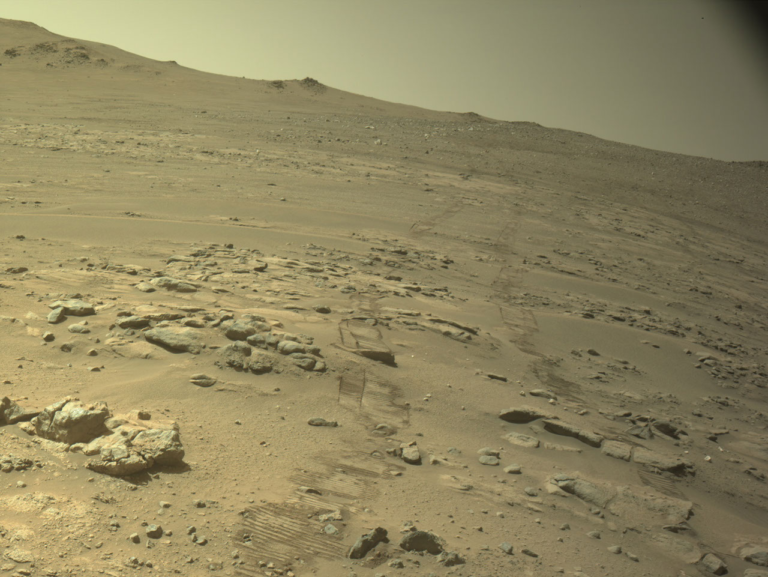
NASA’s Perseverance Rover Breaks Opportunity’s Mars Mileage Record
NASA’s Perseverance rover has set a new off-world driving record on Mars, surpassing the mileage of its predecessor...
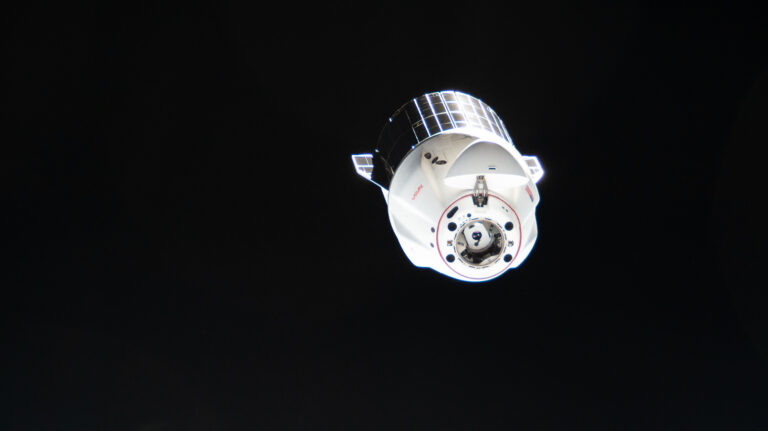
NASA and SpaceX to Launch Cargo and Solar Arrays to Space Station
NASA and SpaceX are targeting Tuesday, October 13, for the launch of the 35th commercial resupply mission to...