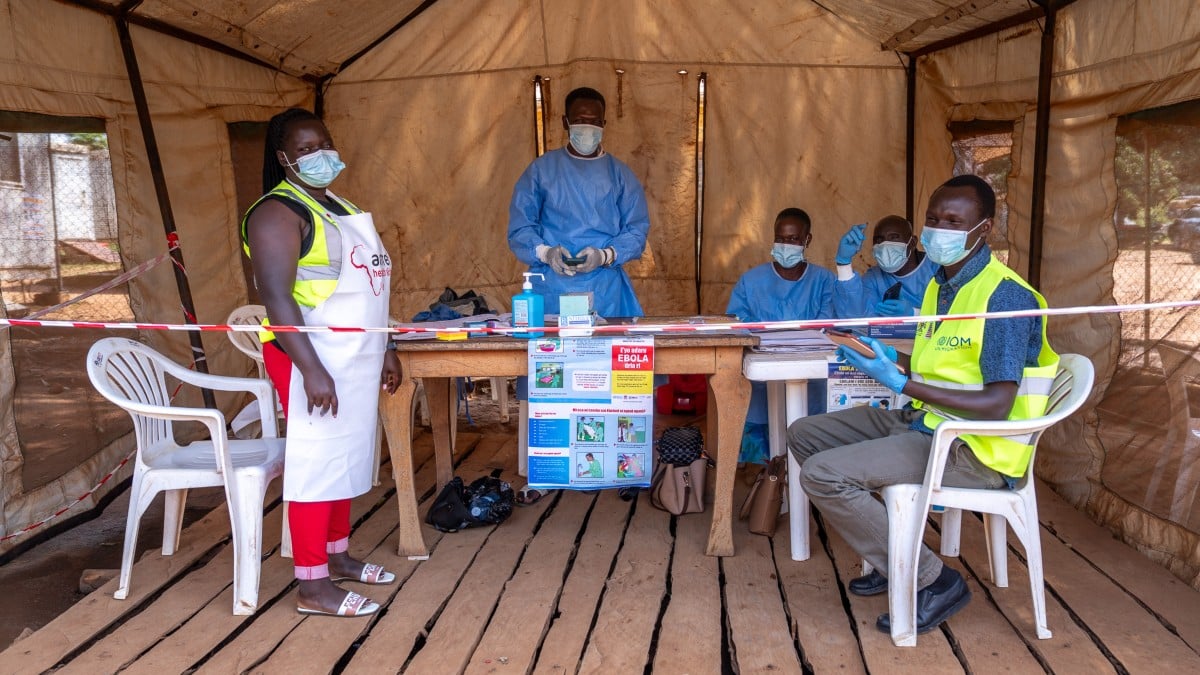
Distant macroclimatic oscillations modify continental rainfall and alter ecological conditions to create seasonal windows that trigger Ebola virus disease spillovers, according to researchers studying outbreaks between 1976 and 2025.
Outbreaks of the Ebola virus do not occur at random intervals or locations across the African continent. A multi-institutional scientific team has linked the emergence of these outbreaks to large-scale meteorological patterns, identifying connections known as teleconnections that originate in regions far removed from Central Africa where the disease frequently surfaces. By analyzing records of 49 African outbreaks spanning nearly half a century from 1976 to 2025 alongside 26 climate oscillation indices, researchers established that distant macroclimatic factors can serve as early warning indicators for environmental conditions favorable to new spillovers.
Macroclimatic Indices and the Pacific Decadal Oscillation
The study, published in the scientific journal Stochastic Environmental Research and Risk Assessment, utilized data through 2018 to build predictive models and reserved the years 2019 to 2025 to test whether those models could forecast subsequent outbreaks. Researchers identified four specific climatic oscillation indices associated with the distribution of the disease.
- The Caribbean Sea Surface Temperature Index, which has been unavailable since February 2020
- The Dipole Mode Index
- The Quasi-Biennial Oscillation
- The Pacific Decadal Oscillation, which emerged as the most frequent and important macroclimatic signal in the model
These large oscillations modify meteorological patterns such as continental precipitation, which in turn alters ecological conditions that favor outbreaks according to Zoology professor Raimundo Real at the University of Malaga.

Statistical Modeling Charts Spatiotemporal Covariates
Separate statistical modeling approaches have likewise attempted to chart the predictable geometry of viral transmission by associating human and great ape spillovers with dynamic environmental variables. Researchers analyzed 37 human or great ape Ebola spillovers recorded since 1982 alongside vegetative cover, human population size, and absolute and relative rainfall across sub-Saharan Africa over three decades.
Spillover intensity reaches its peak during seasonal transitions between wet and dry periods. Analysis revealed that spillover intensity is greatest at both very low human population densities below 100 people per square kilometer and high densities exceeding 1,000 people per square kilometer, when compared to intermediate population levels. The geographic gradient of annual Ebola spillover intensity peaks in central Africa.
Anthropogenic Pressures Shape Syndemic Convergence
Mining, expanding settlements, forest disturbance, and wildlife exploitation serve as significant predictors of spillover events. In northeastern regions of the Democratic Republic of the Congo, these overlapping pressures coincide with outbreaks of cholera and Clade 1b mpox, creating what medical anthropologists describe as a syndemic environment where social, economic, and ecological vulnerabilities compound public health risks.
Surveillance Horizons and Unresolved Questions
Climate oscillation models can identify periods of elevated risk six to twelve months in advance, though their predictive capacity is limited. The models cannot pinpoint the exact timing or location of a future outbreak, nor can they establish which specific animal species transmit the viruses to humans. These tools provide temporary windows of opportunity for healthcare systems to prepare and direct surveillance toward high-risk human-environment interfaces.
The natural reservoir of the Ebola virus remains officially unidentified, and the exact mechanics governing zoonotic leaps continue to present an irregular pattern across sub-Saharan Africa. Researchers aim to build comprehensive observatories that combine wildlife monitoring, deforestation data, macroclimate indices, and local weather conditions to refine risk forecasts before new outbreaks take hold.
Keep reading
- High-Nicotine Vapes Linked to Greater Nicotine Dependence in Young Adults
- Very Early-Onset Prosthetic Valve Endocarditis Following TAVI with Aorto-Left Atrial Fistula and Aortic Root Pseudoaneurysm
- Kenya's 8 Ebola Cases Trace to One Patient; 7 Were Already Quarantined (daybreakwire.com)
- SGLT2 Inhibitors Linked to Better Recovery in Diabetic Stroke Patients After Thrombectomy (archyde.com)
High-Nicotine Vapes Linked to Greater Nicotine Dependence in Young Adults
Between 2017 and 2022, high-nicotine e-cigarette use surged nearly 80 percent among young adults aged 18 to 24...

Very Early-Onset Prosthetic Valve Endocarditis Following TAVI with Aorto-Left Atrial Fistula and Aortic Root Pseudoaneurysm
Very early-onset prosthetic valve endocarditis occurring within 48 hours of transcatheter aortic valve implantation represents an extreme diagnostic...

NanoMAP Uses Alpaca Antibodies to Modernize Nanobody Discovery
Tufts University researchers have introduced NanoMAP, a custom computational tool that uses alpaca antibodies to help scientists identify...

Sleeve gastrectomy improves cardiac and kidney MRI markers in youth-onset T2D
Vertical sleeve gastrectomy significantly improves cardiac and kidney MRI markers in youth-onset type 2 diabetes.