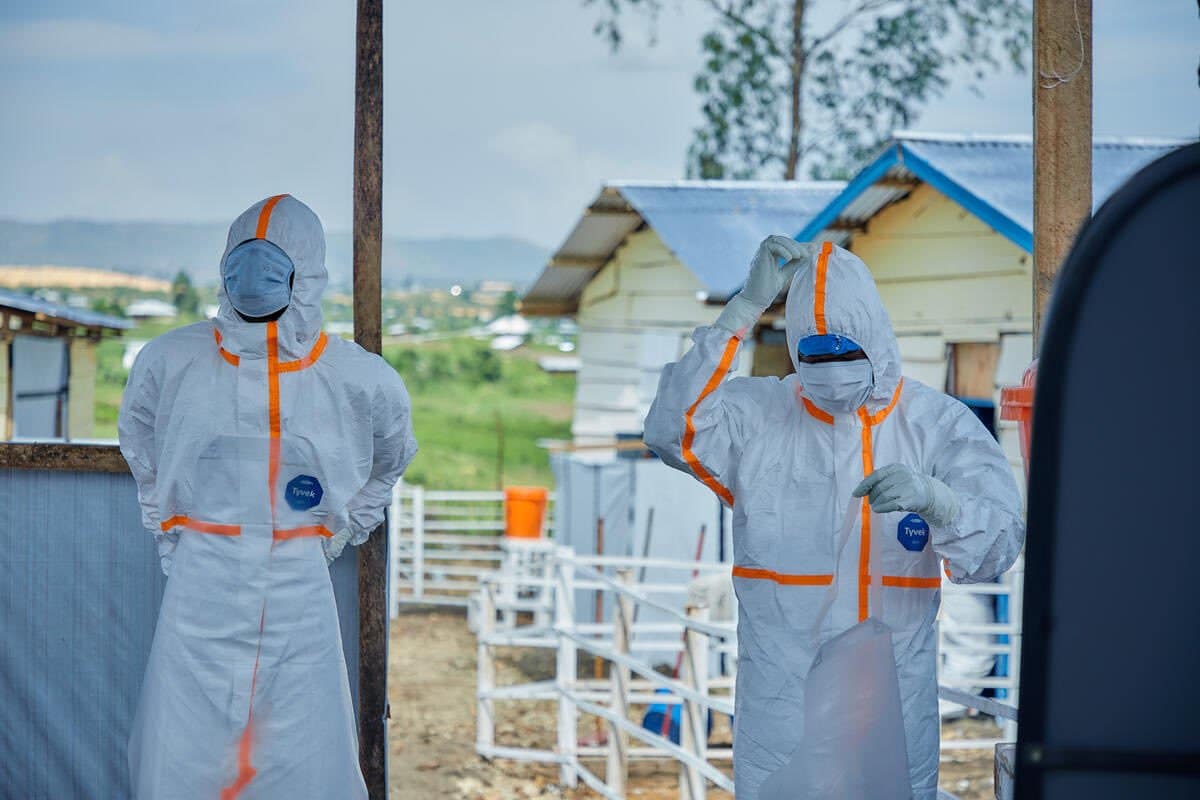
The Democratic Republic of the Congo is battling the fastest-growing Ebola outbreak in the virus’s known history, recording 3,605 confirmed cases and 1,587 deaths across 49 health zones as of July 30, 2026. Caused by the Bundibugyo strain, the crisis has surpassed previous toll records amid severe regional conflict.
The Scale and Record-Breaking Speed of the Bundibugyo Outbreak
The Democratic Republic of the Congo declared its 17th Ebola outbreak on May 15, 2026, triggered by the Bundibugyo ebolavirus. Driven by sustained transmission, the public health emergency has expanded from its initial foothold in Ituri Province to encompass five provinces and 49 health zones, according to data from the World Health Organization. With national totals reaching 3,605 confirmed cases and 1,587 deaths, the crude case fatality ratio stands at 44 percent.
The current trajectory has outpaced all historical precedents. During epidemiological week 30, health authorities logged 567 new cases and 296 deaths in a single week, illustrating an unprecedented transmission velocity. This wave has officially surpassed the country’s previous largest outbreak, which occurred from 2018 to 2020 and resulted in 3,317 confirmed cases over nearly two years.
Ituri Province at the Epicenter as Conflict Hampers Response
Ituri remains the hardest-hit region in the country, accounting for 88 percent of all confirmed infections and over 82 percent of reported fatalities. Urban centers like Bunia and Rwampara, alongside mining regions such as Mongbwalu and Nizi, have become major transmission hubs. Weekly infections in Bunia and Rwampara have consistently ranged between 100 and 150 new confirmed cases.
Relief operations face severe bottlenecks due to ongoing armed conflict, high population density, and frequent civilian displacement.
“Here in Ituri, we have the issues of insecurity, mining and high-population density, which make the current outbreak more complex than previous ones.”
Prof Pierre Akilimali, public health institute (NPHI)
Local residents describe a climate of severe disruption. Deborah Nzuva, a mother living in Rwampara, expressed widespread anxiety that daily routines and development projects could come to a complete standstill under the weight of the disease and local insecurity.
Surveillance Gaps and the Challenge of Community Transmission
Medical organizations working on the ground highlight critical gaps in contact tracing that allow the virus to spread largely undetected by health authorities. Data presented at the 2026 World AIDS Conference in Rio de Janeiro revealed that only two percent of patients admitted to treatment structures managed by Médecins Sans Frontières were previously monitored as contacts of a confirmed case, far below the operational threshold required to extinguish chains of transmission.
This low tracking rate is compounded by a clinical presentation featuring milder or atypical forms that bypass early medical screening, combined with widespread community deaths occurring outside formal treatment centers. While national authorities have built more than 20 treatment centers, established local testing laboratories, and deployed community liaison officers, health experts emphasize that delayed initial detection forces response teams into a constant catch-up mode.
Vaccine Trials and Cross-Border Collaboration Amid Uganda’s Recovery
Because the Bundibugyo strain lacks standard approved treatments or established commercial vaccines, experimental measures have been deployed. Clinical trials for a candidate vaccine began in early July, enrolling approximately 20 participants under the direction of Irishtimes, head of laboratory operations for the DRC Ebola response. These trials are expected to span up to four months.

Across the border, Uganda officially declared an end to its own localized Bundibugyo outbreak on July 28 after completing 42 days without a new locally transmitted case following the discharge of its final patient in June. Having successfully contained its twenty recorded cases, Ugandan health authorities dispatched experienced specialists to assist Congolese counterparts along the border regions of Tchomia and Kasenyi.
Diagnostic Improvements and the Long Road Ahead
Despite persistent operational hurdles, response teams have achieved measurable improvements in laboratory processing speeds. The turnaround time for polymerase chain reaction (PCR) test results has dropped from several days down to just four hours, expanding the daily diagnostic capacity across affected provinces.

Even with enhanced testing capacity and international backing from the World Health Organization and the Africa Centres for Disease Control and Prevention, public health officials caution that overcoming the outbreak will require a massive escalation in resources. Irishtimes, field incident manager for Africa CDC, emphasized that recovery remains a race against time against a virus that outpaces standard containment frameworks.
Stanford Researchers Transplant Human Brain Organoids Into Mice
Stanford Medicine researchers have successfully transplanted lab-grown human cortical organoids into bioengineered mice missing most of their cerebral...

Daily Orange Juice May Alter Genes Linked to Inflammation and Blood Pressure
Drinking 500ml of pure pasteurized orange juice daily for two months changes the activity of thousands of genes...

UTHealth Houston Researchers Find Protein Signatures Predict Future Disease Risk
Researchers at UTHealth Houston discovered that cardiometabolic disease risk factors can be identified in children using protein blood...

Monaldi Hospital Study Reveals Microbiota Differences in Endocarditis Patients
Researchers in Italy have revealed notable differences in gut, oral, and skin microbiota among patients with heart valve...