
The Tightening Race in Colorado’s 4th Congressional District
In a political environment typically defined by predictable outcomes, Colorado’s 4th Congressional District is currently defying its own history. According to returns finalized through 6 p.m. Wednesday, Democratic challenger Eileen Laubacher maintains a narrow lead over incumbent Republican U.S. Rep. Lauren Boebert. The margin sits at 3,405 votes, representing a 0.95 percentage point advantage for Laubacher. While the race remains too close to call, the intensity of the contest shows a change in a district long considered a bedrock of Republican support.
The Denver Gazette reported that while Boebert managed to close the gap by over 1,000 votes throughout the day on Wednesday, the current spread is not wide enough to trigger an automatic recount. With 48.88% of the vote compared to Boebert’s 47.93%, Laubacher has managed to stay ahead in a region that, just two years ago, saw Boebert secure victory by an 11-point margin. The district’s historical trend is even more stark; President Donald Trump carried the area by more than 18 points previously, and the seat had not elected a Democrat since 2008.
A Shift in District Dynamics
The current competitiveness of the race marks a departure from the 4th District’s status as the most solidly Republican seat in Colorado. For context, the Republican who held this seat prior to Boebert’s tenure typically cruised to reelection with margins exceeding 20 percentage points. National election forecasters signaled this vulnerability last week, shifting the race from a safe GOP hold to “leans Republican,” stopping just short of a “toss-up” designation.
The stakes for the district’s constituents—who encompass the Eastern Plains, the Loveland area, and are anchored by Douglas County—are high. Laubacher, a 58-year-old retired U.S. Navy rear admiral and former National Security Council official, has campaigned on a platform of mature representation, emphasizing bipartisan cooperation on housing, healthcare, and inflation. In contrast, the 39-year-old Boebert, a well-known national figure, has leaned into her established focus on border security, fossil fuel production, and the reduction of federal spending.
Financial Disparities and Campaign Hurdles
A striking element of this cycle is the lopsided fundraising totals. Laubacher has dominated the financial front, raising nearly $14 million—more than 10 times the $1.2 million accumulated by Boebert. While outside groups have played a role, the spending has largely centered on the incumbent’s personal and political controversies. Approximately $1.5 million in negative advertising has been deployed against Boebert, much of which focused on a 2023 public incident at a Denver theater that drew international headlines.
Boebert's Relationship with Trump
The relationship between Boebert and the national Republican establishment has shifted, with instances of both public alignment and documented friction. While she rose to power as a staunch ally of Donald Trump, the two had a public divergence last year when Boebert signed a discharge petition to force the release of files related to Jeffrey Epstein. The friction reached a point where Trump called for a primary challenge against her earlier this year, though the request came after the Colorado GOP primary ballot had already been finalized.
Boebert has maintained that any rift with the former president has been mended, and she received his endorsement again just last week. With the Libertarian candidate, Douglas Mangeris, holding 3.2% of the vote, the path to victory for both major candidates remains dependent on the remaining uncounted ballots in a district that is testing the limits of its own partisan loyalty.
Keep reading

Wendy’s rejects takeover proposal from Nelson Peltz’s Trian Fund
Wendy's has officially rejected a $1.4 billion takeover proposal from a group of investors led by Nelson Peltz's...
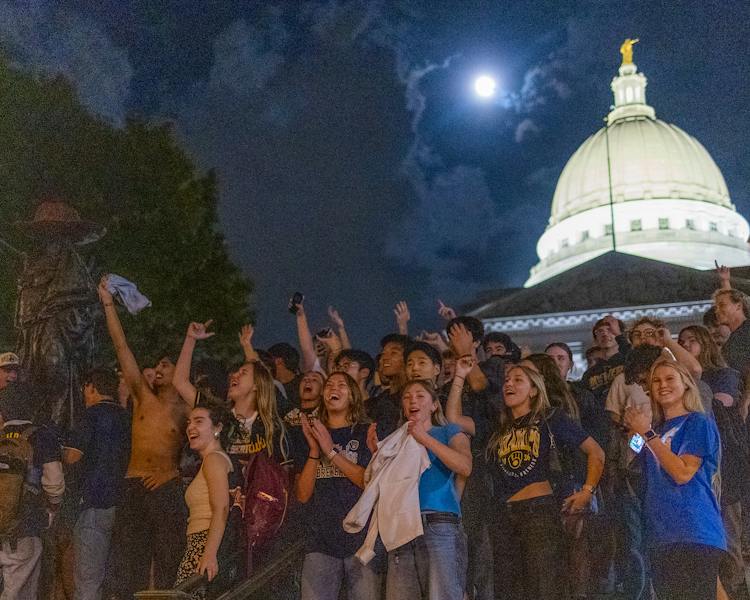
Brewers’ win Ignites Debate Over Bringing baseball back to UW-Madison
Brewers' Title Ignites Debate Over Bringing Baseball Back to Badgers The question is hanging in the Wisconsin air,...

Wyoming Cave Systems Offer Unique Underground Exploration Opportunities
Wyoming's underground sites offer diverse geology and history Wyoming’s mountain ranges provide some of the most significant opportunities...

Democrats win Texas statewide offices and control Texas House
Texas Turns Blue, but for How Long? On an election night that delivered surprises across the nation, the...