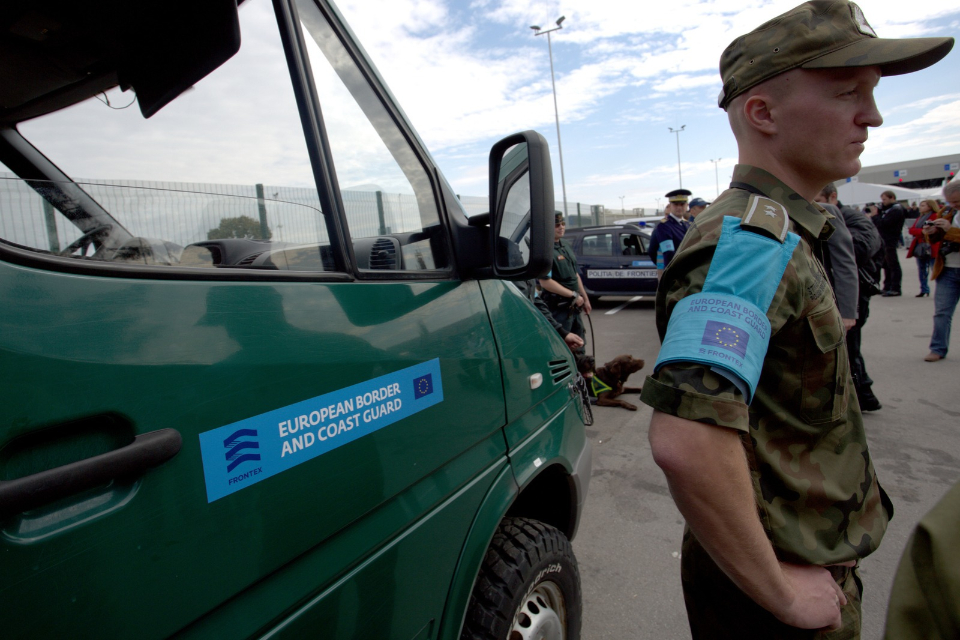
On 9 November 2026, the European Commission wants to transform Frontex into the central engine for European Union deportation operations.
A new proposal submitted on October 27 seeks to turn the border agency into the bloc’s primary actor for both guarding external borders and organizing the return of migrants. The plan includes a massive expansion of the agency's workforce and extends its operations into non-EU territories.
“Today we propose that Frontex becomes the central EU actor on returns,” Magnus Brunner, the EU commissioner for internal affairs and migration, told reporters.
The 30,000 officer target
The Commission’s proposal aims to scale the agency’s standing corps to 30,000 officers. To reach this figure, the plan intends to double the number of officers employed directly by Frontex and establish a new “European border and return reserve” consisting of 17,000 officers. These would be added to the 7,000 officers that member states already second to the agency.
Under the proposed regulation, Frontex could buy, lease, and co‑own equipment, and act as a central purchasing body for digital and artificial intelligence‑enabled tools.
The Commission has proposed €11.8 billion for Frontex under the EU’s 2028–2034 financial framework. This amount is nearly double the agency’s current seven‑year budget allocation, though it remains subject to negotiations.
| Frontex Personnel Category | Proposed Number of Officers |
|---|---|
| Directly Employed (Doubled) | Not specified (Target part of 30,000) |
| European Border and Return Reserve | 17,000 |
| Member State Seconded Officers | 7,000 |
| Total Proposed Standing Corps | 30,000 |
Operations beyond EU borders
A core component of the proposal is the creation of a new Return Coordination Center. This center would gather and analyze operational information to help plan deportations across the entire bloc. The Commission states that Frontex support would span the entire process, from early identification and voluntary return counseling to the actual return operations and reintegration assistance.
The most important change in jurisdiction involves where these operations can occur. The agency could help organize and carry out returns from one non‑EU country to another, provided the countries involved sign an agreement. For example, DW reported that Frontex could potentially deport a Bangladeshi national from Libya, a common starting point for many migrants heading toward the EU.
The Commission maintains that such third‑country operations would comply with international standards and fundamental rights. This move builds on a return framework agreed upon earlier this year, which opened the door for return hubs located outside the EU.
Lessons from the Ceuta surge
The push for these new crisis tools follows a major surge in Ceuta this summer, when approximately 80,000 people crossed into the Spanish enclave. At that time, Spain requested assistance from Frontex, Europol, and the European Union Agency for Asylum. The incident led to Italy placing temporary border controls on travel from Spain, and prompted the Spanish prime minister at the time to criticize certain member states for a “selfish” response.
Magnus Brunner linked the new proposals directly to that crisis. “We need to learn the lesson. Therefore, we propose for Frontex to detect dangerous trends early,” he told reporters.
To ensure rapid response, the proposal includes a Quick Reaction Force that could deploy within 24 hours of a member state’s emergency request. The Executive Director of Frontex would hold the authority to decide on such deployments. A new Online Monitoring and Response Center would track publicly accessible social media to identify developments related to border management and combat illegal online content tied to security risks.
Proposed changes may reduce Frontex watchdog scope
The proposal would narrow the scope of Frontex’s internal fundamental‑rights watchdog, shifting the handling of complaints to national authorities instead.
Tineke Strik, a Dutch Member of the European Parliament (MEP) from the Greens/European Free Alliance group, accused the Commission of “pandering to populism and the far right on migration.” She warned that the changes risk turning Frontex into a “European version of ICE” and argued that third‑country operations without sufficient oversight could weaken accountability and create legal uncertainty for European personnel.
Frontex has a history of scrutiny regarding its conduct. Allegations of pushbacks and human rights violations previously led to the 2022 resignation of then‑Executive Director Fabrice Leggeri, who now serves as a far‑right MEP.
The regulations now move to the European Parliament and the Council. While the 10,000‑officer goal for 2027 remains in place, the long‑term future of the agency depends on whether negotiators approve the €11.8 billion budget and the expanded mandate for third‑country operations.
Related reading

Popocatépetl, Semeru and Other Volcanoes Report Active Ash Plumes
Multiple volcanoes across the Pacific Ring of Fire and the Americas are currently experiencing explosive activity, sending ash...

For more than half a decade, the military junta led by General Min Aung Hlaing has maintained its
The Myanmar Junta’s Five-Year Survival Strategy For more than half a decade, the military junta led by General...

Thousands Protest in Ireland Demanding Moratorium on Data Centre Expansion
Thousands March in Dublin Against Data Centre Expansion Thousands of demonstrators converged on Dublin’s Parnell Square on Saturday...
IPPF FGM/C Provider Training Consultancy 2026: Apply Now
The International Planned Parenthood Federation (IPPF) is searching for a specialized consultant to develop comprehensive training materials aimed...