It was just getting started, everything was normal, the next glaciation was about to happen—and yet it stopped,
says Nicolás Young.
Rising global temperatures have abruptly halted a new glacial period that had been taking shape in the Arctic for approximately 2,000 years, according to research published in the journal Science. The study suggests that humans may have already called off the next ice age.
The study focuses on the Barnes Ice Cap on Canada’s Baffin Island, which serves as a surviving remnant of the massive Laurentide Ice Sheet that once smothered much of North America from about 95,000 to 20,000 years ago, according to Scitechdaily. While the original ice sheet vanished, the Barnes Ice Cap began expanding about 2,000 years ago, signaling the potential start of Earth’s next ice age.
Researchers used vegetation and rock dating to track ice growth
Researchers identified the ice’s growth by studying vegetation preserved beneath the ice.
The team utilized several methods to reconstruct the region’s climate history. Using beryllium-10 exposure dating on nearby rocks, researchers determined that the ice reached its modern size approximately 3,600 years ago. To track the expansion of the ice margin, they studied dead mosses that were killed when the ice re-advanced.
By using carbon-14 dating on these buried plants—a radioactive form of atmospheric carbon that decays at a predictable rate—the team was able to estimate when the vegetation died as the ice moved over them.
These findings indicate the ice began growing again about 2,000 years ago, marking what researchers argue was the beginning of Earth’s next glacial period.
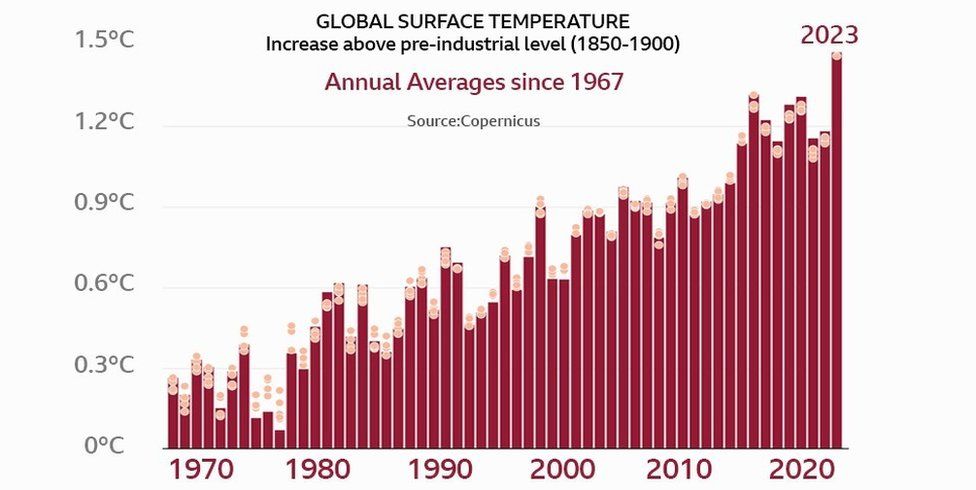
This expansion was interrupted in the 1960s as warmer summers began to reverse the process. The Week reports that the glacier’s margins have retreated at an average rate of 4 meters (13.12 feet) per year since the 1980s, a period that coincides with a time of rapidly increasing carbon emissions.
The reconstruction of the Barnes Ice Cap’s history shows that Earth’s climate warmed enough that the ice cap lost more ice during the summer months than it was able to add during the winter.
Disruption of a natural cycle
The reversal of 2,000 years of net expansion changes the ice cap's history. Nicolás Young, a geochemist and lead author of the study at the Lamont-Doherty Earth Observatory, which is part of the Columbia Climate School, said the retreat was a major disruption. Modern retreat of this glacier has reversed 2,000 years of net expansion—that’s a pretty decent chunk of time,
Young said.
While ice ages are usually triggered by the changing positions of Earth’s moving continents, which influence atmospheric and ocean circulation patterns, the current warming has interrupted this progression.
The study also revisits controversial claims from the 1970s. It has been noted that climate skeptics have long mocked a 1970s Brown University meeting where scientists warned President Nixon of an imminent ice age. Regarding this, Young said, I think this study actually helps show that scientists were right about a pending glaciation.
The end of the Laurentide remnant
The loss of the Barnes Ice Cap may have lasting consequences for future glacial developments. The ice mass previously acted as a foundation that supported feedback processes, encouraging further ice accumulation during cooling periods.
Meredith Kelly, a professor of earth sciences at Dartmouth, described the data as awesome
, though she noted the need for further comparisons with other global sites to confirm the trends occurring before human-driven warming intervened.
That will be the true very last remains of the Laurentide, disappearing for good.
Nicolás Young, via SciTechDaily
Once the ice cap finally vanishes, the remnants of this ancient glacial structure will be lost to history forever.
Worth a look
- NASA Artemis II Launch Caused GPS Disruptions Across North America
- New Software Makes James Webb Telescope Up to 15 Times More Sensitive
- South Korean Ship Completes Arctic Voyage to Europe in 50 Days (world-today-news.com)
- Sausages Return and £200 Certificates Would End; Start May Slip to 2028 (daybreakwire.com)
NASA Artemis II Launch Caused GPS Disruptions Across North America
A positioning error of a couple of meters is enough to cause an autonomous car to change lanes,...
New Software Makes James Webb Telescope Up to 15 Times More Sensitive
Astronomers have developed a new software technique that makes the James Webb Space Telescope two to 15 times...
KM3NeT Telescope Finds No Violation of Einstein’s Relativity
Only the neutrinos can get through, says Lukas Hennig, a doctoral student at Erlangen-Nürnberg.

McGill University Researchers Build Biocomputer Using Bacteria
Researchers at McGill University have built a biocomputer that runs on living bacteria, using their ability to multiply...