Union Commerce and Industry Minister Piyush Goyal told Delhi University students on Thursday, 15 October 2026, that India’s Viksit Bharat 2047 roadmap depends on youth capability. Addressing the Shri Ram College of Commerce centenary, speakers across sectors highlighted that bridging India’s campus-to-career gap requires shifting education toward continuous, self-directed learning.
Piyush Goyal and the SRCC Centenary Call to Action
On the birth anniversary of Dr. APJ Abdul Kalam, Union Commerce and Industry Minister Piyush Goyal addressed the inauguration of the Centenary Conclave on Pathways to Viksit Bharat at Shri Ram College of Commerce. Goyal framed the national roadmap for a developed economy by 2047 around the enterprise and confidence of young students. The choice of date was noted as a national prompt reflecting the faith of India’s 11th President—who served from 2002 to 2007—in the potential of young citizens. Launching the conclave during the centenary year served as a deliberate signal that the ambition of the 2047 vision runs directly through academic institutions.
The choice of venue was deliberate. For a century, SRCC has served as a primary training ground for economists and policymakers. Goyal told the audience that India enters a new era of economic realignment under Narendra Modi, where competitive advantage relies on trusted partnerships and talent. His message urged students to look beyond conventional definitions of success, embrace lifelong learning in an automated world, and apply their knowledge directly to shape the national growth story.
Delighted to interact with the bright young minds of @SRCCOfficial at the inauguration of the Centenary Conclave on Pathways to Viksit Bharat.On the birth anniversary of Dr. APJ Abdul Kalam ji, whose faith in the transformative power of young minds continues to inspire us, I… pic.twitter.com/oHzDDHnnY6
The transformative power of young minds continues to inspire us.
Piyush Goyal, Union Commerce and Industry Minister
The Campus-to-Career Gap and NITI Aayog Reforms
Despite rising employability metrics—climbing from 46% in 2020 to 56.4% in 2026—structural barriers persist across the education system. The NITI Aayog report titled Reimagining Skilling for Viksit Bharat@2047
outlines core reforms reshaping the landscape. NITI Aayog’s analysis notes that vocational training has traditionally suffered from a perception problem, often viewed as a “second choice.”
Higher education institutions are also shifting toward industry-linked models through public-private partnerships and apprenticeship programs. Such coordination across government, industry, academia, development institutions, and the innovation ecosystem is deemed vital for unlocking a developed-economy status through the nation’s demographic dividend.

AI Integration and Lifelong Learning in India’s Workforce
With artificial intelligence reshaping employment, institutions face a major change in what skills remain durable. The World Economic Forum notes that 59 out of every 100 workers globally will need new skills or retraining by 2030. As India strengthens its position in artificial intelligence, digital services, advanced manufacturing, and Global Capability Centres, the conversation around talent has grown increasingly nuanced.
Education experts emphasize that fixed lecture formats are giving way to continuous learning. Programmes such as IBM SkillsBuild provide learners access to courses in AI, cybersecurity, cloud, quantum computing, and professional skills, while collaborations with the All India Council for Technical Education and the Directorate General of Training under the Ministry of Skill Development and Entrepreneurship expand digital skilling across the vocational ecosystem.
Digital Infrastructure and Grassroots Skilling Initiatives
India’s broader digital push underpins these educational reforms. Pradhan Mantri Kaushal Vikas Yojana (PMKVY) had trained candidates by June 2026. Concurrently, platforms like MY Bharat have registered 2.22 crore youth, providing access to volunteering, skilling, and career opportunities.
| Skilling or Digital Initiative | Scale / Reach |
|---|---|
| PMKVY | Candidates trained by June 2026 |
| MY Bharat Registrations | 2.22 crore youth registered |
Collaborative frameworks like the Prime Minister Internship Scheme (PMIS) reflect the necessity of public-private cooperation, creating structured frameworks where companies offer meaningful workplace exposure. Initiatives driven by capital growth, technology processes, and people-driven institutions aim to fuel a 20-year canvas known as Agrasar Bharat, supporting India’s journey toward resilience, innovation, and opportunity by 2047.

>
Rice University scientists unveil monolithic ion trap
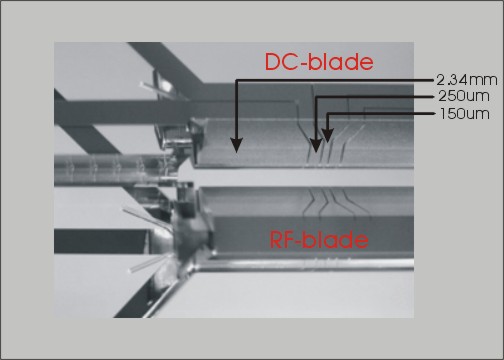
Researchers at Rice University, Duke University, and Translume Inc. have unveiled a monolithic three-dimensional ion trap capable of...

Apple’s first foldable smartphone is set to be released on October 23rd
Apple’s first foldable smartphone, the iPhone Duo, has triggered massive demand, selling out online within hours of its...

Hackers Use Stolen ConnectWise Cloud Backup Credential to Access Microsoft 365 Tenants
Hackers compromised a trusted Microsoft 365 backup application credential belonging to ConnectWise Cloud Backup, using it to sign...

Verizon Announces $10 Monthly Fee for iPhone Handoff
Apple’s iPhone Handoff feature allows users to share a single phone number across two active iPhones running iOS...