
Great Wall Motor Accelerates NASCAR-Style Prototype Ambitions in Baoding
Great Wall Motor (GWM) has escalated its high-performance automotive ambitions, with a hybrid NASCAR-style prototype appearing on an open transporter in Baoding, China, on November 7. Spotted by automotive blogger SugarDesign near Baoding Love Square, the magenta-and-gold vehicle emerged just days before the company’s scheduled Car Carnival. While the appearance suggests a strategic move to build momentum ahead of the event, GWM has yet to confirm any plans for dynamic track testing or competitive entry into the NASCAR Cup Series or IndyCar.
The prototype, branded under the “Covenant” name, first appeared during GWM’s Motorsport Culture Day at the 2026 Beijing Auto Show. The vehicle features a classic stock-car silhouette, complete with a composite front fascia, dual brake-cooling ducts, and a prominent rear swan-neck wing. Its technical configuration, which currently utilizes a longitudinal V6 powertrain, is intended to evolve into a V8-based hybrid system. The appearance in Baoding confirms that the company is continuing to refine the physical assets first displayed in April, maintaining the same color scheme and aerodynamic appointments.
Engineering Strategy and Recruitment Shifts
The movement of the prototype aligns with a significant expansion of GWM’s technical recruitment. On November 4, the company listed a position for a “GF NASCAR Expert” (job code 49231) at its Vehicle R&D Technology Centre in Baoding. This listing provides the clearest look yet at the company’s internal roadmap. The role focuses on performance development for the NASCAR Gen7 chassis and the Dallara-based IndyCar platform, specifically citing the calibration of a 5.86-litre V8—a displacement that mirrors the 358-cubic-inch standard used in the NASCAR Cup Series.

The recruitment listing describes performance-development work involving that architecture, rather than confirming that GWM is developing a new chassis. Its IndyCar responsibilities likewise do not confirm a planned entry in the open-wheel championship.
The reference to a “Coyote” engine in the job description presents a technical anomaly. While the term is synonymous with Ford’s 5.0-litre DOHC production V8, the NASCAR Cup Series FR9 engine is a pushrod-based unit. GWM has not clarified whether it intends to pursue a specialized hybrid architecture or if the Coyote designation refers to a specific development program or supplier collaboration. This technical ambiguity remains a central point of speculation for industry analysts monitoring the company’s entry into global motorsport.
Integration with the GF Performance Ecosystem
The NASCAR-style project is not an isolated experiment; it functions as a satellite to GWM’s broader GF high-performance program. This initiative includes a mid-engine supercar currently under the guidance of former McLaren chief engineer Adam Thomson. The road-going version of this vehicle is slated to feature a 4.0-litre twin-turbocharged V8 paired with an electrified front axle. GWM’s commitment to internal combustion development was further punctuated at CES 2026 in Las Vegas, where the automaker displayed its proprietary 4.0-litre twin-turbo V8 engine.
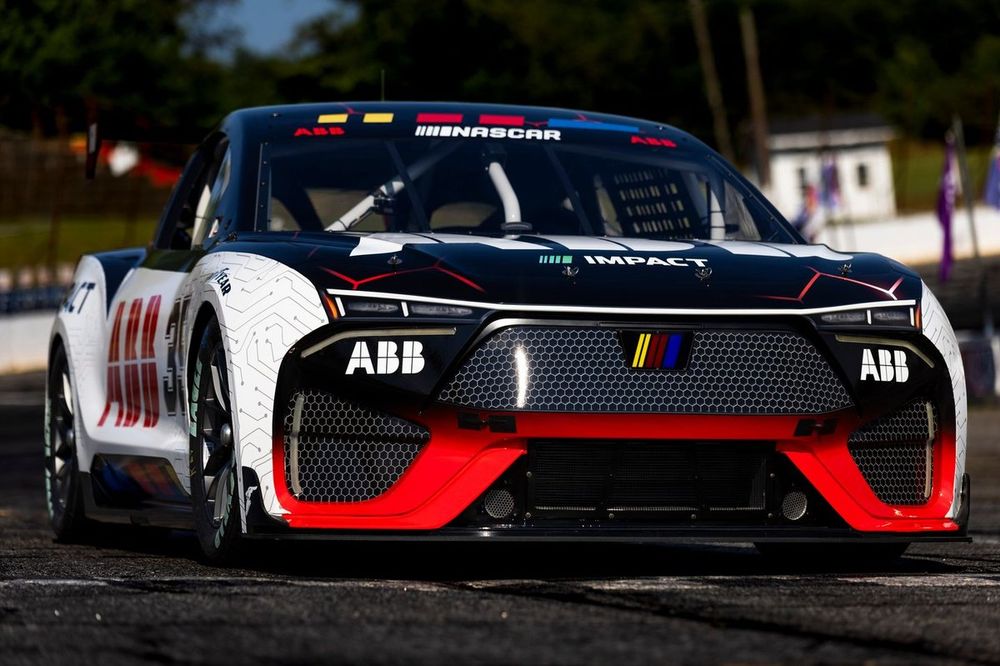
For observers of vehicle dynamics and aerodynamic development, the focus remains on whether GWM will transition these components into a verified GT3 racing car, as the company has previously outlined. By leveraging the GF architecture across multiple disciplines—stock car, open-wheel, and GT3—GWM is attempting a multi-front entry into high-performance engineering that mirrors the development cycles of established manufacturers. However, without a confirmed entry into a sanctioned racing series, the current projects remain firmly in the prototype and research phase.
The timeline suggests that the coming months will be critical for GWM’s technical validation. The proximity of the prototype to GWM’s headquarters and the ongoing recruitment of engineers with experience in NASCAR’s Gen7 platform and IndyCar telemetry indicate that the company is prioritizing the establishment of a specialized racing department. Whether this results in a competitive debut or remains an advanced R&D exercise will depend on the successful calibration of the V8 hybrid system and the alignment of these vehicles with existing regulatory compliance standards in international racing.
Disclaimer: The analytical insights and data provided in this article are for informational and entertainment purposes only and do not constitute medical advice or sports betting recommendations.
Related reading

Texas upgrades Wingo, Phillips, and Littleton to probable for Missouri game
Texas Upgrades Three to Probable for Missouri Trip The Texas Longhorns caught a much-needed break on the injury...

The Cost and Challenge of Reactive Phillies Roster Building
The cost of reactive roster building has left the Philadelphia Phillies operating in a reactive mode for much...

Golden State Warriors Injury Report and Porzingis Update vs. Magic
According to the official Golden State Warriors injury report released ahead of their matchup against the Orlando Magic,...

Packers Analysis: Jordan Love Mechanics and Team Depth
Jordan Love’s Rocket Balls and the Packers' Ground Game Focus In a recent column, analysts discussed the evolution...