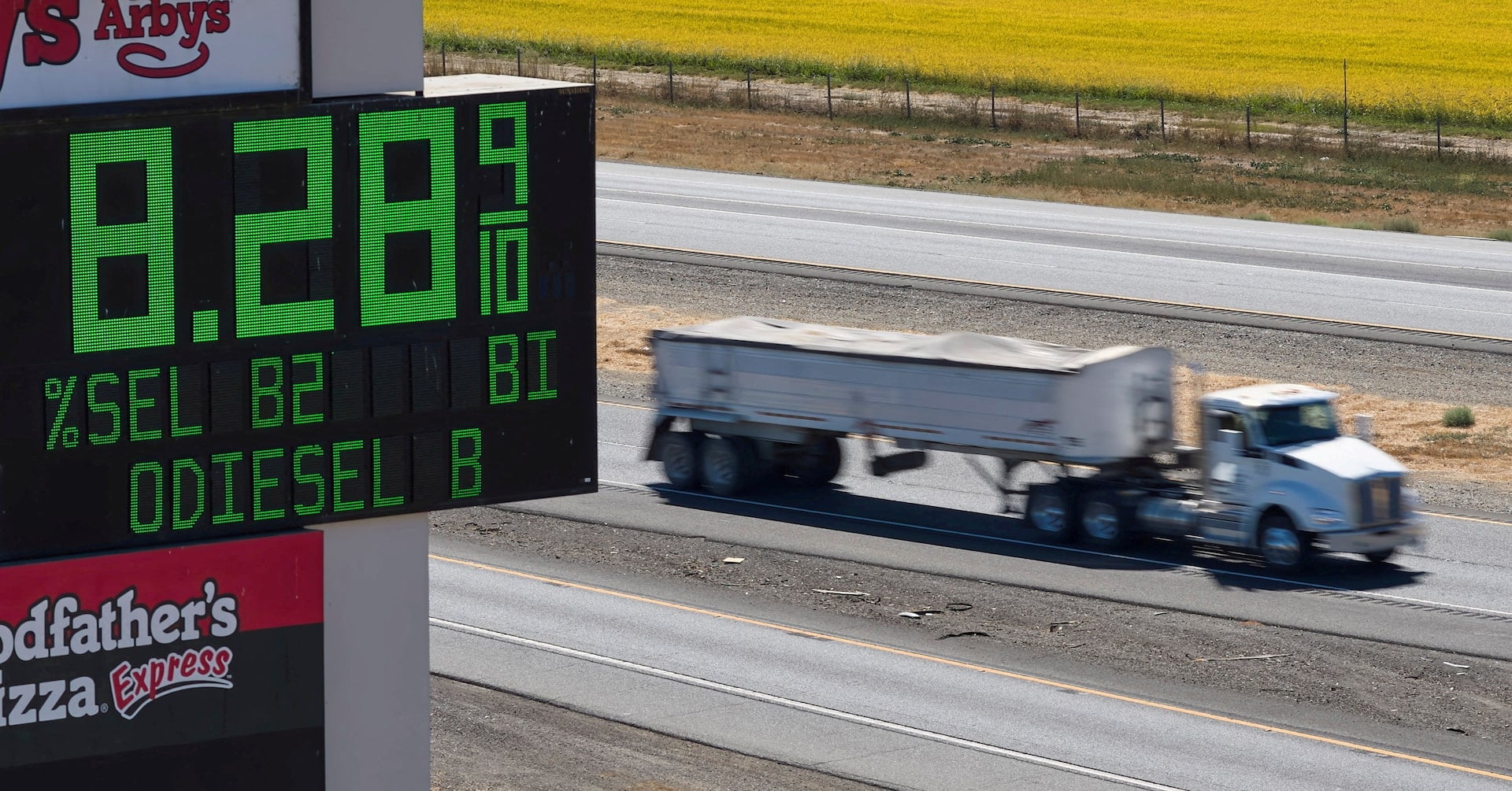
Global diesel supplies will remain under severe strain well into 2027 as ongoing Middle East conflicts and Russian export disruptions drain inventories according to the International Energy Agency, threatening to drive up consumer prices and stoke inflation despite falling overall oil demand.
IEA Warns Diesel Supply Constraints Will Last Until 2027
The International Energy Agency warned on Wednesday that constrained middle distillate supplies will extend well into the latter half of 2027. In its monthly October 2026 Oil Market Report, the Paris-based watchdog noted that prolonged supply disruptions have forced counter-seasonal stock draws just as autumn refinery maintenance begins and peak winter demand approaches.
Combined diesel export losses from Russia and the Middle East reached 1.3 million barrels per day in September, contributing to a year-on-year drop of 700,000 barrels per day in global diesel exports. While global diesel prices have pulled back from September records exceeding $200 a barrel, benchmarks remain nearly double the price of crude oil and their pre-crisis levels. During mid-September, wholesale diesel costs topped $200 a barrel in Singapore while peaking at unprecedented levels near $220 per barrel across the United States and Europe.
Middle East Crude Oil Exports by Iran, Iraq, Kuwait, Qatar, Saudi Arabia, UAE and Oman combined during 2026; stated in million barrels per day.JAN: 18.335FEB: 19.434MAR: 8.712APR: 8.501MAY: 6.488JUN: 11.087JUL: 12.939AUG: 13.896SEP: 14.652OCT: 17.273#OOTT #IranWar
“Diesel markets remained under significant strain as prolonged supply disruptions forced counter-seasonal stock draws ahead of autumn refinery maintenance and peak winter demand.”
International Energy Agency, via Reuters
High Diesel Values Push up Merchandise Expenses
The high cost of fuel is rippling through the global economy. Widespread economic repercussions are already stemming from record-high diesel values, which are pushing up merchandise expenses while negatively affecting inflation, general economic productivity, and household purchasing power.
Refining margins have climbed sharply. Diesel refining margins rose 2% on the day to around $85.42 per barrel, while Brent crude futures traded around $105.80 per barrel according to Reuters reporting. Physical markers have increased much more, with North Sea Dated up by 43% to $134 per barrel and other North Sea grades trading up to $160 per barrel. At the same time, regional tanker freight costs have surged. With pricing pressures in the crude transportation sector having spilled over into alternative vessel classes, European, African, and Latin American markets—which rely heavily on imported gasoil—may experience another upward surge in delivered diesel costs over the upcoming weeks.
Global oil demand in 2027 is forecast to grow by about 2.6 mb/d, y-o-y, following an upward revision from last month’s assessment. The OECD is forecast to grow by about 0.5 mb/d, while the non-OECD is forecast to grow by about 2 mb/d. #OPECMOMR pic.twitter.com/udyDXCl5bO
OPEC+ Production Drives Global Oil Supply Increase
Total global oil supply rose by 2.5 million barrels per day in September to reach 102.3 million barrels per day, according to Anadolu Ajansı. This output increase was driven primarily by the OPEC+ group, whose production climbed by 2.1 million barrels per day to 40.6 million barrels per day.
Crude oil exports from Middle East Gulf producers surged by 4.4 million barrels per day in September to 13.9 million barrels per day, reaching more than 75% of pre-war levels. However, refined product shipments from the region have lagged far behind crude, remaining below half of their pre-war levels due to refinery damage and security risks.

Emergency Stock Releases and Demand Destruction
To calm soaring costs, IEA member countries have coordinated emergency reserve releases. However, an internal document reviewed by Euronews indicates that these barrels will cover volumes still owed under an earlier March pledge of 400 million barrels—326 million of which have been released—rather than add fresh reserves as Euronews reported.
Meanwhile, high prices and a deteriorating economic outlook are destroying demand. The IEA forecasts that global oil demand will fall by 2.6 million barrels per day in 2026 to average 102.4 million barrels per day, with diesel accounting for 25 per cent of the dip. Global oil consumption is expected to partially recover in 2027 by 2 million barrels per day, but will still remain 620,000 barrels per day below 2025 levels.
Global oil demand is forecast to grow by 0.2 mb/d in 2026, y-o-y, following a slight downward revision from last month’s assessment. The OECD is forecast to ease by about 0.2 mb/d, while the non-OECD is forecast to grow by about 0.4 mb/d. #OPECMOMR pic.twitter.com/VBHzwmo8dq
More on Oil Market Report
Global oil production recovered above the 100-million-barrels-a-day threshold in September, after a surge from the Middle East (to hit ~102m b/d), per new @IEA estimates. Despite the recovery, supply remains slightly below global demand of ~103.5m b/d.
Worth a look

Oriental Land Co. Names Disney Imagination for 2029 Japan Launch
Oriental Land Co. and Disney have officially named Japan's inaugural Disney cruise ship Disney Imagination.

FTC Temporarily Shuts Down Digital Forensics Corporation Over Alleged $60 Million Fraud
A federal court has temporarily shuttered Digital Forensics Corporation after the Federal Trade Commission alleged the company defrauded...

Bitmine Immersion Technologies Nears Ethereum Accumulation Goal as a Six-Week Timeline Begins
Bitmine Immersion Technologies, a major Ethereum treasury holder, is nearing its self-imposed 5% ownership target after acquiring 12,532...

Asian Stocks Plunge in Tech Sell-Off Led by South Korea and Japan
Asian stock markets plunged on Tuesday, led by steep losses in South Korea and Japan, as renewed concerns...