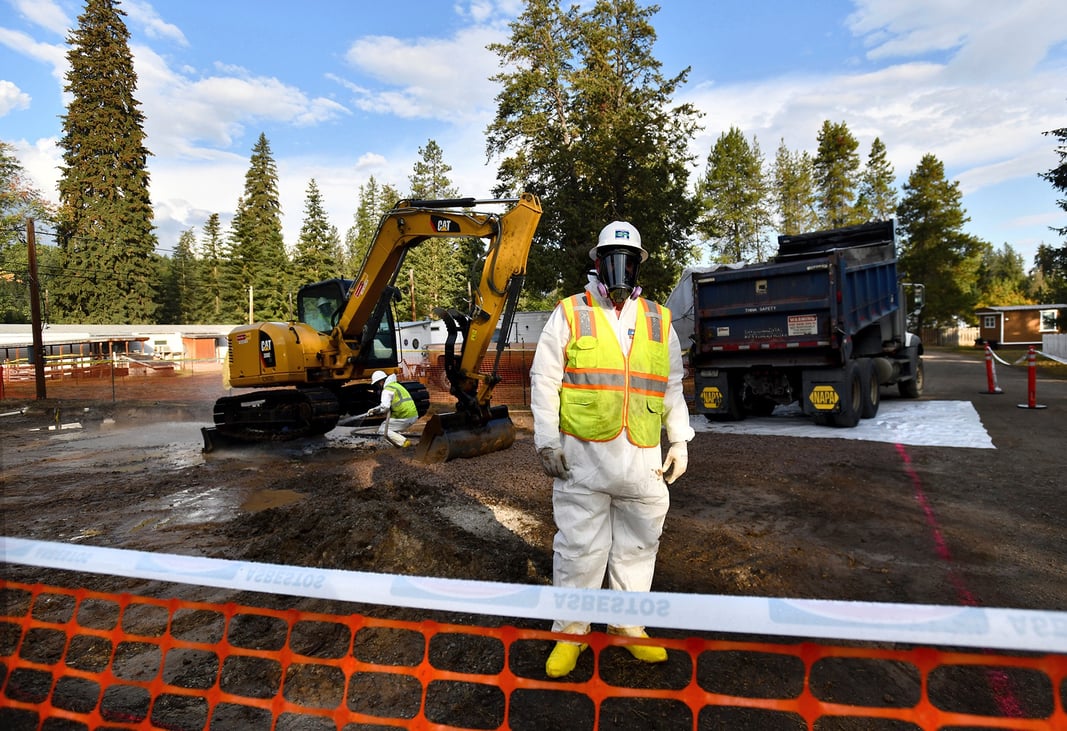
Decades after miners and residents near Libby, Montana, faced devastating asbestos exposure, two insurance companies are squaring off in a federal courtroom over who should foot a multimillion-dollar reinsurance bill.
The trial, which kicked off Monday at the federal courthouse in downtown Omaha, Nebraska, centers on contracts inked more than a half-century ago.
The 44.5 Million Dollar Reinsurance Dispute
At the heart of the legal battle is a reinsurance agreement—often described as insurance for insurance companies. National Indemnity argues that TIG Insurance Company shortchanged its share of the costs stemming from Montana’s historic liability.
What will happen is hospitals, clinics, and drug companies will raise their prices significantly, knowing that the government will pay it. Your taxes will be much more than what you pay for insurance today. https://t.co/sNa8QkDEW9
In 2022, National Indemnity and the state of Montana agreed to resolve all coverage claims tied to the widespread asbestos contamination for $157 million. National Indemnity subsequently billed its reinsurers more than $101 million, though most have since been dropped from the lawsuit.
Michael Knoerzer, an attorney representing National Indemnity, told jurors that TIG was responsible for one-third of the costs, amounting to $44.5 million. TIG, however, has only paid $12.7 million, maintaining that it has already covered what it owes.
Counting Occurrences and Communicating Risk
The core mathematical disagreement boils down to how many legal occurrences took place. National Indemnity insured the state from July 1, 1973, to July 1, 1975, a period when TIG provided reinsurance coverage.
National Indemnity’s contract required it to pay up to $3 million per loss. While the state initially pointed to 21 occurrences of state inspectors failing to warn miners, National Indemnity later settled with the state at 27 occurrences, pushing that total to $81 million alongside defense costs.
Scott L. Davis, an attorney representing TIG, pushed back against that calculation in his opening statements. Not once not ever did the State of Montana say there was 27 occurrences,
Davis told jurors, arguing that National Indemnity shifted its math to maximize coverage.
The two companies are also locked in a dispute over communication. National Indemnity maintains it sent numerous notices to TIG regarding the case between April 2005 and June 2019. TIG contends that a four-year communication gap left them in the dark too late to meaningfully participate.
The Human Toll in Libby
The financial ledger traces back to the W.R. Grace & Co. mine operating just outside Libby, Montana, from 1963 to 1990. The vermiculite extracted from the site stirred up dangerous asbestos fibers, leading to the EPA’s first-ever public health emergency during a 2009 Superfund cleanup.
Hundreds of deaths and thousands of illnesses among workers and local residents have been tied to the contamination. Compounding the community’s ongoing struggles, federal grant funding for Libby’s screening clinic for asbestos patients ended, resulting in its closure in August.
As the trial unfolds over the next two weeks in Omaha, the fundamental question of who ultimately pays for the decades-old tragedy remains wide open.

South Dakota Supreme Court Hears Final Arguments on Judicial Merger
As the state Supreme Court heard final comments in Pierre, the merger of the fourth and seventh judicial...

Are OUI Sobriety Checkpoints Legal in Massachusetts
Yes, OUI sobriety checkpoints are completely legal in Massachusetts, though they operate under strict constitutional scrutiny. Because roadblocks...

Philly Restaurant Boycott Backfires as Supporters Turn Out in Force – Philadelphia Jewish Exponent
Philadelphia Restaurant Boycott Backfires as Crowds Defend Eateries A planned boycott targeting Jewish- and Israeli-owned eateries in Philadelphia...

Teenager Arrested for Fatal Shooting of Columbus High School Graduate
Jaycier Armstrong, a 16-year-old wanted in connection with a fatal shooting that claimed the life of an 18-year-old...