
In 1994, Jeff Bezos and MacKenzie Scott undertook a 2,000-mile road trip from Texas to Washington to launch Amazon. While Scott drove their borrowed 1988 Chevy Blazer, Bezos drafted the company’s business plan on a laptop. This journey, which concluded on July 5, 1994, marked the transition from Wall Street to the garage-based startup that evolved into a global powerhouse.
The Road to the Pacific Northwest
Before Amazon became a retail giant, its origin was defined by a cross-country drive. Indiatimes At the time, he earned between $1.5 million and $2 million annually in today’s value, making the departure a significant financial risk.

The logistics of the trip involved a July 4 holiday weekend flight to Fort Worth, Texas, where the couple collected a used 1988 Chevy Blazer from Bezos’s father, Mike Bezos. From there, they navigated the 2,000-mile stretch toward Washington state. During the drive, the vehicle served as a mobile office where Bezos drafted a 30-page business plan and set up financial spreadsheets.
“couldn’t wait to hop in the car.”
MacKenzie Scott, via Indiatimes
Modest Beginnings and Miscalculated Projections
The journey was marked by practical challenges, including a shortage of accommodations. In Shamrock, Texas, the couple found no space at a local Motel 6 and instead stayed at the Rambler Motel, a facility so sparse that Scott reportedly kept her shoes on inside. Amid the travel, they paused at the Grand Canyon to watch the sunrise, a rare moment of respite during the intense planning phase.
Upon arriving in Bellevue, Washington, on July 5, 1994, the business began in a garage. While the initial vision was ambitious, early financial modeling proved conservative. According to journalist Brad Stone, Bezos estimated the online bookstore would generate $70 million in sales by 2001. The actual performance shattered that prediction, with Amazon recording over $3 billion in sales that year—a difference of more than $2.9 billion. The site eventually launched in July 1995, with a copy of Fluid Concepts and Creative Analogies as its inaugural sale.
MacKenzie Scott’s Role in Early Operations
Beyond driving the Blazer, Scott was integral to the company’s foundational tasks. She handled administrative duties that kept the startup afloat, including bookkeeping, managing accounts, and issuing employee checks. Her involvement extended to high-level operational decisions, such as conducting job interviews and negotiating early shipping contracts. One notable meeting to secure these logistics took place at a local Barnes & Noble store.

This period of rapid evolution saw the company transition from a niche bookstore to a broader retailer, culminating in a 1997 public offering on the Nasdaq. While the couple eventually divorced, Scott retained a significant stake in the company, which today anchors a wealth profile that has seen Bezos reach an estimated $275 billion, even after stepping down as CEO in 2021.
Legacy of the 1994 Business Plan
The transition from a 30-page draft written in a borrowed Chevy to a three-trillion-dollar entity highlights the scale of the company’s growth. Amazon’s expansion into Amazon Web Services, AI, and global logistics has fundamentally altered the retail and technology sectors. While the company has pivoted from its original name, Cadabra, Inc., to Amazon, the early 1994 road trip remains the definitive starting point in the company’s corporate lore.
Find more reporting in our Business section.

Sensex Closes 1,533 Points Higher at 74,315.61
Indian equity benchmarks Sensex and Nifty rallied sharply on October 15, 2026, defying weak global markets as investors...

Yass Valley Council to Consider 76pc Rate Hike
Yass Valley Council has voted to put three financial options before the public, warning that residents across Yass,...
IEA Forecasts Global Diesel Supply Strain to Persist Into 2027
Global diesel supplies will remain under severe strain well into 2027 as ongoing Middle East conflicts and Russian...
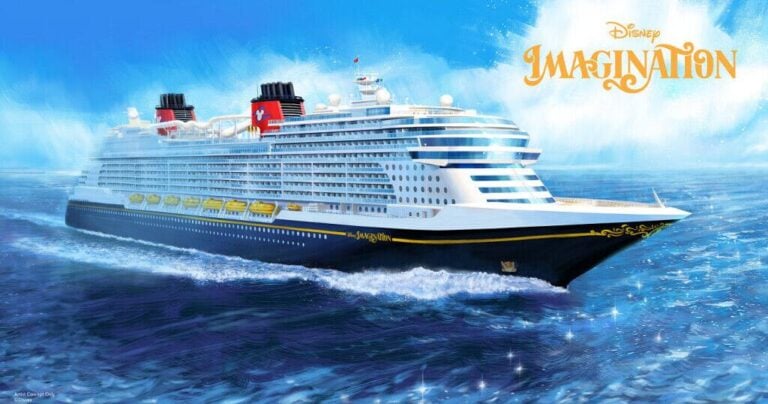
Oriental Land Co. Names Disney Imagination for 2029 Japan Launch
Oriental Land Co. and Disney have officially named Japan's inaugural Disney cruise ship Disney Imagination.