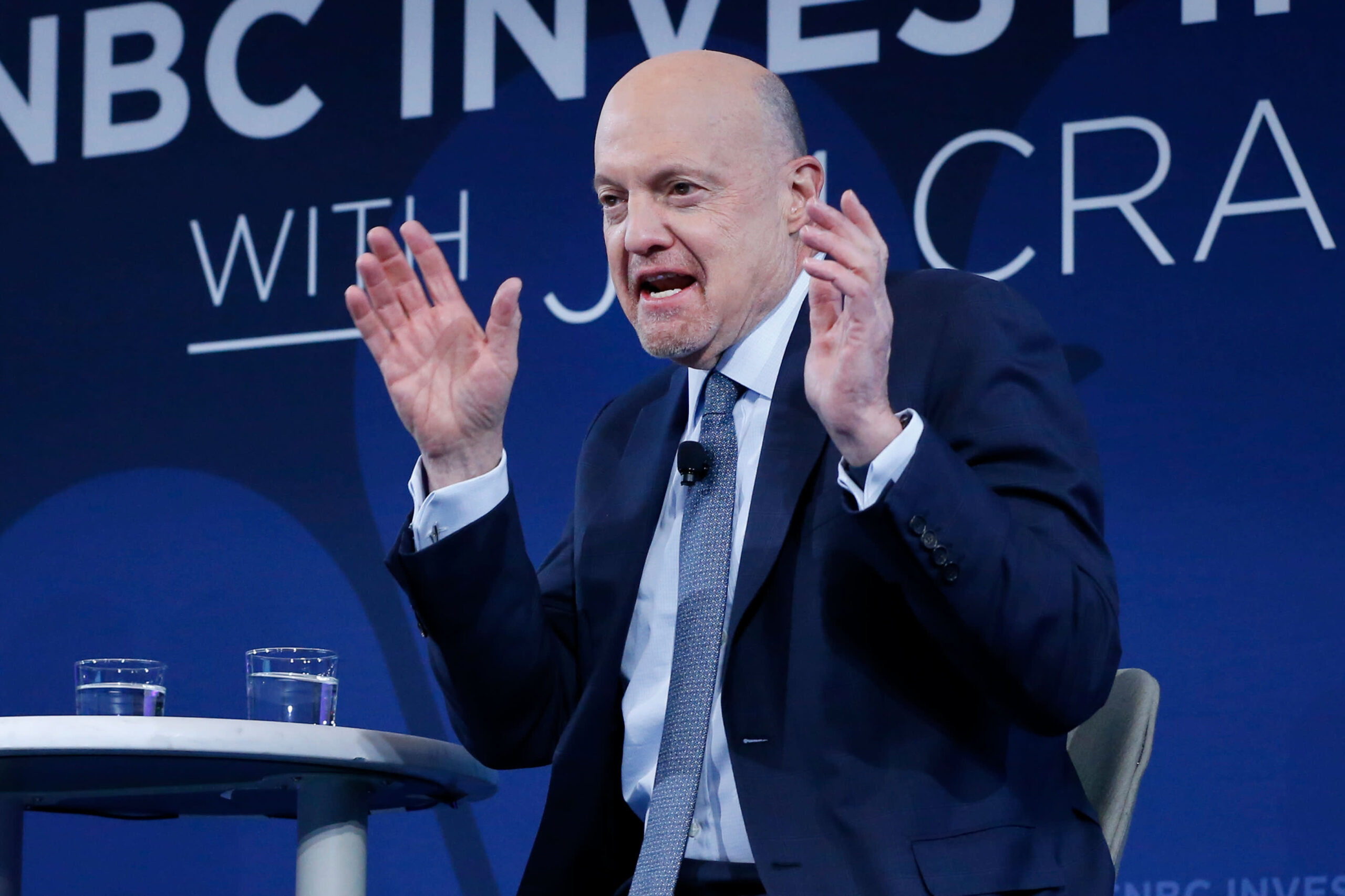
Financial commentator Jim Cramer defended individual stock picking against index-fund orthodoxy, arguing that retail investors can outperform the broader market by tracking recognizable companies like Apple, Microsoft, and Meta Platforms while consumer spending faces headwinds from gas prices.
Challenging the Speculator Stigma in Retail Trading
Retail stock trading has expanded significantly over recent decades, with individual volume rising from 10% to 20% of total market activity, according to estimates cited in reporting from UA.News. Yet, individual investors who select specific equities rather than holding S&P 500 index funds often face dismissive attitudes from professional commentators who label them speculators rather than informed participants.
Writing in a column for CNBC Top News, market commentator Jim Cramer pushed back against that framing by pointing to major blue-chip names that remain entirely understandable to everyday consumers. He noted that Warren Buffett’s long-term outperformance at Berkshire Hathaway relied heavily on a single massive, concentrated position in Apple rather than a diffuse index strategy, proving that targeted stock selection can work for patient buyers who watch products scale in real life.
me by noting that individuals are buying stocks in record numbers, up to 20% from 10% of all volume in the last couple of decades.
Jim Cramer, via CNBC
How Apple, Microsoft, and Meta Fit the Consumer Thesis
The argument for individual stock picking rests on tangible familiarity with products people hold in their hands every day. Berkshire Hathaway began building its stake in Apple in 2016 after Buffett observed children glued to their iPhones at a Dairy Queen, cementing his belief in the device as an essential consumer staple. Over his 15 years as chief executive officer, Tim Cook maintained customer satisfaction ratings consistently in the highest 90th percentile while also building a high-margin services revenue stream and securing an arrangement that had Alphabet bankroll AI power costs.

Beyond hardware and mobile services, retail investors can track corporate technology and social platforms through daily professional and personal use. Microsoft sustains its dominant position through corporate reliance on Windows and the Office suite, continued development of Azure, and heavy artificial intelligence investments, alongside major corporate transactions like its $26 billion acquisition of LinkedIn in December 2016 and its purchase of Activision Blizzard for $69 billion in October 2023. Meanwhile, Meta Platforms relies on its core advertising engine, WhatsApp, Threads, and Mark Zuckerberg’s aggressive push into artificial intelligence competition.
Consumer Pressures and Leadership Transitions at Major Tech Firms
While large technology platforms show strong fundamentals, broader consumer spending faces pressure from everyday expenses. Cramer noted that retail shoppers appear weaker than previously anticipated, with households squeezed by fuel costs even as crude oil prices moved. Those pressures have weighed on food and beverage companies, where snack-oriented blue chips like PepsiCo face steep valuation drops and heightened investor scrutiny over GLP-1 health trends.
At the same time, top-tier technology giants are managing major executive handovers. At Berkshire Hathaway, Warren Buffett turned the chairman role over to his son, Howard Buffett, earlier this month, while Greg Abel stepped into the chief executive role in January to oversee non-insurance operations. At Apple, Tim Cook moved to executive chairman on Sept. 1, handing the CEO position to longtime hardware chief John Ternus just as the company launched its new iPhone 18 lineup.
- Serbia President Aleksandar Vucic Resigns to Run for Prime Minister
- Xbox Project Helix Projected to Outperform PlayStation 6 in Raw Power
- Why Larry Ellison's Scrapped $7.5 Billion Stock Sale Was Never a Secret (daybreakwire.com)
- Apple hit with $5.7 billion verdict over Taptic Engine patent infringement (newsarchyuk.com)

Serbia President Aleksandar Vucic Resigns to Run for Prime Minister
Serbia's populist president, Aleksandar Vucic, resigned on Sunday to run for prime minister in an upcoming October parliamentary...
Xbox Project Helix Projected to Outperform PlayStation 6 in Raw Power
Hardware leaker KeplerL2 has revealed that next-generation graphics chips for the PlayStation 6 and Xbox Project Helix have...
AI Market Volatility Erases Trillions Before Rebound
Stock markets swung wildly over a recent two-week period, erasing and then recovering hundreds of billions of dollars...

Meta Unveils $1,299 VR Glasses With Lighter Design at Meta Connect
Meta unveiled its $1,299 Meta VR Glasses at the Connect conference on September 23, 2026, featuring a 100-gram...