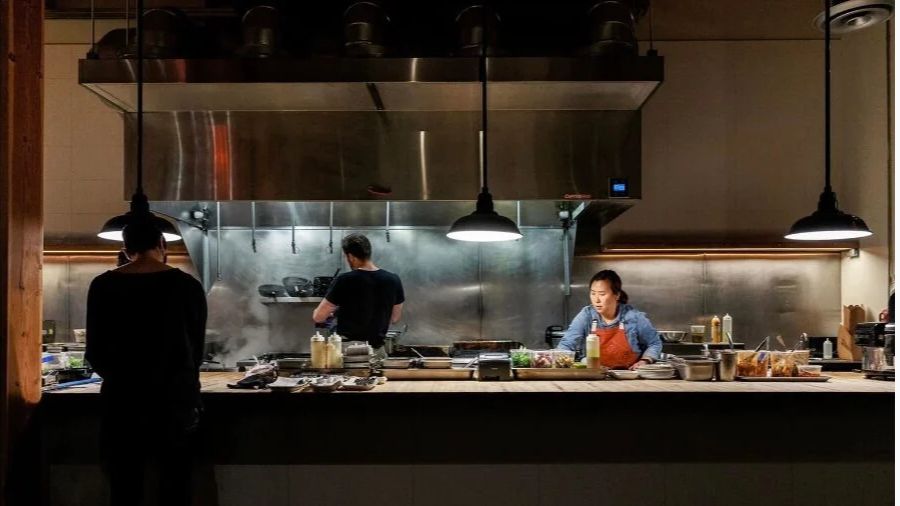
The landscape of Seattle’s dining scene is shifting, and for many residents, the change is hitting home in the form of an empty chair where a favorite restaurant used to be.
KIRO Newsradio hosts Gee Scott and Ursula Reutin recently addressed the closure of Revel, a modern Korean restaurant in Fremont that had become a staple for many locals. The conversation highlighted a growing tension between rising operating costs and the diminishing purchasing power of the average diner.
Ursula, who had frequented Revel for special occasions like Valentine’s Day and her anniversary, expressed genuine surprise at the closure. She noted that her personal visits always left her with the impression that the venue was thriving. “Because I had no idea that Revel was struggling.
That’s a fantastic restaurant. Like that really bums me out,” she said. Her experience highlights a common disconnect: a busy dining room on a Saturday night does not necessarily reflect the financial health of a business struggling to cover its overhead throughout the slow mid-week shifts.
The Rising Threshold of Affordability
The conversation quickly turned toward the broader economic reality facing the city. Gee Scott did not mince words regarding the current price of a night out, stating plainly, “The prices here are outrageous.” He pointed to his own recent travels to Chicago, where he found that even in a city with a world-class culinary reputation, the cost of dining remained more accessible than what he encounters in Seattle.
When the discussion turned to the math of a standard dinner for two, KIRO producer Andrew Lanier suggested that a $100 bill—even before factoring in alcohol—has become a reasonable expectation for a mid-tier meal. That figure serves as a sobering benchmark for the local economy. As Gee noted, “That’s the problem. That’s what’s happening right now.”
When Heritage Faces Financial Pressure
The struggle isn’t limited to trendy modern spots. Ursula also highlighted the precarious position of La Palma Family Mexican Restaurant, a business that has operated in the community since 1976. Unlike the sudden closure of Revel, La Palma has been transparent about its financial hardships. Granddaughter Lauren Jewett recently took to Instagram and TikTok to share the family’s story, a digital plea that briefly flooded the restaurant with customers.
While the surge of support filled the parking lot over one weekend, it sparked a difficult question about the nature of modern dining: can a viral social media moment replace the steady, daily patronage required to sustain a legacy business?
Ursula acknowledged the immediate success of the appeal but remained skeptical about the long-term outlook, asking, “So by noon Saturday, the parking lot was full. Sunday brought another big crowd, but how long does that go?”
The Changing Habits of the Seattle Diner
Gee argued that the problem is not merely a lack of interest in high-quality food, but a fundamental change in how and where people spend their money. Delivery apps, the instant gratification of social media, and the pressure on household budgets have altered the dining industry.
“Some of these places have great food. People aren’t just going to places for great food anymore,” he observed. The working-class demographic that once formed the backbone of neighborhood dining is increasingly finding itself squeezed by the rising costs of housing, groceries, and fuel.
In an effort to stimulate local commerce, organizations like Visit Seattle have launched initiatives such as the “There’s Never Been More to SEA” campaign, which features a Perks Pass offering discounts at over 70 businesses.
While Ursula recalled the era of the “entertainment book”—a collection of coupons that many residents used to rely on—Gee expressed doubt that a 10% discount could bridge the gap created by current inflation. “Even going to that place saving 10%, what’s that really going to do? Because your gas is higher, the groceries are higher,” he said.
As the city looks toward an uncertain winter, the closure of established names like Revel serves as a bellwether for the industry. The question remains whether the current model of mid-tier dining can survive when the cost of participation exceeds the disposable income of the community it serves.
Keep reading
Democrats Flip 4 Seats as Alabama Legislative Margins Shift
Alabama’s legislative makeup changed in subtle but telling ways this past Tuesday, as Democrats managed to chip away...

Ukraine’s Biometric Identity Market Faces Uneven Growth Amid War
The Ukrainian digital identity sector is navigating a complex landscape where rapid state-driven adoption of biometric authentication meets...

Wyoming’s Barrasso, Hageman and Gray Face Democrat-Led Congress
Wyoming’s Republican Delegation Faces Shift to Minority Power When the new Congress convenes this January, Wyoming’s all-Republican congressional...

Goose Delivers High-Energy Funk Set at Milwaukee’s Miller High Life Theatre
Goose returned to the Miller High Life Theatre in Milwaukee on November 7, 2026, for the second of...