
Wyoming’s Republican Delegation Faces Shift to Minority Power
When the new Congress convenes this January, Wyoming’s all-Republican congressional delegation will face a political environment drastically different from the one they occupied over the past two years.
With Democrats securing control of both the U.S. Senate and the House of Representatives, the path for Senator John Barrasso, Senator-elect Harriet Hageman, and Representative-elect Chuck Gray has narrowed significantly.
The transition marks the end of a legislative era where Republicans held the majority in the upper chamber. As reported by Yahoo, the Democratic surge is projected to be the party’s largest House majority since the early 1990s. In the Senate, the shift is equally pronounced; Democrats have secured their clearest majority since 2008, flipping seats in states including Iowa, Kansas, and Texas, according to reporting from WyoRoundup.com.
The New Reality for Senate Leadership
Senator John Barrasso, who has served as the majority whip since January 2025, is set to transition into the role of minority whip. While he will retain a position within party leadership, the nature of his daily work is shifting from coalition-building to defensive maneuvering. His primary directive will now be maintaining message cohesion among Senate Republicans who may be increasingly fractured by the election results.
“In the Senate, we will aggressively oppose terrible ideas that drive our country toward the socialism Democrats embraced,” Barrasso stated. “Our commitment is to common sense. And our focus should not waver from the top priority of driving down prices that have remained stubbornly too high.”
The economic climate that preceded the election highlights the political stakes. WyoRoundup.com reported that exit polling data indicated roughly 60% of voters blamed President Donald Trump’s policies for higher-than-usual prices, while 74% viewed the ongoing war in Iran as a critical factor in their decision-making. This environment creates a difficult environment for the delegation to push a unified, Trump-aligned agenda.
Legislative Hurdles for Hageman and Gray
For incoming members like Harriet Hageman and Chuck Gray, the change in majority status complicates their ability to move legislation. Hageman, currently a U.S. Representative, will move to the Senate as a freshman. Ryan Williamson, an associate professor at the University of Wyoming’s School of Politics, Public Affairs and International Studies, noted that Hageman may find some flexibility in the Senate that is unavailable in the House.
The people of Wyoming have hired me to do a new job. I am grateful, and I will not let you down. Four years ago, you gave me the honor and responsibility that go with serving in the U. S. House of Representatives, and I have worked hard every day to defend your Constitutional… pic.twitter.com/r2pd8tj60U
Williamson suggested that Hageman could utilize procedural tools like the filibuster or attempt to attach amendments to must-pass legislation, such as government funding bills, to secure concessions. Hageman herself remains focused on continuity.
“I am eager to build upon my accomplishments from the House by accelerating an aggressive legislative agenda in the Senate,” she wrote in a statement to the Wyoming Tribune Eagle. “While control of Congress has changed, my priorities have not.”
The situation for Chuck Gray, the incoming U.S. Representative, is more restrictive. As a rank-and-file member in the House minority, his ability to influence the legislative process is limited by the sheer size of the Democratic majority. Williamson explained that Democrats have gained enough seats to potentially bypass the need for Republican support entirely on many measures, leaving new members like Gray with few traditional avenues for legislative success.

The Uphill Battle Toward 2027
The broader impact of this shift is a fundamental change in how Wyoming’s delegation interacts with the federal government. While state-level elections in Wyoming remained solidly Republican, the federal delegation is now preparing for a session that begins in 2027 with significant procedural hurdles.
The challenge, as identified by political analysts, is that the delegation must find ways to represent their constituents' priorities while facing a legislative body where their party holds little power.
As Gray prepares to take his seat, he has framed his role as one of listening and protection. “The time is now to look past the election and work together to help all of Wyoming,” Gray stated. Whether that approach will yield results in a polarized Washington remains the central question for the delegation as they head into the new year.
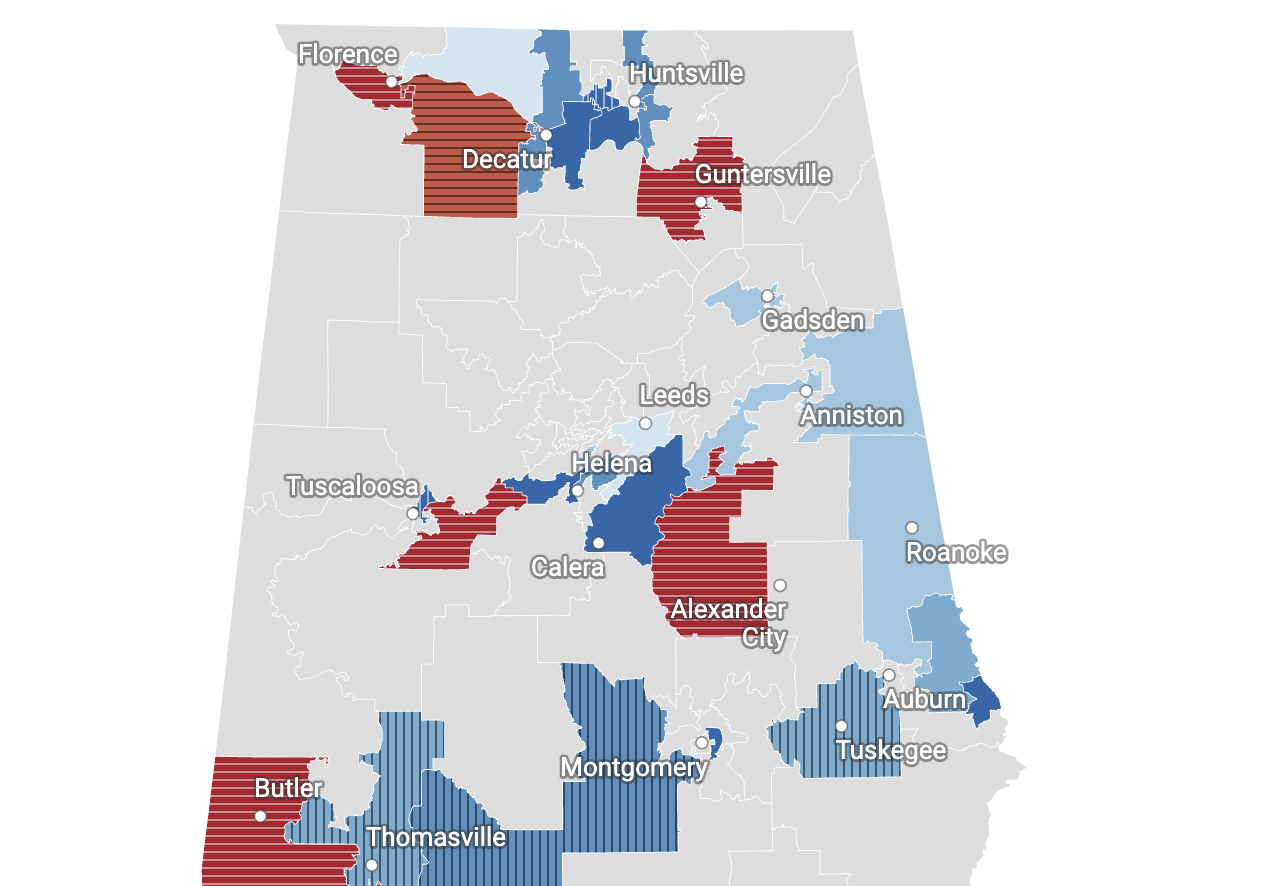
Democrats Flip 4 Seats as Alabama Legislative Margins Shift
Alabama’s legislative makeup changed in subtle but telling ways this past Tuesday, as Democrats managed to chip away...

Ukraine’s Biometric Identity Market Faces Uneven Growth Amid War
The Ukrainian digital identity sector is navigating a complex landscape where rapid state-driven adoption of biometric authentication meets...

Goose Delivers High-Energy Funk Set at Milwaukee’s Miller High Life Theatre
Goose returned to the Miller High Life Theatre in Milwaukee on November 7, 2026, for the second of...

KIRO Hosts Discuss Revel Closure and Seattle Dining Costs
The landscape of Seattle’s dining scene is shifting, and for many residents, the change is hitting home in...