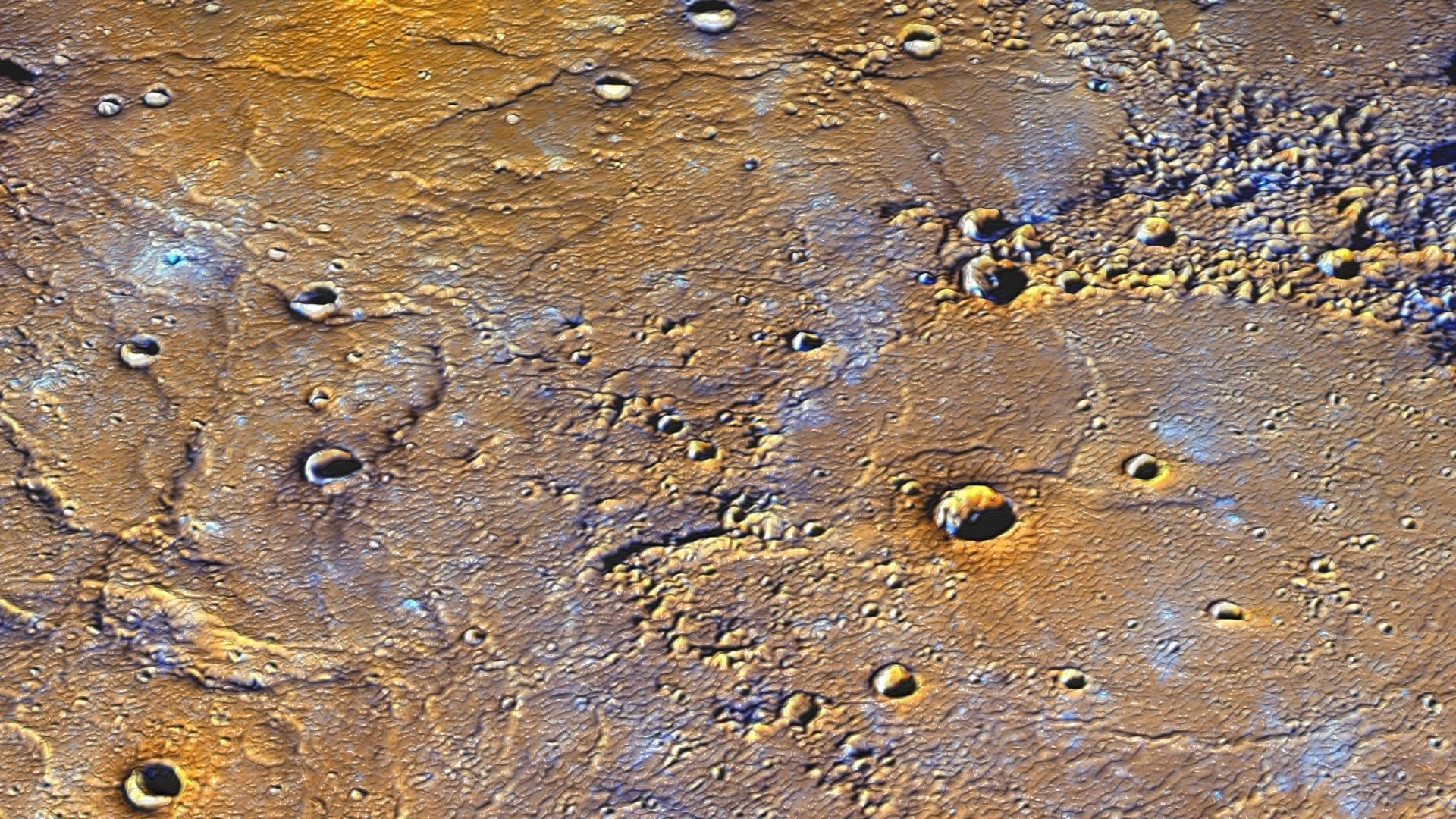
Mercury’s surface contains roughly 37 percent silicon dioxide by mass, dropping up to 25 percent below previous estimates and pointing to a planet that formed from deeper mantle material than once assumed. Researchers calibrated infrared measurements using laboratory-grown glass beads and lunar data ahead of the BepiColombo spacecraft’s upcoming arrival.
Re-Evaluating Mercury Through Silicon Dioxide Content
Mercury may preserve evidence of a hotter, more extreme interior than scientists once expected, according to a new analysis of the planet’s surface composition. Researchers examining remote sensing data have determined that Mercury contains substantially less silicon dioxide than previously estimated, placing the compound at about 37 percent by mass.
That figure sits up to 25 percent below earlier projections. The discrepancy suggests that Mercury’s volcanic rocks may have formed from mantle material that melted more deeply than once assumed, offering a fresh window into a volcanic history distinct from Earth’s.
While Earth remains geologically active through plate tectonics and ongoing volcanism, Mercury cooled early. The smallest planet and the closest to the Sun saw its volcanic activity largely cease about one billion years after formation, leaving behind a solid, continuous crust. How that early activity produced the surface observed today remains a central question for planetary scientists (Scitechdaily).
Laboratory Glass Beads and Lunar Calibration
Determining the chemical makeup of Mercury presents a distinct challenge because scientists have no physical pieces of the planet to analyze. No lander has reached its surface, and no rock samples have returned to Earth. Instead, researchers rely on remote sensing observations gathered by telescopes and spacecraft, interpreting infrared radiation coming from the surface.
To translate those infrared readings into accurate silicon dioxide estimates, a research team from the Max Planck Institute for Solar System Research alongside the Universities of Münster and Göttingen developed a precise calibration method using laboratory-grown materials (Scitechdaily).
The team created tiny glass beads about half a millimeter across, each containing a precisely controlled proportion of silicon dioxide, and measured their infrared properties (Scitechdaily).
“The glass beads serve a similar function to calibration weights on a scale. Their weight is known precisely. They therefore allow us to correctly interpret the scale’s balance. Similarly, the glass beads allow us to draw the correct conclusions from the properties of the infrared radiation.”
Iris Weber, University of Münster
Before applying this calibration to Mercury, the team tested the approach on the Moon, utilizing high spatial resolution infrared data gathered by NASA’s Lunar Reconnaissance Orbiter (Scitechdaily).
Deeper Mantle Melting and Alternative Explanations
The relatively low abundance of silica at Mercury’s surface points directly to the thermal conditions of the young planet’s interior. As a cooling planet’s mantle solidifies, the first rocks to form remove relatively little silicon dioxide from the remaining molten material. As cooling continues, silicon dioxide becomes increasingly concentrated in the melt, meaning lava reaching the surface later usually contains more of it (Scitechdaily).
A lower silica concentration therefore indicates high interior temperatures that melted mantle material from greater depths (Scitechdaily).
“Our findings suggest that the volcanic rocks on Mercury formed from more deeply melted mantle material than previously assumed.”
Christian Renggli, head of the Experimental Laboratory Magma Ocean research group at the Max Planck Institute for Solar System Research
Researchers also note a second possibility: Mercury may have originally held more silicon dioxide in its crust and gradually lost oxygen over time (Scitechdaily).
Mapping Volcanism and Spectroscopy via MESSENGER Data
Parallel research efforts continue to refine how scientists interpret the planet’s complex surface features. The Mercury Surface Spectroscopy research group utilizes remote sensing instruments and laboratory experiments to investigate volatile-rich deposits, explosive volcanism, and hollows that may mark recent subsurface degassing (cosmos.esa.int).
Researchers working with data from the MErcury Surface, Space ENvironment, GEochemistry, and Ranging mission employ the Mercury Atmospheric and Surface Composition Spectrometer instrument alongside the Mercury Dual Imaging System camera. By importing spectrometer observations into a relational database, scientists can rapidly search through more than 4.7 million spectra based on location, viewing geometry, and spectral parameters (cosmos.esa.int).
The group also investigates how crustal magnetism and space weathering alter observed reflectance spectra, incorporating deep learning techniques to analyze planet-scale reflectance characteristics (cosmos.esa.int).
Preparing for BepiColombo’s Arrival at Mercury
These ongoing spectroscopic analyses and laboratory calibrations provide essential groundwork for upcoming missions. Researchers are actively using current data to plan targeted observations for the European Space Agency spacecraft (cosmos.esa.int).

BepiColombo is scheduled to enter orbit around Mercury in November, opening a direct opportunity to test these indirect compositional findings against fresh in-situ measurements (Scitechdaily).
Keep reading

Artemis II Commander Recalls Moment He Feared Being Lost in Space
Artemis II Commander Reid Wiseman recalled a terrifying moment during his ten days in space earlier this year...
Researchers Recreate Planetary Turbulence in Laboratory Experiment
Scientists have successfully recreated an extreme, long-theorized form of planetary and stellar turbulence in a desktop-sized laboratory setting...

Iapetus Moon Visible Near Saturn on Thursday, October 22
Shining at 11th magnitude on October 22, Saturn’s two-toned moon Iapetus is currently passing south of the ringed...

Researchers Find Rock from Papua New Guinea Reveals Unexpected Temperature Reversal
An international research team analyzing a rare metamorphic rock from Papua New Guinea has discovered that tectonic plates...