
An international research team analyzing a rare metamorphic rock from Papua New Guinea has discovered that tectonic plates can experience an unexpected temperature reversal during subduction, plunging 90 kilometers deep after starting with unusually hot conditions at shallower depths.
Deep beneath the surface of eastern Papua New Guinea, a geological sample has rewritten what scientists understand about the thermal behavior of subduction zones. Recovered from remote islands during an expedition over two decades ago, the specimen spent roughly four million years descending more than 90 kilometers (56 miles) into the Earth.
When two tectonic plates collide, one slides beneath the other and sinks toward the mantle. This process drives earthquakes, powers volcanoes, and regulates global climate over millions of years by recycling carbon dioxide and other elements. Yet the thermal history locked inside this specific rock contradicts foundational assumptions about how heat moves through these subterranean corridors.
Coesite Crystals and Extreme Pressure in Papua New Guinea
The sample in question is an eclogite, a dense metamorphic rock forged under crushing pressures and high temperatures. Inside the specimen, researchers identified microscopic crystals of coesite—a mineral that forms only under ultrahigh-pressure conditions—trapped inside another mineral matrix.
These tiny inclusions preserved a precise timeline of the rock’s descent. Using geochemical techniques unavailable when the rocks were first gathered, scientists determined that the sample reached depths where temperatures hit approximately 800°C (1,472°F). Suzanne Baldwin, Professor Emerita of Earth and Environmental Sciences at Syracuse University, noted the enduring value of the original fieldwork.
This study was based upon a sample that Syracuse University scientists collected on an NSF-funded expedition to remote islands of eastern Papua New Guinea over two decades ago.
Suzanne Baldwin, Professor Emerita of Earth and Environmental Sciences at Syracuse University
The collection effort took place in 2003, the same year Syracuse University celebrated a men’s basketball National Championship. Baldwin’s earlier expeditions to the region had previously identified the world’s youngest ultrahigh-pressure terrane,
setting the stage for the recent laboratory analysis.
Reconstructing an Unexpected Thermal Path
By mapping the rock’s complete trajectory, the research team uncovered a surprising thermal change. Conventional geological models assume that sinking tectonic plates experience a steady, predictable increase in temperature relative to depth. Instead, this rock defied those projections.
At a depth of roughly 45 kilometers (28 miles), the rock had already heated to about 700°C (1,292°F). That meant it was only 100°C cooler at the halfway point of its descent, even though it still had another 45 kilometers to fall. While its absolute temperature continued to rise as it moved deeper, the rate of warming slowed down dramatically, transitioning from an unusually warm regime at shallow depths into a cooler subduction environment further down.
Finding this change from hot to cold subduction was unexpected as this contradicts our current thermal models of subduction zones.
Dr. Jan Schönig, Göttingen University’s Geoscience Center
While geologists have previously encountered rocks showing evidence of high temperatures, this project marks the first time researchers have documented such a distinct thermal transition during a single descent.
Scientists Propose Hypotheses for Unusual Heating Pattern
Scientists investigating the anomaly have proposed two primary hypotheses to explain the unusual heating pattern. First, intense shearing forces generated as tectonic plates grind against each other may produce substantial frictional heating at relatively shallow depths. Second, the subduction zone itself may have been too young to develop the cooler thermal profile predicted by standard models. Both factors likely played a role in shaping the rock’s history.
Refining these models carries practical importance. Subduction zones drive the seismic activity that generates earthquakes and the volcanic eruptions that impact regional safety and air transport. They also govern the deep carbon cycle that stabilizes Earth’s long-term climate. Baldwin emphasized that the methodology established in the study opens new doors for examining subterranean mechanics globally.
The entire pressure-temperature-time path that rocks take from the surface to extreme depths and back to the surface needs to be documented and incorporated into models of subduction zone evolution.
Suzanne Baldwin, Professor Emerita of Earth and Environmental Sciences at Syracuse University
The findings, backed by funding from the German Research Foundation (DFG) and the National Science Foundation, demonstrate how multidisciplinary collaboration between institutions in the United States, Germany, and elsewhere can extract new revelations from decades-old samples.
This approach can be applied to ultrahigh-pressure rocks globally.
Suzanne Baldwin, Professor Emerita of Earth and Environmental Sciences at Syracuse University

Researchers Propose Light-Based Method to Detect Hypothetical ‘Mirror Life
Researchers at the University of Strathclyde and Durham University have proposed the first light-based method to detect hypothetical...
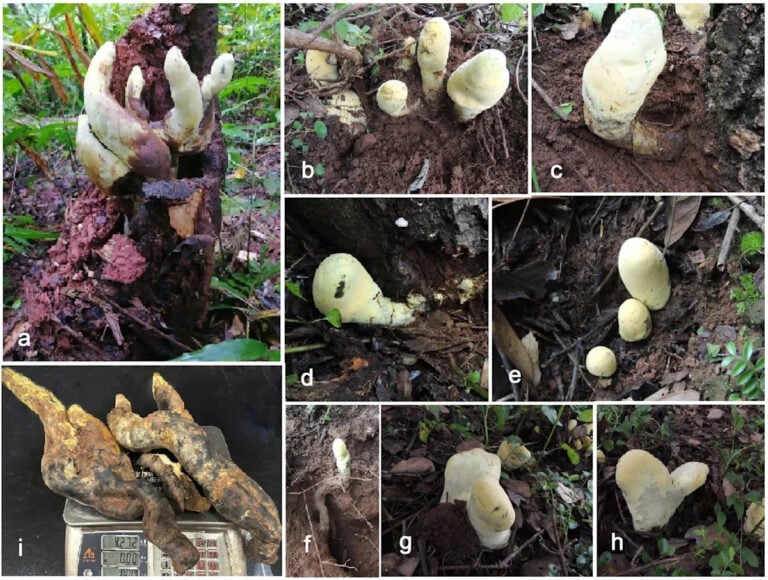
Researchers in southwestern China discovered a nearly 5-pound fungus so unique it required a new family
Researchers in southwestern China have discovered a towering new fungus species, Dianjunus rex, that grows up to 50...
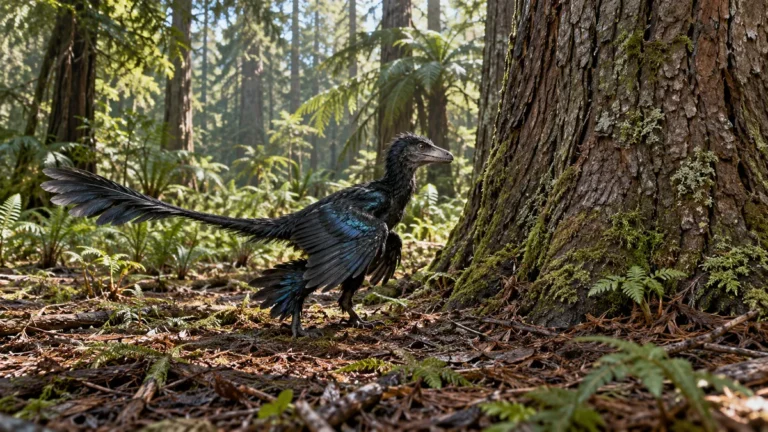
Microraptor was a very small, feathered dinosaur with wings on its legs as well as its arms
Discovered in northeastern China, Microraptor is a diminutive, feathered dinosaur renowned for its four wings and shimmering plumage,...
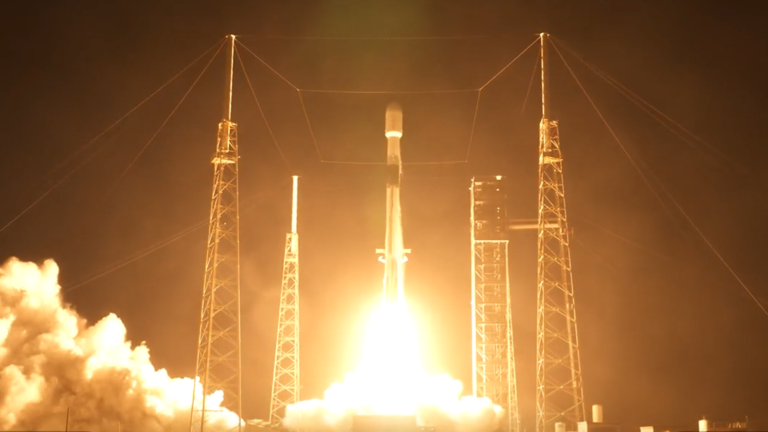
SpaceX Launches Starfall Return Capsule for Second Time
SpaceX launched the uncrewed Starfall reentry capsule for the second time on October 20, 2026, from Cape Canaveral...