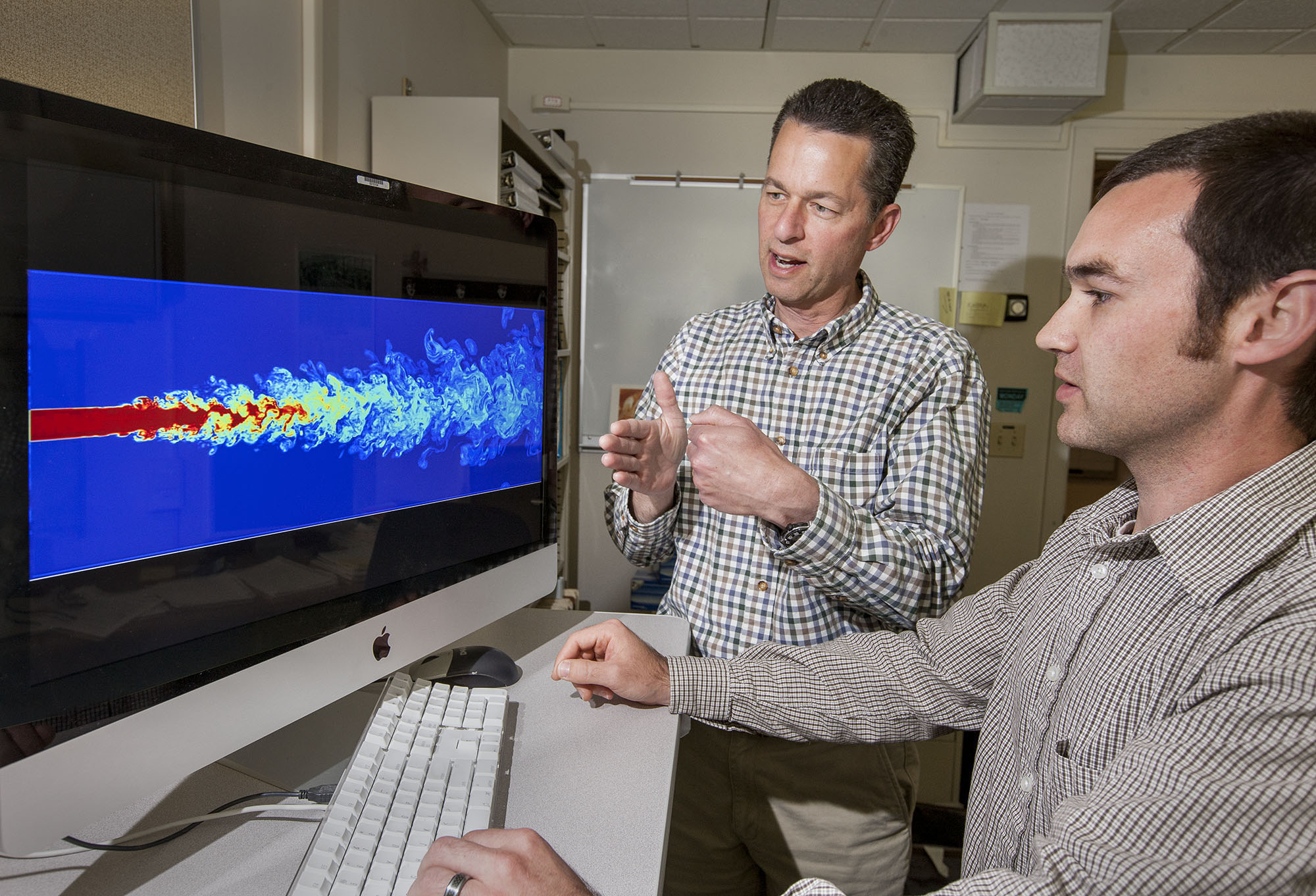
Scientists have successfully recreated an extreme, long-theorized form of planetary and stellar turbulence in a desktop-sized laboratory setting for the first time, offering new methods to study how distant worlds and Earth generate heat, movement, and magnetic fields.
Historically, researchers struggled to replicate this extreme turbulence in laboratories because boundary friction within experimental vessels throttles energy transfer, preventing researchers from capturing behaviors typical of large natural systems. According to Coventry University researchers, the international team demonstrated a specific fluid motion known as diffusivity-free turbulence. This process naturally occurs within the interiors of stars and planets, where it drives powerful currents and helps establish global magnetic fields.
Scientists Build Desktop Astrophysical Model
To bypass traditional experimental hurdles, the research team utilized liquid gallium—a metal remaining liquid near room temperature—housed inside a rotating experimental device. Rather than depending on conventional convection patterns, the scientists employed an exclusive style of rotating convection called oscillatory convection.
The team tracked three primary indicators of fluid behavior: heat transfer, internal temperature variations, and flow speed. Across all measurements, the empirical results closely matched long-standing theoretical predictions, while independent computer simulations further verified the findings.
The work indicates that this elusive diffusivity-free regime can manifest in relatively compact laboratory equipment, validating that desk-sized experiments can successfully model astrophysical processes occurring millions of miles away.
Collaborative Study Published in Journal
The research team includes Susanne Horn at Coventry University’s Research Centre for Fluid and Complex Systems, alongside Jewel Abbate and Jonathan Aurnou from the University of California, Los Angeles; Yufan Xu from the Princeton Plasma Physics Laboratory; Tobias Vogt from the Helmholtz-Zentrum Dresden-Rossendorf; and Keith Julien from the University of Colorado Boulder.
The collaborative study was published in Physical Review Letters and earned recognition as an Editors’ suggestion. The published findings establish a new experimental platform for exploring turbulent flows that govern the evolution of stars and planets, helping bridge the gap between theoretical models and real-world observations.
Related reading

Iapetus Moon Visible Near Saturn on Thursday, October 22
Shining at 11th magnitude on October 22, Saturn’s two-toned moon Iapetus is currently passing south of the ringed...

Researchers Find Rock from Papua New Guinea Reveals Unexpected Temperature Reversal
An international research team analyzing a rare metamorphic rock from Papua New Guinea has discovered that tectonic plates...

Researchers Propose Light-Based Method to Detect Hypothetical ‘Mirror Life
Researchers at the University of Strathclyde and Durham University have proposed the first light-based method to detect hypothetical...

Researchers in southwestern China discovered a nearly 5-pound fungus so unique it required a new family
Researchers in southwestern China have discovered a towering new fungus species, Dianjunus rex, that grows up to 50...