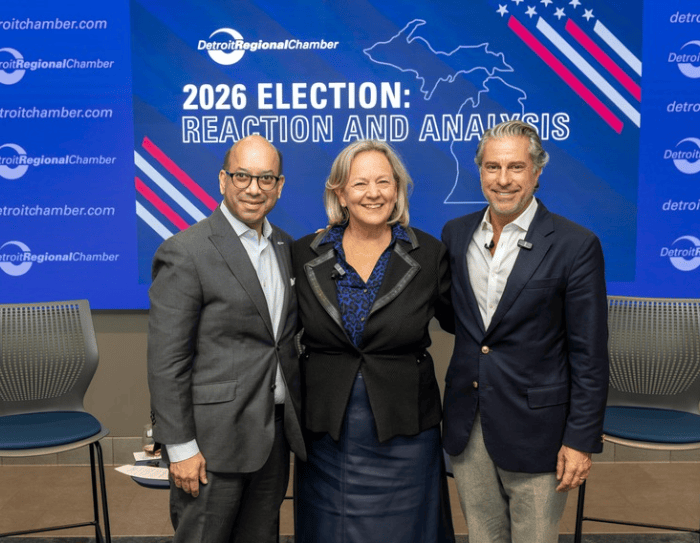
Following a significant Democratic sweep in Michigan’s recent elections, the state’s business community is bracing for a period of policy transition. As the dust settles from Tuesday’s results, industry leaders and political strategists are evaluating how the new political landscape will impact economic competitiveness, job creation, and Michigan’s long-term influence in Washington.
Michigan’s Shifting Political Landscape and Business Competitiveness
The results of Tuesday’s election have prompted an urgent conversation about the state’s economic trajectory. According to reporting from the Detroit Regional Chamber, the Democratic victory introduces a mix of potential opportunities and significant concerns for job creators. Venkee Baruah of the Chamber noted that while the organization continues to press for solutions to Michigan’s economic challenges, there is a clear need to move beyond simply highlighting problems to actively shaping the state’s fiscal environment.
“We keep pushing; simultaneously, the House is on Fire, but we keep posing the question of, you know, what’s the fix, right?” Baruah said, emphasizing the Chamber’s desire to avoid being seen as merely “howling at the moon.” The central question for the business sector remains how the incoming administration will manage economic development and environmental regulations—two pillars that will define Michigan’s attractiveness to private investment in the coming years.
The Decline of Michigan’s Congressional Seniority
Beyond the state house, the broader political environment has raised alarms regarding Michigan’s standing in the nation’s capital. Republican strategist Jason Roe observed that Michigan has historically derived significant power from members of Congress holding influential committee chairmanships. This seniority, he argues, has eroded, leaving the state with less leverage to secure federal resources or influence national policy in ways that benefit the Michigan economy.
“We don’t really have the kind of seniority that we once did,” said Roe.
This loss of institutional memory and power comes at a time when the state is navigating intense economic headwinds. As reported by CBS News, the electoral outcome arrived as a surprise to many, with polling once again failing to accurately predict the scale of the shift. This disconnect between public sentiment and pre-election data suggests a volatile environment where elected officials across the spectrum will face immediate pressure to deliver tangible results or risk rapid electoral turnover.
The Potential for Legislative Gridlock and Political Chaos
The transition period following the election is proving to be a jarring experience for campaign teams and political organizations alike. Jason Roe described the current moment as one where the momentum of a hard-fought campaign comes to a “screeching halt,” leaving participants physically and emotionally exhausted. Looking toward the next two years, Roe expressed concern that the divide between the executive and legislative branches could result in policy paralysis.
“I don’t think the House or the Congress would pass anything the president would sign, or the president would sign anything the House would pass, and then there’s the political chaos that emerges out of that,” Roe told CBS News. This assessment highlights the risk of stagnation, where the inability to find common ground on critical issues—such as infrastructure, education, and taxation—could leave the business community in a state of uncertainty, unable to plan for long-term growth.
The Opportunity for Policy Stability
Despite the concerns over gridlock, some analysts see a path toward productive governance if leaders choose to prioritize stability. As noted in the discussion highlighted by the Detroit Regional Chamber, the ultimate measure of success for Michigan’s new era will be whether the administration can translate election results into policies that directly address affordability and competitiveness.
Reflecting on the need for pragmatism, Alper suggested that the election results serve as a notice to both parties that voters expect action. “I see this as a moment of opportunity for people to roll up their sleeves and get in there and improve what’s not working,” Alper said. For the business community, this means that the next few months will be a critical window for advocacy, as they seek to ensure that the new administration’s focus remains on the fundamentals of economic health rather than purely partisan objectives.
As the state moves forward, several high-profile candidates have begun the formal process of transitioning to new roles or conceding their races. Republican gubernatorial candidate John James recently confirmed he reached out to Governor-elect Jocelyn Benson to offer his congratulations, while other candidates, such as Anthony Forlini, have publicly acknowledged the voters’ choice. While some races remain in the final stages of certification, the focus of the state’s economic leadership has clearly shifted from the ballot box to the boardroom, where the real work of legislative negotiation will soon begin.
Related reading
Republican John Sununu Blames Trump for Double-Digit Senate Defeat
John Sununu Blames President Trump for Senate Defeat Former New Hampshire Senator John Sununu is pointing directly at...

Tupac Shakur Murder Trial Attorney Michael Sanft Dies
Las Vegas Legal Community Mourns Attorney Michael Sanft Michael Sanft, a prominent Las Vegas attorney known for his...

Joshua Cabe Billings Passes Away in Payson Utah
Joshua Cabe Billings: A Life of Skill and Community in Payson Joshua Cabe Billings, a man known to...

Kansas City Tour Owner Launches New Holiday Light Guide Website
Kansas City launches digital map for holiday light enthusiasts A newly launched website is centralizing holiday light displays...