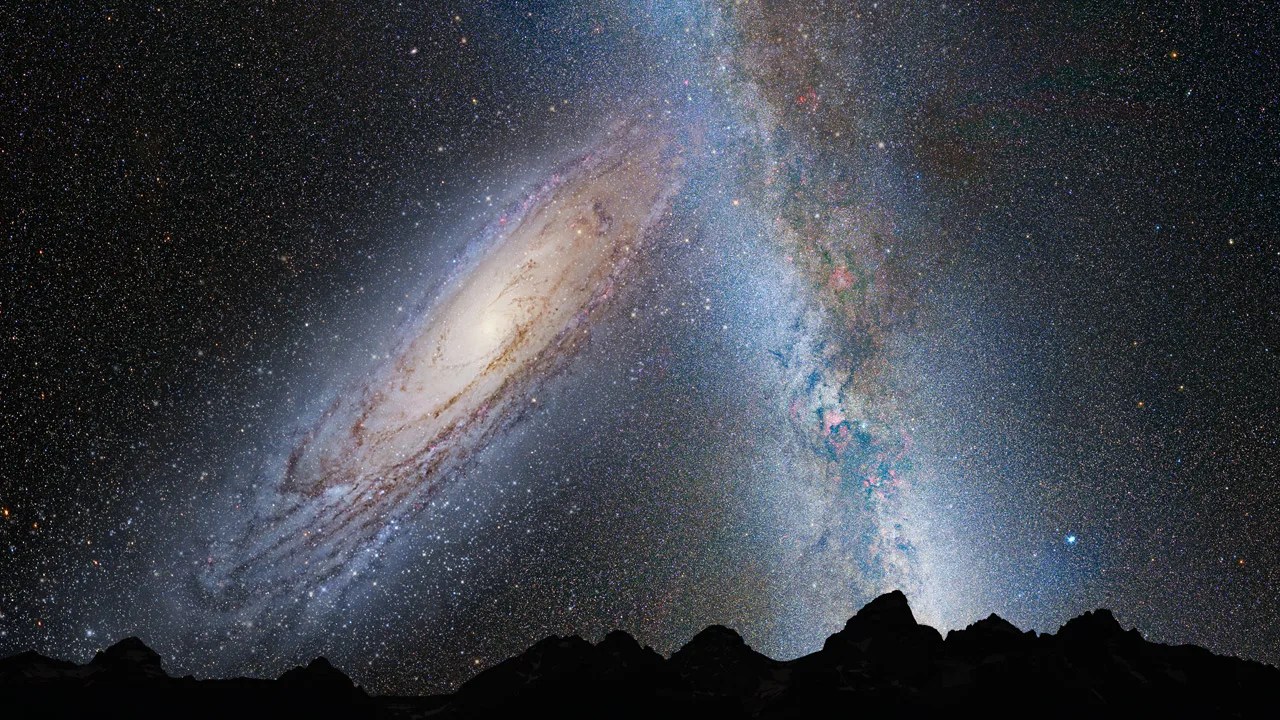
Astronomers simulating the early universe revealed that the Milky Way neighborhood began as thousands of smaller galaxies, offering the first direct predictions for what telescopes like Hubble and the James Webb Space Telescope can observe at cosmic dawn.
Milky Way Evolution Model Led by Harley Katz
Long before our home galaxy formed its familiar spiral disk, the region destined to become the Milky Way was a bustling cosmic collection of thousands of smaller galaxies. Some of these early systems were actively pumping out tons of new stars, while others consisted entirely of gas or contained dead stars and black holes, according to a new set of computer models.
The simulations, which required three years of run time on high-powered supercomputers, represent the most detailed model to date illustrating how a galaxy like ours evolved over its first several billion years. A team of scientists led by Harley Katz, assistant professor of astronomy and astrophysics at the University of Chicago, directed the project.
The Open Journal of Astrophysics
Named MEGATRON, the project spans six papers published in The Open Journal of Astrophysics. The research offers fresh insight into the makeup of early galaxies and the timeline of elemental formation. Because scientists cannot travel back to the dawn of the universe, building detailed computer models remains one of the primary methods for understanding space evolution.
Essentially, we put in all of the physics we think is relevant—gravity, hydrodynamics, radiation, chemistry, etc.—and then let it evolve and see if it reproduces what we actually see when we look around us today.
Harley Katz, assistant professor of astronomy and astrophysics at the University of Chicago
The influx of new data from the James Webb Space Telescope prompted researchers three years ago to incorporate these observations into a model of the galaxy’s first billion years. By running the clock backward in their simulations, the team mapped a complex web of large and small galaxies of varying types that ultimately merged into the modern Milky Way.
We follow thousands of subsystems in the model and directly compute what they all would have looked like with our most powerful space telescopes, which is many orders of magnitude more than what had been simulated before,
Katz explained, noting the incredible diversity observed among the simulated subsystems, some of which are bursting with star formation while others are dying or completely dead.
Big Bang Iron Abundance
The simulation yielded several unexpected discoveries, including the predicted existence of galaxies that do not contain any stars at all yet still manage to shine. While some of these unique systems may have previously housed stars that exploded or collapsed directly into black holes, others might have only ever contained gas.
The model addresses a long-standing puzzle in stellar astrophysics regarding iron abundance. Typically, smaller and fainter galaxies in the Milky Way contain less iron. However, this trend breaks down in extremely faint systems where iron levels appear constant regardless of mass—a behavior previous simulations failed to replicate.
The simulation points to explosions from an exotic class of star left over from the aftermath of the Big Bang as the underlying cause. Known as population III stars, these ancient bodies consist solely of the universe’s initial elements, hydrogen and helium. When they explode, they generate more iron than typical supernovae. Galaxies with sufficient gravity retained this iron, while smaller systems lost it to space.
Non-Equilibrium Physics in MEGATRON
None of these population III stars have ever been observed directly by telescopes. However, a separate paper within the project details how these stars form in a Milky Way-like environment and forecasts where they are most likely to exist today, potentially guiding future astronomical searches.
The simulation stands out for its unprecedented complexity. Researchers modeled the enrichment of individual chemical elements from individual stars following the Big Bang, coupling those observations with detailed calculations of gravity, chemistry, radiation, and stellar processes.
Significantly, the project represents the first large-scale simulation to incorporate detailed computations of non-equilibrium physics,
dropping the simplifying assumption that a system’s chemistry remains in equilibrium while galaxies continuously evolve.
What does the Milky Way look like at what we call cosmic dawn?
Katz asked. For the first time, we can directly predict what the early Milky Way would have looked like to telescopes like Hubble or the James Webb Space Telescope.
Worth a look
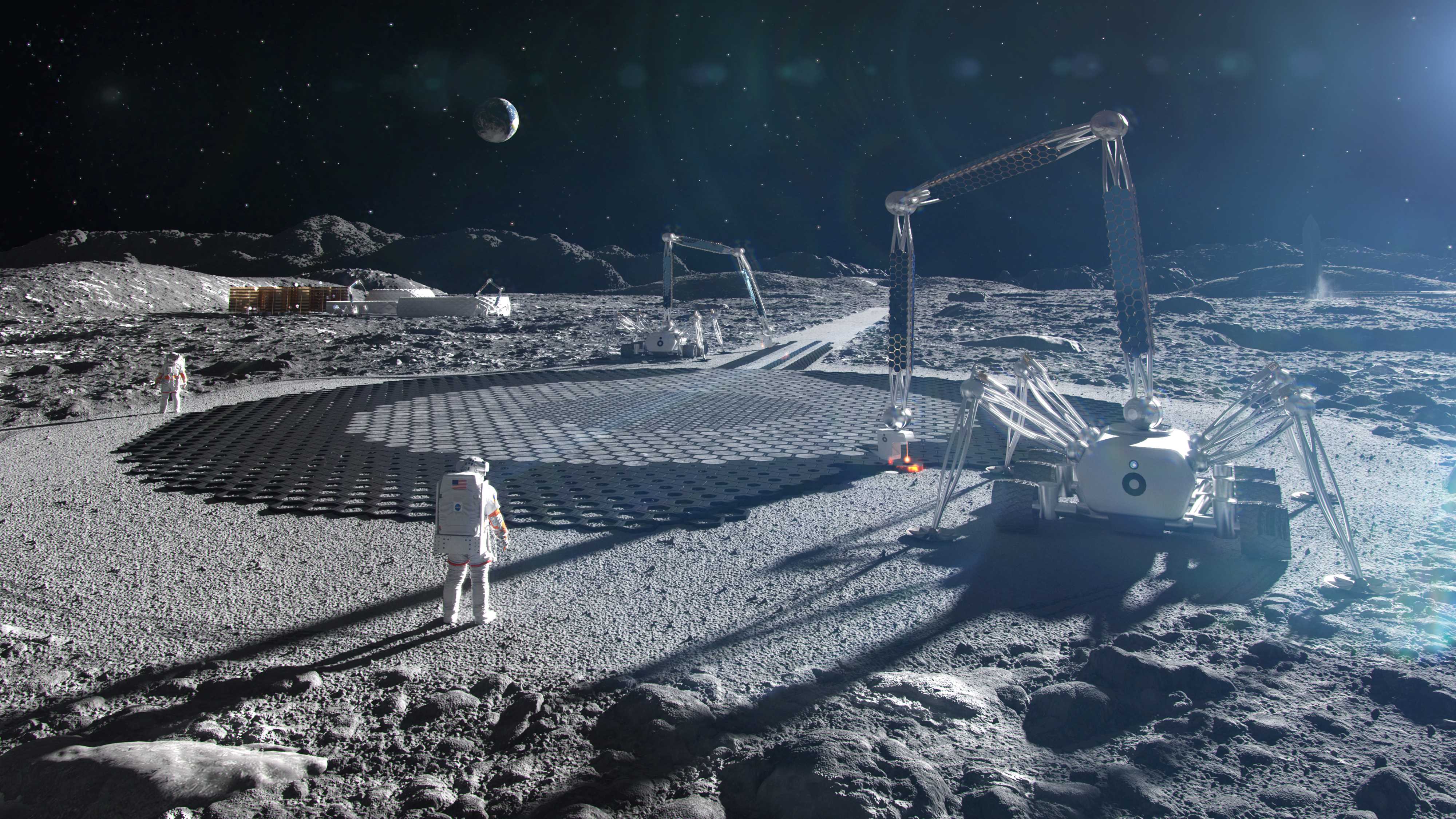
NASA Selects Three Investigations to Study Lunar Resources and Shelters
NASA chose three scientific investigations led by Ariel Deutsch of NASA’s Ames Research Center in California’s Silicon Valley...
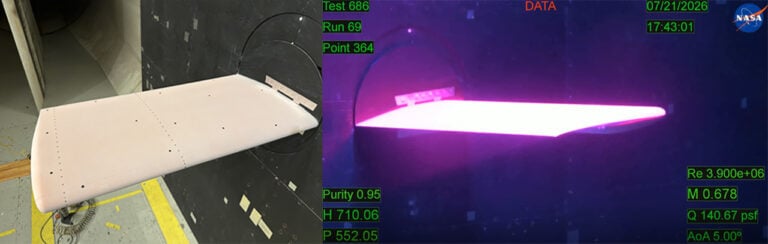
NASA Tests Pressure-Sensitive Paint on Moving Wing in Wind Tunnel
NASA researchers at Langley Research Center have completed the first unsteady pressure-sensitive paint tests on a freely moving...
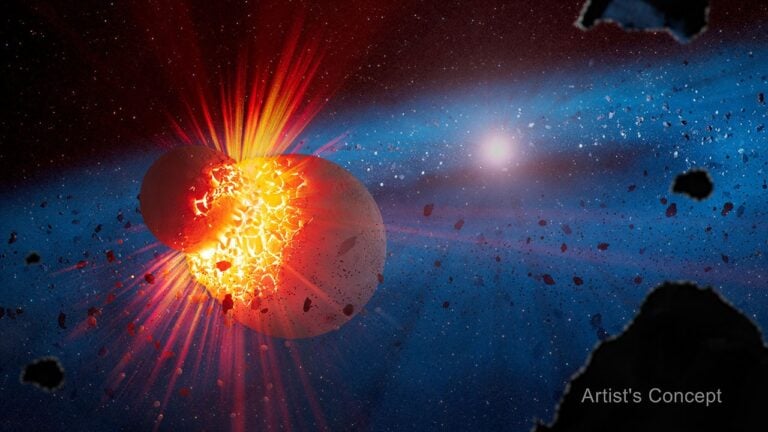
Webb Telescope Spots 21 Star Systems With Extreme Debris Disks
Astronomers using the James Webb Space Telescope and retired Spitzer archive data have identified 21 young star systems...
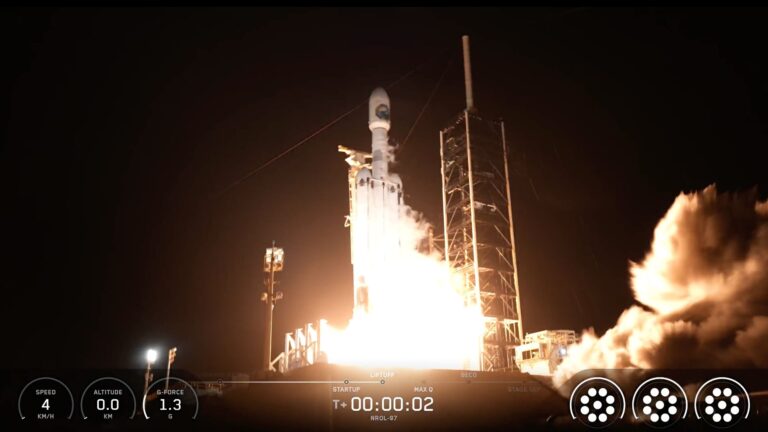
SpaceX Launches First Falcon Heavy Mission for National Reconnaissance Office
SpaceX launched a classified National Reconnaissance Office payload aboard a Falcon Heavy rocket from Florida on Thursday night,...