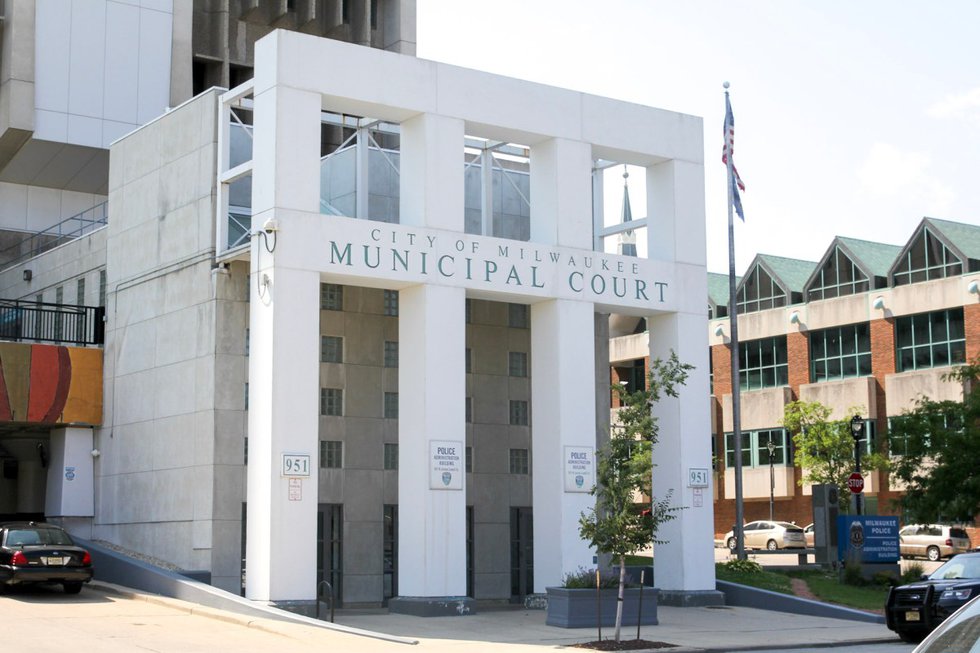
The Shrinking Footprint of Milwaukee’s Municipal Court
For two decades, the machinery of Milwaukee’s Municipal Court has been quietly idling down. Where the court once processed up to 160,000 cases annually during the late 2000s, the intake has plummeted. Recent data confirms that annual caseloads have remained well below 40,000 for the past three years. This isn’t just a minor statistical dip; it represents a fundamental shift in how the city handles civil ordinances and traffic violations.
In a newly published analysis for the Milwaukee Journal Sentinel, Mike Gousha and I tracked this trajectory using the court’s official annual reports. The numbers tell a stark story: between 2006 and 2025, adult cases fell by 72%, while juvenile matters—ranging from truancy to curfew violations—dropped by 94%. To understand why this matters, you have to look at how these cases reach the bench in the first place.
From Traffic Stops to Courtroom Dockets
Unlike circuit court, where a district attorney evaluates evidence before filing charges, municipal court operates on a more direct pipeline. When a police officer issues a citation for a traffic violation or an ordinance offense, that ticket effectively becomes a case the moment it is submitted. Paying that fine, whether by mail or online, serves as a plea of guilty or no contest. Consequently, the municipal court’s volume acts as a high-fidelity mirror of police activity.
The decline in court cases aligns precisely with a radical transformation in the Milwaukee Police Department’s (MPD) operational strategy. The era of “broken windows” policing—which emphasized strict enforcement of minor offenses to deter larger crimes—has largely retreated. The data bears this out with striking clarity. According to the Wisconsin Policy Forum’s Arresting Developments report, MPD arrests cratered from 51,000 in 2012 to just 9,000 in 2023. The change in traffic stops was even more pronounced, dropping from 150,000 in 2015 to 28,000 in 2023. Perhaps most dramatic of all, pedestrian stops plummeted from 46,000 to roughly 700 in that same eight-year window.
The Real-World Stakes of Policy Shifts
Why does this matter to the average resident? If you live in a neighborhood that relied on these interactions to maintain order, the change is palpable. If you represent a community that felt disproportionately targeted by high-volume discretionary stops, the drop represents a significant relief. Yet, the policy shift creates a tension that is difficult to reconcile. While the department has backed away from minor citations, its referrals for serious criminal offenses have remained steady or even ticked upward. In 2010, MPD referred roughly 12,000 felony and 16,000 misdemeanor charges to the DA; by 2024, those figures had climbed to 14,000 felonies and 19,000 misdemeanors.
This leaves us with a challenging civic question: Has the pivot away from aggressive, low-level enforcement gone too far, leaving some neighborhoods feeling less secure? Or, conversely, is the department finally making a more efficient use of its resources by focusing solely on serious, reported crimes rather than discretionary interactions?
The fallout from past abuse scandals involving MPD officers undoubtedly accelerated this change, forcing a rethink of how police engage with the public. But as the caseload statistics show, this wasn’t a subtle adjustment. It was a structural realignment. We are now living in the wake of that decision, and the long-term impact on public safety and community trust remains an open, evolving debate. The courtroom, once a bustling hub of minor ordinance enforcement, now stands as a quiet witness to a city that has fundamentally changed the way it polices its own streets.

U.S. Bancorp to Resume Share Buybacks and Expand Capital Markets via BTIG Acquisition
U.S. Bancorp, the Minneapolis-based banking giant, is preparing to resume share buybacks as its capital markets division gains...

Seattle Children’s Hospital explains VATER and VACTERL association
Understanding the VATER Association at Seattle Children’s Hospital For families navigating a new diagnosis of VATER—or the more...

Vermont Arts Council Awards Over $300,000 for Cultural Facility Improvements
Vermont Arts Groups Secure $307,322 for Facility Upgrades For many of Vermont’s cultural institutions, the line between fostering...

Houston Aims to Generate $1 Billion From New Film Industry Plan
Houston’s Five-Year Push to Become a Texas Film Hub Houston is betting big on the silver screen. As...