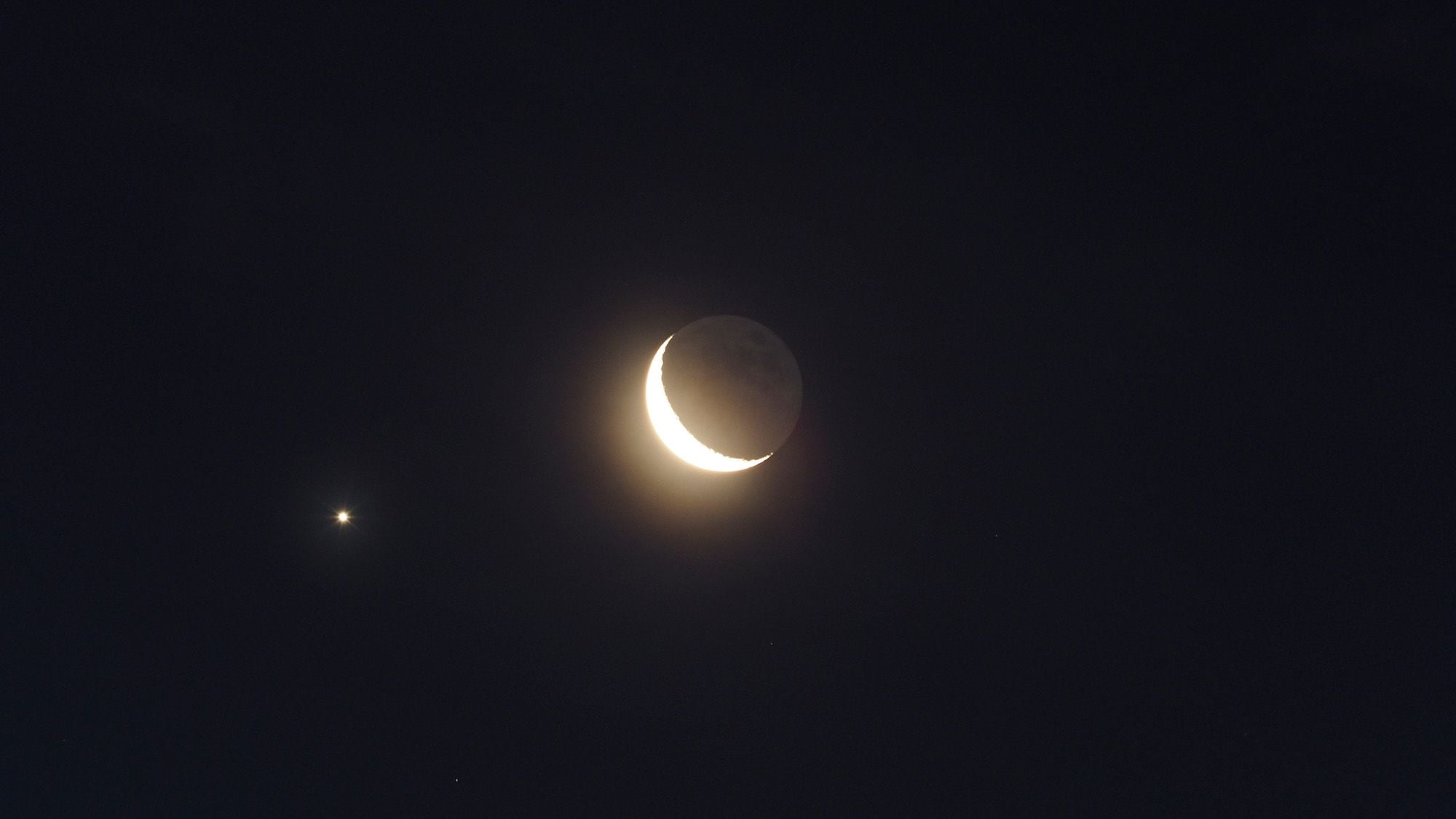
Skywatchers across much of eastern North America can watch a rare lunar occultation early Tuesday morning as a waning crescent moon passes directly in front of Jupiter, hiding the planet for up to an hour before it reappears in an event that will not repeat in the region for over a decade.
Visibility Across North America and Timing for Major Cities
Observers throughout the eastern and central United States, eastern Canada, and the Caribbean are positioned to watch the entire sequence unfold in darkness when the celestial alignment takes place in the predawn hours of Tuesday, Oct. 6, 2026. For viewers in the mountain states, only the planetary reappearance is visible, while regions further west experience the event below the horizon or see Jupiter simply grazed by the lunar limb.
In Chicago, the occultation runs from 3:22 to 4:17 a.m. CDT, according to calculations from the International Occultation Timing Association. Further east, cities like New York experience the cover-up from 4:23 to 5:27 a.m. EDT, while Atlanta watches from 4:15 to 5:17 a.m. EDT. Observers in Toronto view the passage between 4:25 and 5:22 a.m. EDT, and Boston records the window from 4:26 to 5:30 a.m. EDT. Additional cities in the viewing area include Detroit, where the occultation spans from 4:16 to 5:20 a.m. EDT; Miami, with a window from 4:20 to 5:09 a.m. EDT; Washington, D.C., running from 4:20 to 5:24 a.m. EDT; Philadelphia, spanning 4:22 to 5:26 a.m. EDT; and Montreal, where observers can watch from 4:30 to 5:26 a.m. EDT.
Telescopic Details and the Galilean Moons
No optical equipment is required to spot the planet near the lunar crescent without optical aid because Jupiter shines at a bright magnitude of -1.9. Pulling out binoculars or a small telescope transforms the event into a much more dramatic spectacle. Given Jupiter’s apparent diameter of 33.7″, the lunar disk takes approximately 60 to 70 seconds to completely cover the planet during ingress, and a similar duration to uncover it upon egress.
The moons Europa, Callisto, and Io precede the planet into occultation through a telescope, disappearing behind the bright lunar limb one by one in that specific sequence about five minutes before the planet slips out of view. Ganymede follows behind Jupiter, trailing by roughly 1.5 minutes. The climax of the event occurs when Jupiter swells from a tiny spark to full brilliance as it emerges from behind the unlit portion of the moon.
Waiting Periods Until the Next North American Alignment
The last comparable occultation visible across parts of North America took place on May 17, 2023, while lunar occultations of Jupiter occur on average once every 13 years for a particular location, according to Joe Rao, meteorologist and contributing editor for Sky & Telescope. Stargazers who miss the spectacle due to clouds or sleeping through their alarms face a lengthy wait following this October 6 alignment. The next lunar occultation of Jupiter visible from North America will not occur until September 28, 2034, with subsequent projections pointing toward late November 2037.
Keep reading

Saturn Reaches Closest Approach to Earth for the Year
Saturn stands roughly 784 million miles from Earth as opposition positions the ringed giant at its closest annual...

Researchers Identify Candidate Second-Generation Planet Orbiting White Dwarf
Circling its parent dead star every 4.4 days, a Jupiter-sized gas giant orbits the white dwarf HS 0209+0832...

UK Proposes Norfolk Housing Levy to Unlock Stalled Homes
Environment Secretary Angela Eagle launched a public consultation on 17 September for a Norfolk pilot scheme requiring housing...

Wilkes Subglacial Basin Ice Could Raise Sea Levels by Four Meters
East Antarctica's Wilkes Subglacial Basin contains enough ice to raise global sea levels by up to four meters,...