
NASA has selected 41 technology proposals from 37 American companies to accelerate the development of critical capabilities for future exploration of the Moon and Mars. These selections were made under the agency’s 2025 Announcement of Collaboration Opportunity (ACO), a program designed to foster innovation in space transportation, planetary surface operations, and long-term infrastructure.
The initiative aims to strengthen the nation’s space economy by allowing private industry to work alongside NASA using the agency’s specialized facilities, hardware, software, and technical expertise.
A Model for Public-Private Partnership
Since the ACO program began in 2015, NASA has supported more than 110 projects. The agency estimates it has contributed approximately $30 million in resources to these collaborations, while participating companies have invested an additional $32 million.
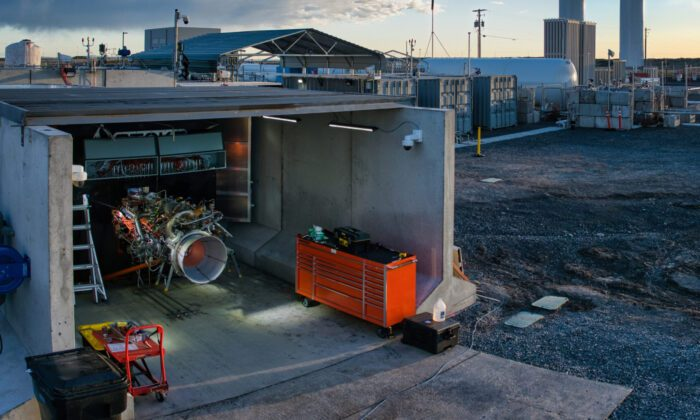
Under the ACO model, NASA does not provide direct funding to the selected companies. Instead, the partnerships are established through Space Act Agreements that typically last between 12 and 24 months. According to Greg Stover, director of the Advanced Research and Technology Division at NASA Headquarters, the program empowers American industry to become active partners in the agency’s missions.
"By tapping into commercial industry, NASA can rapidly develop key capabilities to support its most ambitious missions while fostering the nation’s robust space economy," Stover said.
Advancing Moon and Mars Infrastructure
The 2025 selections focus on high-priority areas, including propulsion components, guidance and navigation systems, landing technologies, in-space servicing, assembly, and manufacturing, and energy management.
Several companies are developing technologies specifically tailored to the harsh environments of the Moon and Mars:
- Power Generation: Lockheed Martin is working on a compact, modular power system designed for the Moon’s permanently shadowed regions.
Washington State Aerospace Leadership
Five companies based in Washington state were among those selected, highlighting the region’s role in the aerospace supply chain. Senator Maria Cantwell, Ranking Member of the Senate Committee on Commerce, Science and Transportation, noted that these projects advance launch systems and next-generation infrastructure.
The Washington-based selections include:
- Aerojet Rocketdyne (Redmond): Improving the affordability of advanced electric propulsion systems.
- Blue Origin (Kent): Assessing space-to-surface deceleration capabilities for landing on planetary surfaces.
- Starcloud Inc. (Redmond): Demonstrating high-performance computing to support spacecraft autonomy.
- STOKE Space Technologies (Kent): Advancing entry, descent, and landing capabilities for its "Nova" reusable launch vehicle, utilizing NASA Ames Research Center’s hypervelocity test facilities.
- Zeno Power Systems (Seattle): Conducting testing on compact nuclear batteries designed to provide reliable power in harsh environments like the lunar surface.
Expanding Horizons to the Red Planet
In addition to the ACO selections, NASA’s Mars Exploration Program has identified nine U.S. companies to conduct 12 concept studies for commercial services to support future missions to Mars. These studies, which include potential roles for payload delivery, communications relays, and surface imaging, are intended to support a strategy for more frequent, lower-cost missions over the next two decades.
Awards for these Mars studies range from $200,000 to $300,000 per study. Many of these proposals involve adapting existing lunar or Earth-orbiting technologies, such as "space tugs" and communication relays, for use at Mars.
"We’re in an exciting new era of space exploration, with rapid growth of commercial interest and capabilities," said Eric Ianson, director of NASA’s Mars Exploration Program. "Now is the right time for NASA to begin looking at how public-private partnerships could support science at Mars in the coming decades."
As these technologies mature, NASA anticipates benefits that extend beyond government missions, including the potential to open new commercial markets, reduce operational costs, and expand customer choice within the space sector.
Find more reporting in our Science section.
Keep reading

University of Queensland Researchers Propose Omic Technologies to Develop Heat-Adapted Chickpeas
Researchers at the University of Queensland have proposed a staged approach using new omic technologies to accelerate the...

President Daniel Chapo Urges Global Action on Climate Justice
Mozambican President Daniel Chapo called for strengthened international climate justice measures at a Maputo conference on October 14.
CHIME Telescope Detects Early Universe Hydrogen Signal Independently
Using only its own data, the Canadian Hydrogen Intensity Mapping Experiment (CHIME) telescope in British Columbia detected a...
NASA’s Perseverance Rover Breaks Opportunity’s Mars Mileage Record
NASA’s Perseverance rover has set a new off-world driving record on Mars, surpassing the mileage of its predecessor...