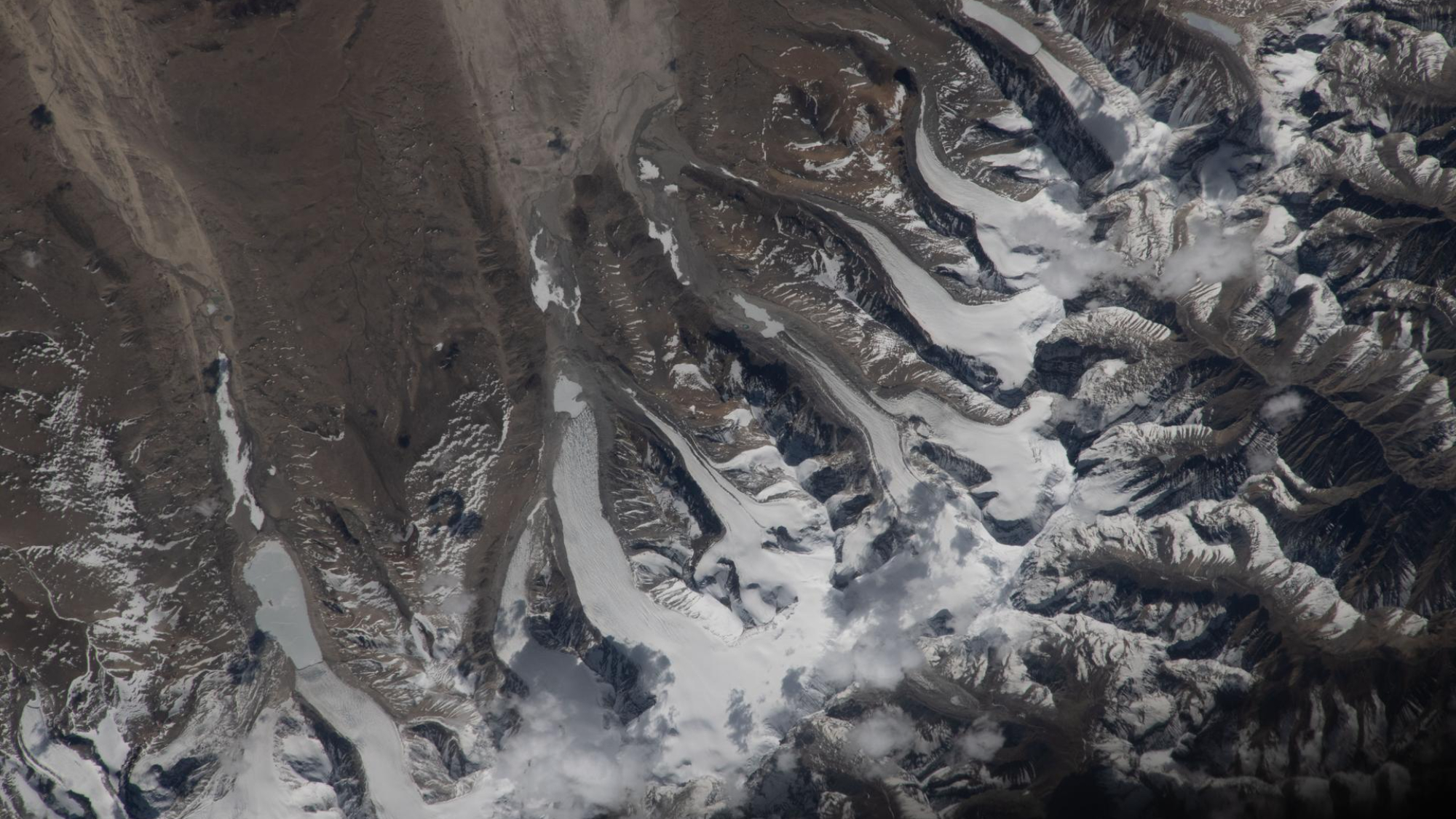
Recent observations from the International Space Station have provided a unique vantage point of the Himalayan mountain range, highlighting the massive, slow-moving rivers of glacial ice that carve through the landscape. Captured by NASA astronaut Jessica Meir from 259 miles above Earth, these images offer a perspective of the mountains—which span 1,500 miles across five countries—that remains impossible to achieve from the surface. While the imagery captures the scale of the region, researchers are using this data to better understand the rapid changes occurring within the global cryosphere.
The Mechanics and Formation of Glacial Ice
Glaciers are defined as slowly flowing masses of ice with significant erosive capabilities. According to geology instructor Sara Bennett, they function as metamorphic rock, formed through the compression and recrystallization of snow. For glacial ice to develop, more snow must accumulate in the winter than melts during the summer. Over decades or even centuries, the weight of overlying snow packs the buried layers into a dense substance known as firn, eventually expelling air to form glacial ice.
The Ecological Stakes of a Shrinking Cryosphere
The global decline of glaciers carries significant implications for human safety, water security, and ecosystem stability. The United Nations Environment Programme’s Mountains in Motion: Global Linkages from Ridge to River report warns that over the past two decades, glacier loss has escalated, with some regions experiencing a reduction of nearly 40 percent of their ice mass. If current greenhouse gas emissions continue, the world is on track to lose nearly all low-lying and tropical glaciers.
Glaciers act as “silent guardians” of freshwater, holding an estimated 70 percent of the world’s supply. This meltwater supports agriculture, energy production, and drinking water for millions. However, many river basins have already reached “peak water,” a threshold where the volume of glacial runoff begins a permanent decline. Projections indicate that one-third of the world’s largest river basins could see runoff drop by more than 10 percent by 2100.
Pollution and Hazard Patterns
Glaciers serve as archives of planetary change, trapping aerosols, bacteria, and biomass that provide researchers with records of past climates. However, these natural archives are increasingly acting as landing pads for modern industrial contaminants. Windborne pollutants, often black in color, accumulate on the surface of high-altitude ice. These particles trap heat, which accelerates the melting process and releases long-stored contaminants back into the environment.
The Future of Glacier Monitoring
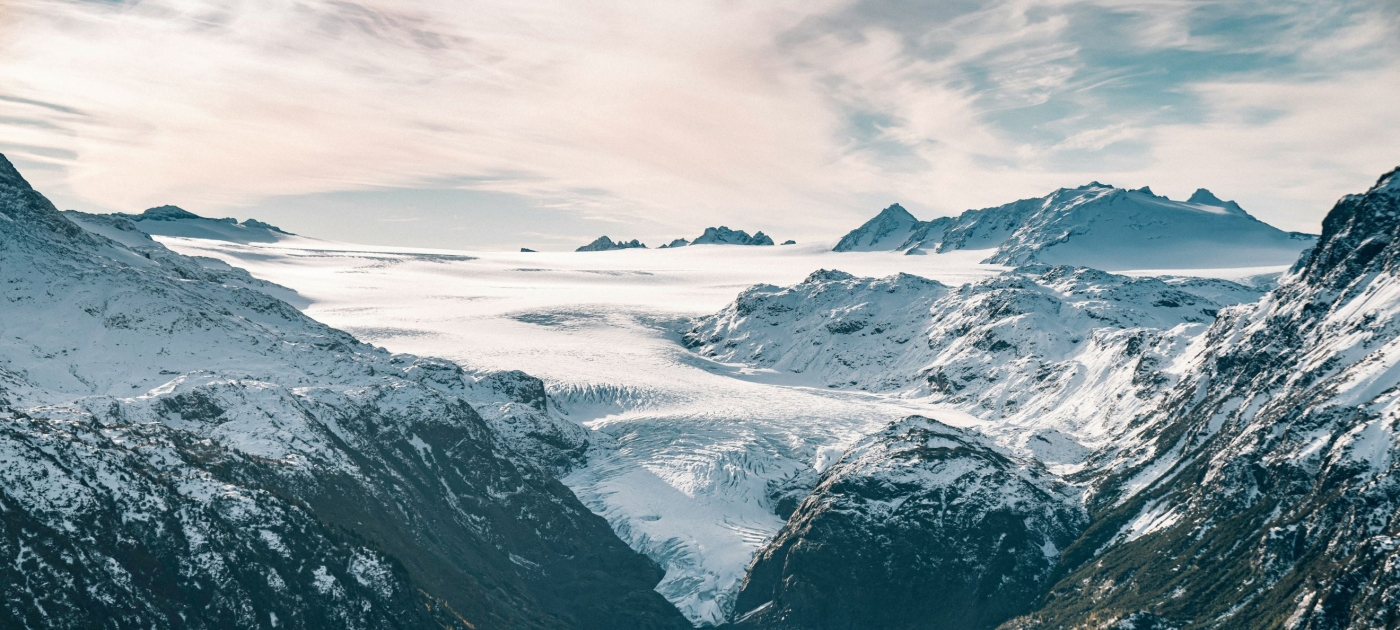
Meltwater supports freshwater systems, and retreating ice exposes new land for colonization by pioneer species. Yet, this transition is a double-edged sword: while new ecosystems may emerge, species specifically adapted to glacial environments face the loss of their only habitat.
The ability to monitor these changes from space is an essential resource for researchers. By tracking how glaciers melt, move, and flow, scientists aim to better prepare for the impacts of a warming planet. As Sonam Tashi, Director of Bhutan’s Department of Environment and Climate Change, noted, the rapid melting of these glaciers puts water security, food systems, and human safety at risk, emphasizing the urgent need for continued observation and understanding of these shifting natural systems.
Find more reporting in our Science section.
Keep reading

University of Queensland Researchers Propose Omic Technologies to Develop Heat-Adapted Chickpeas
Researchers at the University of Queensland have proposed a staged approach using new omic technologies to accelerate the...

President Daniel Chapo Urges Global Action on Climate Justice
Mozambican President Daniel Chapo called for strengthened international climate justice measures at a Maputo conference on October 14.
CHIME Telescope Detects Early Universe Hydrogen Signal Independently
Using only its own data, the Canadian Hydrogen Intensity Mapping Experiment (CHIME) telescope in British Columbia detected a...
NASA’s Perseverance Rover Breaks Opportunity’s Mars Mileage Record
NASA’s Perseverance rover has set a new off-world driving record on Mars, surpassing the mileage of its predecessor...