The Transactional Shift in the Taiwan Strait
Washington is recalibrating its role in the Indo-Pacific, moving away from ideological defense toward a framework of economic and military security.
This shift follows the January 3, 2026, U.S. military operation in Venezuela that resulted in the seizure of deposed President Nicolás Maduro, an event that signaled the practical application of the “Donroe Doctrine,” according to the SAIS Review of International Affairs.
The operation in Venezuela serves as a primary example of the “America First” approach detailed in the U.S. National Security Strategy (NSS) unveiled in December 2025. This new strategic document emphasizes a realist, transactional foreign policy that prioritizes domestic prosperity and the securitization of migration over traditional global primacy.
For Taiwan, this evolution raises a fundamental question regarding the reliability of U.S. support. While the new NSS adopts a more measured stance toward China and Russia than the “pacing challenge” or “revisionist power” labels used by previous administrations, it explicitly links American competitiveness to the stability of the Indo-Pacific.
Economic Security as Deterrence
The NSS frames the Taiwan crisis through the lens of economic and military stability rather than democratic ideology. The document identifies the South China Sea as a vital commercial artery that must not fall under the control of a “hostile power” capable of imposing tolls or closing lanes of commerce at will.
Taiwan’s strategic value is increasingly defined by its semiconductor dominance and its position along the Second Island Chain, which extends from Okinawa through Guam and the Northern Mariana Islands. This geographic and technological centrality provides a new rationale for U.S. involvement: protecting the global supply chain.
However, this “silicon shield” may be undergoing a transformation. A recent agreement involving $250 billion in Taiwanese investment to expand semiconductor production within the United States suggests a trend toward reshoring. While this move improves global supply chain stability, it could simultaneously reduce the strategic necessity of maintaining Taiwan's geographic exclusivity as a deterrent.
China’s Calculated Coercion
Following the U.S. intervention in Venezuela, Chinese social media saw increased calls for similar decisive measures regarding Taiwan. Despite this public fervor, the Chinese Foreign Ministry maintained a measured diplomatic tone, labeling the Venezuelan operation a “hegemonic act” that violates international law and the UN Charter.
Beijing continues to frame the Taiwan issue as a domestic matter, and it possesses legal instruments—including provisions for trial in absentia and capital punishment for separatists—that could theoretically justify “law enforcement” actions. Yet, experts suggest a direct military strike like the one seen in Venezuela remains unlikely.
“Taiwan’s professional military and robust civil society create a high-friction environment that limits China’s room for maneuver,” noted Professor Alexander Chieh-cheng Huang of Tamkang University.
Unlike the internal instability that facilitated the Venezuelan operation, Taiwan maintains resilient democratic institutions and a professional military capable of filling political vacuums. Consequently, China appears to be favoring a spectrum of coercive “gray zone” tactics, such as the “Justice Mission 2025” exercises, to intimidate the island without triggering full-scale war.
The Cost of Defense
The U.S. commitment to Taiwan is evident through large financial and hardware commitments, even as the relationship becomes more explicitly transactional. Recent defense developments include:
| Date | Initiative / Action | Primary Detail |
|---|---|---|
| December 2025 | U.S. Arms Package | $11.1 billion including HIMARS and Altius munitions |
| December 2025 | Pax Silica Framework | Securing global AI and semiconductor supply chains |
| FY 2026 | NDAA Provisions | Legislative support for Taiwan defense capabilities |
While these measures help maintain a conventional military balance, Taiwan faces internal hurdles. Political polarization and a divided government have led to legislative gridlock, specifically regarding the allocation of defense budgets. This domestic friction occurs even as the “porcupine strategy”—aimed at making an invasion prohibitively costly—becomes more urgent.
Taiwan is attempting to mitigate its dependence on a single partner by diversifying its international ties. This includes the New Southbound Policy Plus (NSP+) launched in March 2025, as well as enhanced trade and digital agreements with the United Kingdom, Japan, and the European Union.
As Taiwan integrates further into global networks of interdependence, the central tension remains: can a transactional Washington maintain the resolve required to protect a partner whose security is increasingly tied to American economic interests?
Worth a look
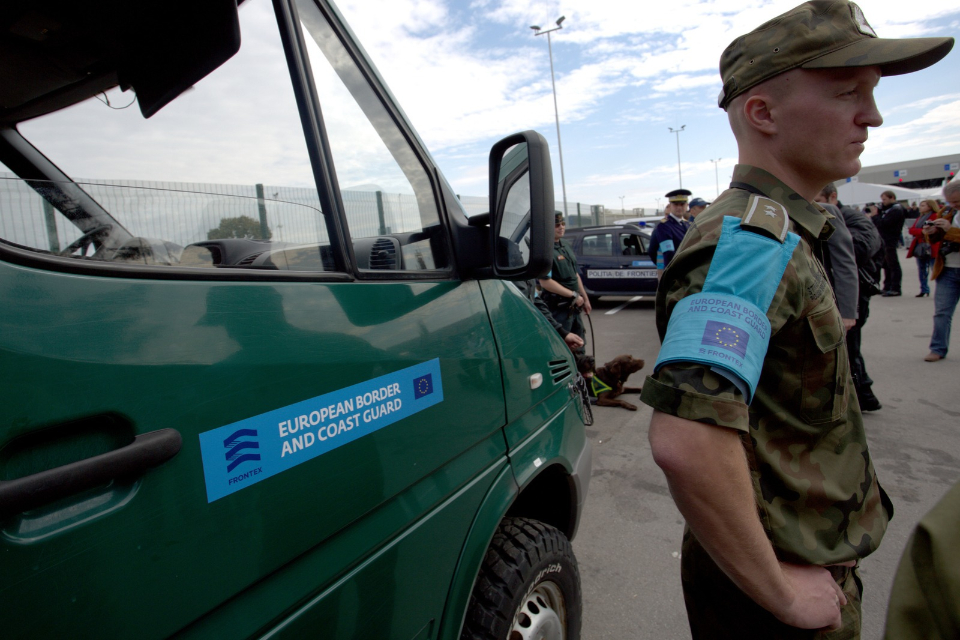
EU Commission Proposes 30,000-Strong Frontex to Lead Deportations
On 9 November 2026, the European Commission wants to transform Frontex into the central engine for European Union...
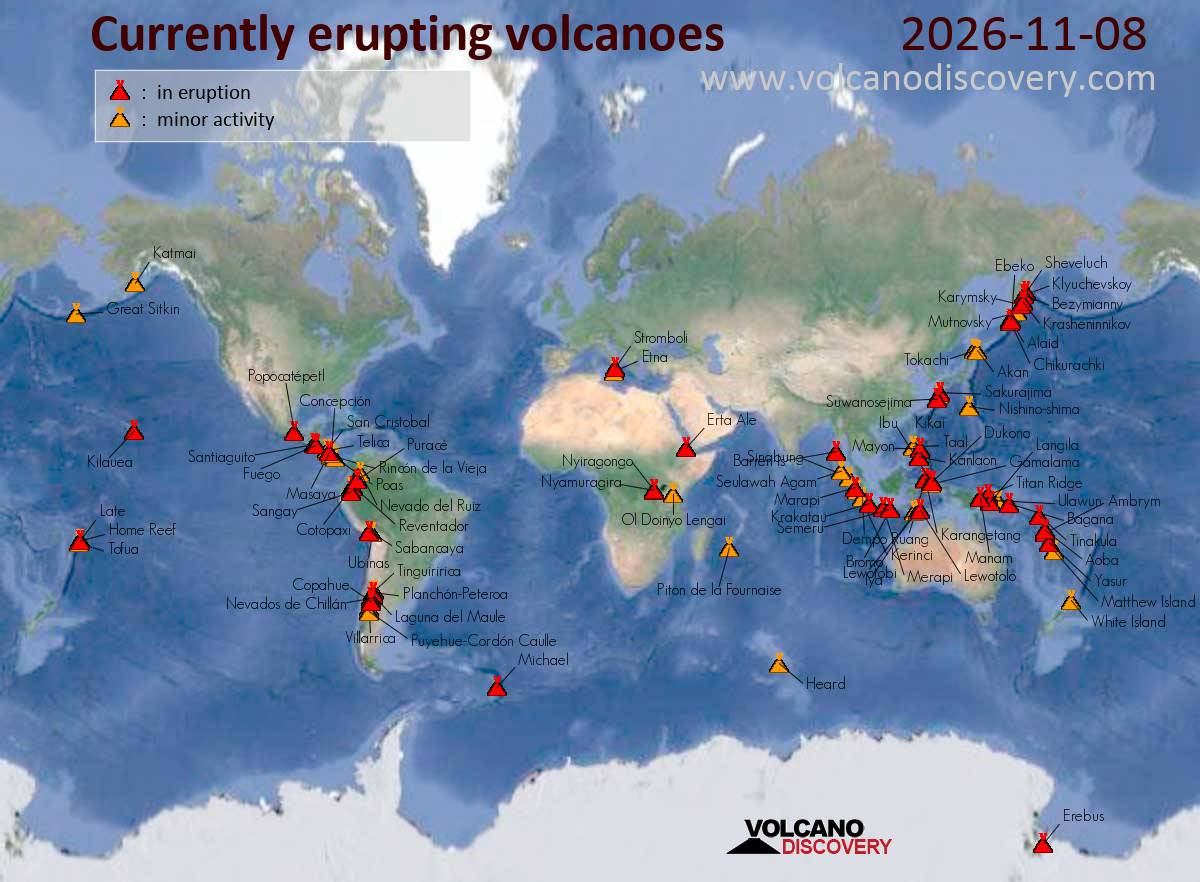
Popocatépetl, Semeru and Other Volcanoes Report Active Ash Plumes
Multiple volcanoes across the Pacific Ring of Fire and the Americas are currently experiencing explosive activity, sending ash...
For more than half a decade, the military junta led by General Min Aung Hlaing has maintained its
The Myanmar Junta’s Five-Year Survival Strategy For more than half a decade, the military junta led by General...
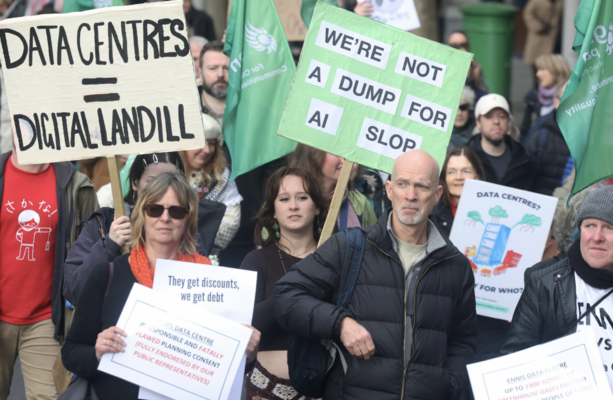
Thousands Protest in Ireland Demanding Moratorium on Data Centre Expansion
Thousands March in Dublin Against Data Centre Expansion Thousands of demonstrators converged on Dublin’s Parnell Square on Saturday...