
Philippine Unemployment Rises to 5.4% as Labor Force Expands With Fresh Jobseekers
More Filipinos entered the labor force, driving the nation’s unemployment rate up to 5.4% in September, BusinessWorld Online reported. While the absolute number of employed individuals climbed significantly, the rapid influx of new jobseekers outpaced the economy’s immediate capacity to absorb them.
The latest figures from the Philippine Statistics Authority (PSA) show that the country’s total unemployed population reached 2.86 million individuals in September. This marks an increase from the 1.96 million jobless recorded in September 2025 and edges past the 2.77 million reported in August, according to the agency’s monthly Labor Force Survey.
Youth and Young Adults Drive Labor Influx
National Statistician Claire Dennis S. Mapa pointed directly to demographic shifts during a livestreamed news briefing. The surge was propelled primarily by younger citizens stepping into the workforce for the first time.
During a livestreamed news briefing on Friday, National Statistician and Civil Registrar General Claire Dennis S. Mapa pointed out that individuals between 15 and 24 years old accounted for the largest annual increase among new labor market entrants at 988,000. Meanwhile, additions for the 35 to 44 cohort stood at 451,000, alongside 433,000 for those aged 45 to 54.
Mr. Mapa also noted that a higher proportion of men entered the labor market during this period compared to the previous year. Overall, the national labor force expanded to 53.19 million people in September, lifting the labor force participation rate to 64.5% from 64.0% the month prior. Youth labor participation specifically jumped to 34.1%, drawing millions of young workers into active economic engagement.
Lumobo sa 2.86 milyon ang bilang ng mga Pilipinong walang trabaho noong September 2026, mas mataas kumpara sa nakaraang buwan at sa kaparehong panahon noong nakaraang taon. Batay sa pinakahuling Labor Force Survey ng Philippine Statistics Authority (PSA), tumaas sa 5.4 percent… pic.twitter.com/3Vlk127t8h
Employment Climbs Even as Jobless Rates Tick Up
The rising unemployment rate masks a growing absolute workforce. Total employment climbed to 50.32 million in September, up from 49.6 million a year earlier and 49.79 million in August. However, because the influx of jobseekers was so steep, the employment rate slipped to 94.6%, down from 96.2% a year prior and slightly below August’s 94.7%.
Sectoral performance presented a mixed picture across the economy. The service sector maintained its position as the dominant employer, capturing 62.2% of total employment. Agriculture accounted for 20.7%, while industry represented 17.1%.
Wholesale and retail trade, alongside the repair of motor vehicles and motorcycles, remained the single largest source of jobs, supporting 19.9% of workers. Accommodation and food service activities posted the most dramatic annual gains, adding 834,000 jobs. Transportation and storage chipped in another 254,000 positions.
Construction Slump Drags Down Industrial Numbers
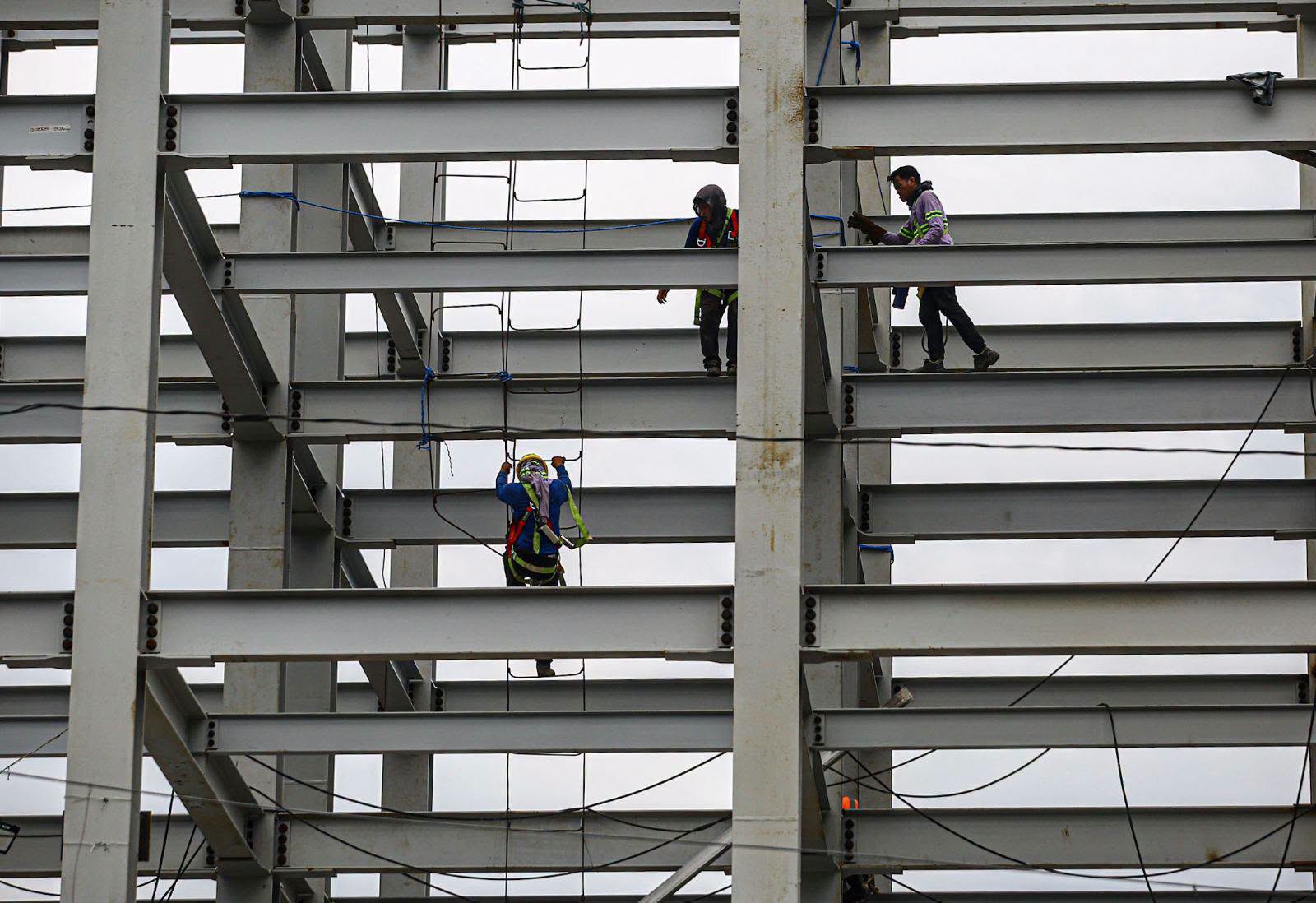
Conversely, the industrial sector faced headwinds, led by a sharp contraction in construction. The construction industry shed 271,000 jobs year-on-year, driven largely by a steep drop in public construction projects and rising material costs.
Mr. Mapa explained that building material expenses, particularly for home repairs and maintenance, climbed at an annual rate of about 5.5%. Building activities dropped notably, with residential and commercial building construction alone losing roughly 329,000 positions.
Despite these industrial losses, underemployment showed measurable improvement. The underemployment rate—which tracks workers seeking extra hours or secondary jobs—declined to 11.0% in September. This represented 5.56 million workers, down from 11.1% a year earlier and 11.9% in August. Out of these underemployed individuals, 61.4% worked fewer than 40 hours a week, while the remaining 38.6% already logged 40 hours or more but still needed supplementary income.
READ | September 2026 Employment Rate 📊 The employment rate in the Philippines was 94.6% in September 2026, lower than the recorded September 2025 employment rate of 96.2%. Moreover, it was also lower than the recorded August 2026 employment rate of 94.7%. pic.twitter.com/FiKXOlzLoe
More on More Filipinos
[1/2] Nitong Setyembre 2026, ang mga sumusunod ang nakapagtala ng pinakamalaking pagtaas sa bilang ng mga may trabaho o negosyo ayon sa major occupation group kumpara noong Setyembre 2025: 1. Elementary occupations, +699 thousand; 2. Service and sales workers, +594 thousand;
Employed Filipinos up, underemployment declines in September MANILA – The Philippine Statistics Authority (PSA) said the number of employed Filipinos rose in September while those who are underemployed declined. In a briefing on Friday, National Statistician Dennis Mapa said… pic.twitter.com/lPQrj6cFdE
Sa populasyon ng labinlimang (15) taong gulang pataas, ang bilang ng nasa labor force o mga indibidwal na employed o unemployed ay nasa 53.19 million nitong Setyembre 2026. #PHEmployment @mapa_dennis
Worth a look

WashU Medicine Researchers Verify New Methods to Detect Rare Somatic Mosaicism DNA Changes
Washington University Researchers Verify Genetic Tools for Rare DNA Changes Washington University School of Medicine researchers have confirmed...

Irish Academic Tom Felle Falsely Claimed Doctorate from London University
A leading Irish academic and prominent voice on media disinformation has found himself at the center of an...

AI Decodes Gene Regulatory Networks to Reprogram Glioblastoma Cell States
Cellular Plasticity Allows Glioblastoma to Evade Anti-Cancer Treatments Glioblastoma has long frustrated clinicians and researchers because its cells...
New tRIBO-seq Method Reveals How Active tRNAs Drive Protein Synthesis
Scientists Catch tRNAs in the Act, Rewriting How We See Cell Biology For decades, scientists have been taking...