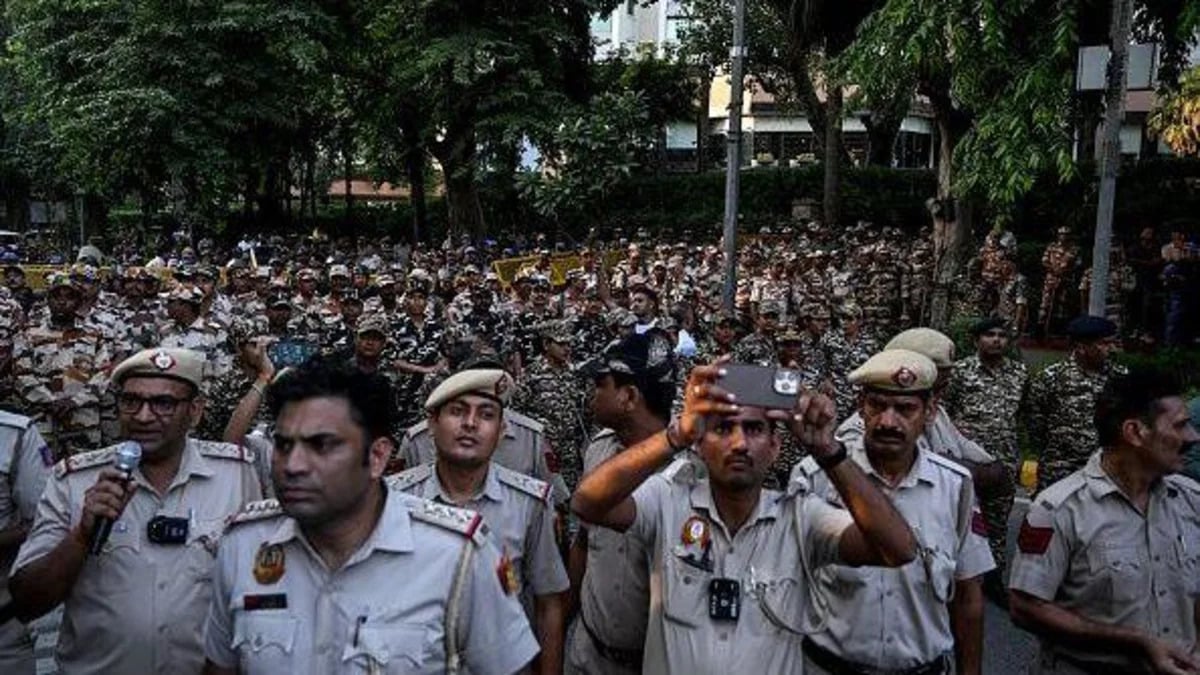
Following a massive security clampdown and the detention of thousands in New Delhi, a local court ordered the release of Cockroach Janta Party founder Abhijeet Dipke and two senior leaders on Sunday, October 11, 2026, as nationwide protests demanding the resignation of India’s election chief continued.
New Delhi experienced an unprecedented security lockdown over the weekend as tens of thousands of police and paramilitary personnel were deployed across the capital to block a planned demonstration at Jantar Mantar. Authorities erected massive metal barricades, shut dozens of metro stations, cancelled numerous train services, and suspended mobile internet across the central business district to thwart the gathering.
The protests were organized by the satirical online movement turned youth pressure group known as the Cockroach Janta Party, alongside various student groups, opposition parties. Demonstrators rallied to demand the resignation of Chief Election Commissioner Gyanesh Kumar.
Court Orders Release of CJP Leaders
The confrontation escalated dramatically on Saturday when police officers boarded an incoming Air India flight upon its arrival from Mumbai to detain CJP founder Abhijeet Dipke alongside senior associates Saurav Das and Ashutosh Ranka. Dipke addressed fellow passengers before disembarking, stating, I have come to get arrested.
Following their overnight detention, an executive magistrate’s court in New Delhi ordered the release of Dipke, Das, and Ranka on Sunday morning. According to CJP legal head Ratna Singh, the trio was freed on the condition of no breach of peace for one year. Police sources and interior ministry officials reported that more than 2,000 people were detained across the capital during Saturday’s crackdown, though most were released late Saturday night. CJP leaders claimed the true number of detained protesters reached as high as 15,000, while other local reports placed the figure around 5,000.
International Criticism Follows Mass Arrests
The mass detentions triggered swift international criticism. A UN body called on authorities to ensure that the right to peaceful assembly was respected and to pursue meaningful dialogue regarding public concerns. Amnesty International warned that the arrests reflected desperate attempts by the government to suppress critical voices, while the Committee to Protect Journalists called for the protection of reporters covering the unrest.

India’s foreign ministry dismissed the UN’s remarks as an unwarranted interference in the internal affairs of India, describing the international approach as selective. Meanwhile, domestic political tensions remained severe. Congress party president Mallikarjun Kharge condemned the heavy-handed police response on social media, declaring that the government had transformed the country into a muzzled democracy.
Movement Faces State Elections Ahead
The Cockroach Janta Party traces its unusual origins to May 2026, when movement founder Abhijeet Dipke posted a satirical question on X asking what would happen if all jobless youth, whom India’s Chief Justice had metaphorically likened to cockroaches, united together. The post went viral, fueling deep-seated frustrations over unemployment, exam paper leaks, and institutional accountability. The group’s summer demonstrations previously forced the resignation of India’s education minister.
With crucial state elections approaching—beginning with polls in the populous state of Uttar Pradesh next year and general elections scheduled for 2029—political analysts note that the movement’s persistence poses a challenge. Political analyst Nilanjan Mukhopadhyay noted that Prime Minister Modi faces an increasingly precarious political environment as youth-led opposition gathers momentum across the country.
Keep reading
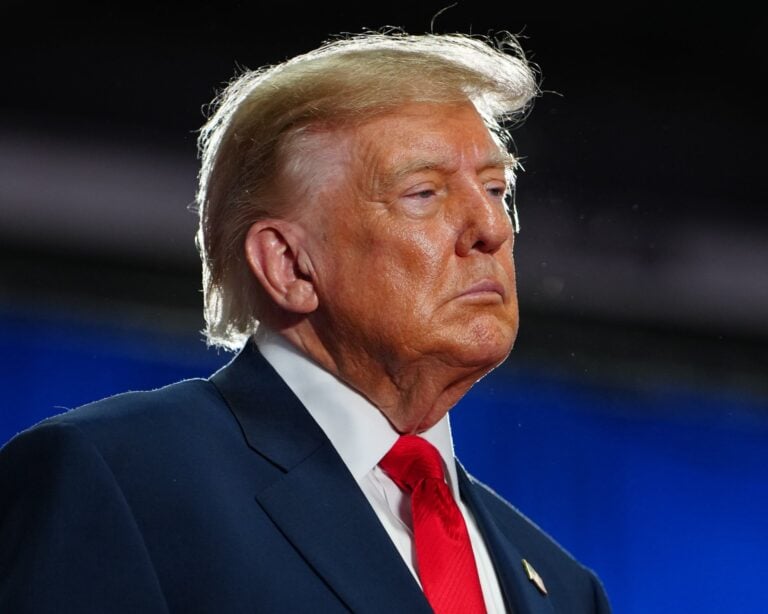
Trump says Norway has an ‘indelible stain’ for not awarding him Nobel Peace Prize
Navi Pillay, a South African jurist and former United Nations human rights chief, won the 2026 Nobel Peace...
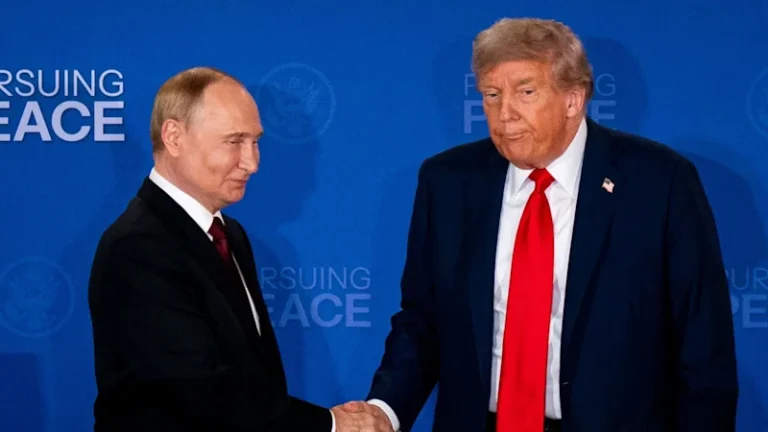
Trump Announces Russian Diesel Deal as Zelensky Condemns Agreement
US President Donald Trump announced a deal with Russian President Vladimir Putin to import Russian diesel into the...
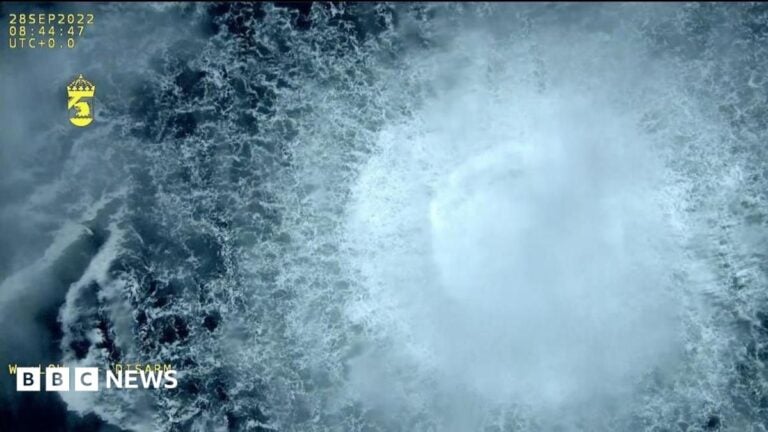
Germany Indicts Former Ukrainian Officer in Nord Stream Sabotage Case
Four years after underwater explosions ruptured the Nord Stream pipelines, Germany’s federal prosecutor has indicted a former Ukrainian...
Malaysia Tables Record 459.8 Billion Ringgit Budget to Boost Welfare
Malaysia Prime Minister Anwar Ibrahim tabled an expansionary budget of 459.8 billion ringgit on October 9, 2026, boosting...