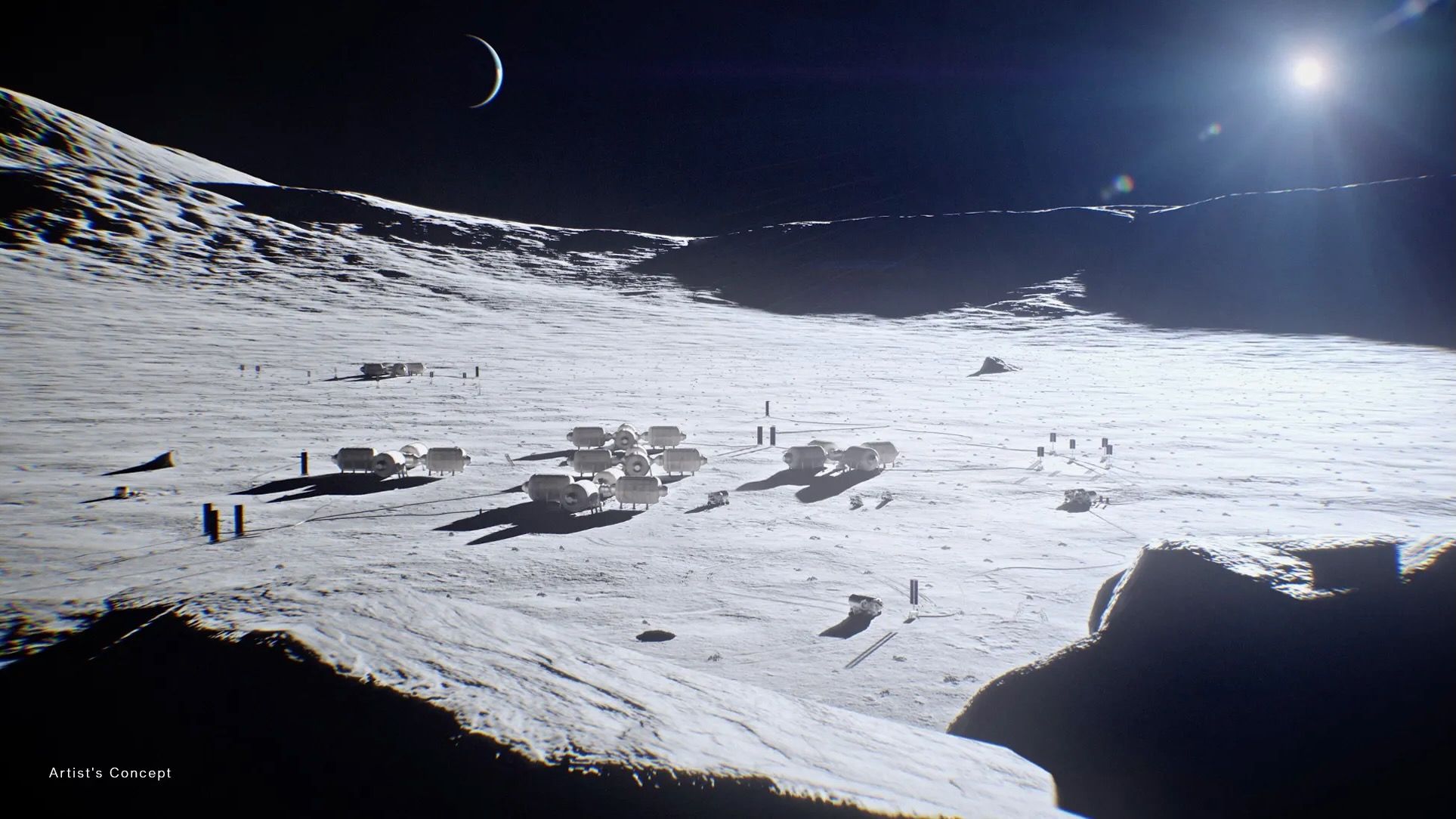
Purdue University researchers have developed a lightweight aerogel from simulated moon dust and recycled cardboard fibers that could insulate future lunar habitats. Lab tests show thermal conductivity as low as 30 milliwatts per meter-kelvin.
The study, published September 18 in ACS Sustainable Chemistry & Engineering, demonstrates an in-situ resource approach that blends regolith simulant with cellulose from waste packaging.
“Sustaining a long-term presence on the moon will require us to rethink how we use local resources,” said Wei, a professor in the James Tarpo Jr. and Margaret Tarpo Department of Chemistry.
The work addresses a blunt economic reality: shipping cargo to the moon costs about $544,000 per pound ($1.2 million per kilogram). NASA’s Artemis program targets a sustainable moon base by 2032. Every kilogram produced on site instead of launched from Earth changes the budget.
How the aerogel is made
Professor Alexander Wei and graduate researcher Jacob Staker combine shredded paper fibers, water, and lunar highland simulant (LHS-1) in a planetary ball mill with heavy ceramic balls. The mineral grains fracture the cellulose into nanofibrillated strands less than one micron wide — eight times thinner than fibers milled without regolith. Those ultrafine strands bind the dusty particles into a connected network that holds shape while staying mostly empty space.
The slurry is frozen and converted to aerogel by supercritical drying in the current lab process. Wei’s team is now studying freeze-drying (lyophilization) for lunar production. The surface’s natural vacuum and subfreezing nighttime temperatures would turn ice directly to vapor and allow water recovery.
“The mineral-assisted milling process is attractive because the equipment is relatively simple with low energy requirements, making it compatible with the resource constraints faced on the moon,” Wei said.

low cellulose batches insulate best yet shrink
Eighteen test batches measured in air registered thermal conductivity between 30 and 45 milliwatts per meter-kelvin — the lowest values approaching still air at roughly 26 mW/m·K. In the moon’s vacuum, pore gas conduction disappears, so effective insulation should improve further. Flight-like vacuum testing has not yet been done.
Insulation and stiffness pull in opposite directions. Low-cellulose batches (1 percent) insulated best but shrank 52 percent during drying and came out soft. High-cellulose batches (9 percent) shrank only 3.2 percent and were nearly 300 times stiffer under compression, but conducted more heat.
“Rather than trying to make the world’s best aerogel, we’re looking for the sweet spot where we can get the properties we need with the limited resources we have available,” Wei said. Design-of-experiments modeling pointed to a composition around 4.3 percent cellulose in water with 25 percent regolith in the aerogel as the practical balance.
Statistical modeling identifies optimal recipes
A statistical model fitted to the 18 batches pointed to a recipe of 61.2 percent regolith by weight that achieved the study’s best thermal conductivity of 30.5 mW/m·K. That mix shrank by roughly half and failed the strength requirement, Orbital Wire reported.
The model also suggested a second balanced recipe with 30.8 mW/m·K conductivity and 18.5 percent shrinkage. It contained only 25 percent dust. The model required at least 60 percent dust because lunar dust is far more plentiful than waste paper, the outlet added.

Earth.com said that empty space accounted for 79.3 percent to 98.6 percent of the volume in the samples, which insulates the interior by maintaining the temperature of what is inside. In total, 18 batches were made and the recipe was varied between them, the outlet reported.
Next steps target lunar production methods
Wei and Staker are studying lyophilization, or freeze-drying, for future lunar production. Supercritical drying needs high-pressure equipment and carbon dioxide that are not readily available on the Moon, The Morning Science reported. The published samples were finished with supercritical drying at NASA’s Glenn Research Center, working with researchers Haiquan Guo and Jamesa Stokes, Intelligent Living noted.
If freeze-dried panels hold up in vacuum, handle launch vibration, and survive abrasive dust, they could line habitats, cover propellant tanks, or shield equipment through the long lunar night, The Morning Science reported.
Why waste cellulose and regolith
Lunar settlers will generate cellulose-rich waste from paper and cardboard packaging, and potentially from agriculture. “Once a lunar settlement is established, inhabitants will naturally generate cellulose-rich waste that accumulates from paper or cardboard packaging, or even from lunar agriculture,” Wei said.
“And I can guarantee that astronauts on the moon will never run out of moon dust.” The regolith simulant used — mostly orthosilicates and aluminosilicates — matches the mineralogy of the moon’s highland crust.
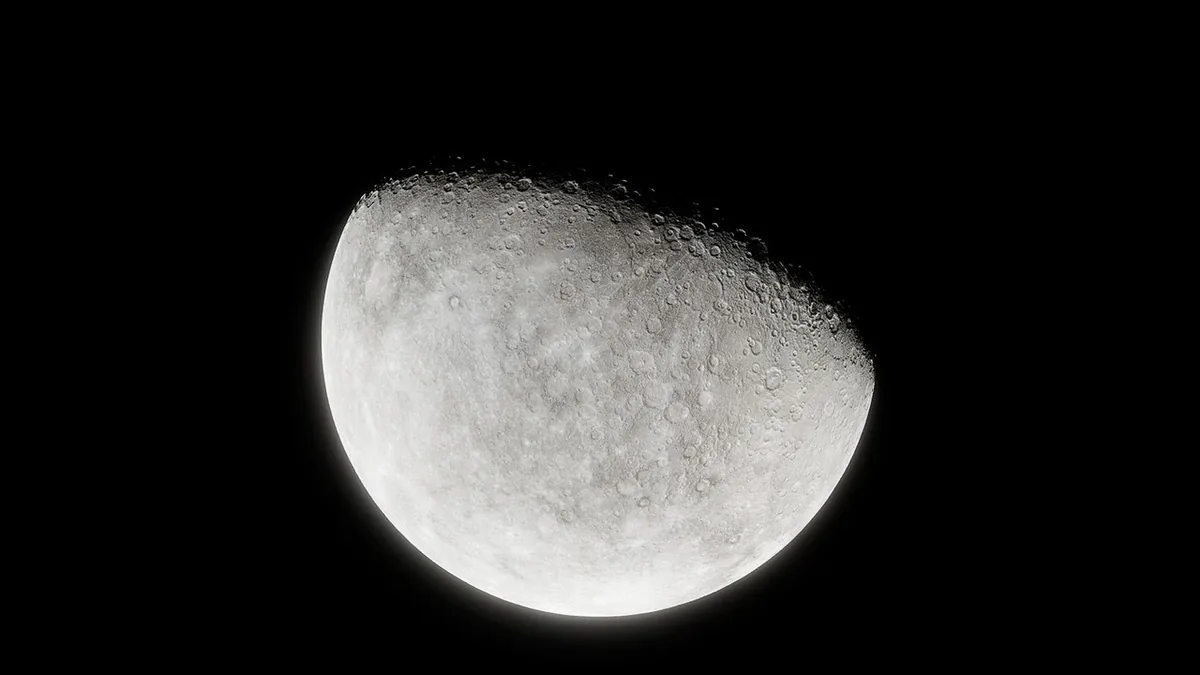
Staker describes the aerogel’s function in vacuum: “Imagine an aerogel as a high-tech thermos for a lunar base. Most of it consists of empty space that insulates the interior, helping it maintain the temperature of what’s inside.” On the moon, those pores become vacuum, hardly conducting heat compared with dense material.
Daytime highs near 260°F (127°C) plunge to –280°F (–173°C) at night, a swing of roughly 540°F that makes insulation life-support critical.
The team’s next steps are scale-up, vacuum thermal testing, and proving the water loop truly closes during freeze-drying. They have also proposed adding simple alcohols or sugars to slow ice-crystal growth that can pack fibers and dust together and degrade quality.
Funding came from the Indiana Space Grant Consortium and the National Science Foundation, with collaboration from NASA Glenn Research Center, the University of Akron, and the Universities Space Research Association.
The study, Nanofibrillated Cellulose–Regolith Composite Aerogels for Lunar Thermal Insulation, was published September 18 in ACS Sustainable Chemistry & Engineering. Purdue issued a statement on the work November 19.
Keep reading
Study Finds Piezoelectric Implant Position Affects Performance Significantly
A study has found that the position of a piezoelectric bone conduction implant significantly affects its performance, altering...
Scientists Discover Sunken Atoll Thriving With Life
Scientists have found a 5-million-year-old sunken coral atoll, its peak nearly 3,000 feet beneath the Atlantic, thriving with...

New Study Proposes Quantum-Resistant Hybrid Framework for Secure IoT Healthcare Systems
A new hybrid framework merges blockchain, software-defined networking, and post-quantum cryptography to secure medical device networks against current...
SNU Researchers Capture Mag 2 Earthquake Rupture Using Telecom Fiber
South Korean researchers captured the rupture of a magnitude 2 earthquake in millisecond detail by turning a buried...