
Researchers at the University of Strathclyde and Durham University have proposed the first light-based method to detect hypothetical mirror life. Published in Royal Society Open Science, the technique uses circularly polarised luminescence to spot synthetic mirror-image organisms, which experts warn could pose severe biosecurity risks if ever constructed.
Life on Earth operates on a specific molecular handedness, utilizing right-handed DNA and left-handed amino acids. Scientists call this natural asymmetry chirality, a property shared by most essential biological building blocks, including RNA, sugars, and various lipids. This property was first demonstrated by the father of modern immunology Louis Pasteur in 1848, and life on Earth overwhelmingly favours one configuration over the other in a phenomenon termed homochirality. Yet laboratory researchers have spent decades studying mirror-image molecules for industrial and medical applications.
While useful for creating degradation-resistant drugs, these mirrored variants raise significant biosecurity concerns. A Policy Forum article was issued in the journal Science in December 2024 by several prominent scientists, alerting readers to the dangers of developing “mirror life” – self-replicating and expanding mirror-image organisms – together with a 299-page technical report reviewing the available data and potential outcomes. These hypothetical agents could potentially evade immune defenses across plants, animals, and humans alike. Because the majority of contemporary antibiotics used against bacterial infections are likewise chiral, their efficacy against mirror-image counterparts is anticipated to be minimal or completely absent.

University of Strathclyde and Durham University Light Detection Method
To guard against such risks, researchers from the University of Strathclyde and Durham University have outlined a new surveillance approach using circularly polarised luminescence, or CPL. Dr Lewis MacKenzie of Strathclyde’s Department of Pure and Applied Chemistry spearheaded the paper titled ‘Circularly Polarised Luminescence (CPL) as a Contingency Assay for “Mirror Life” Bio-Hazards’, partnering with Professor Robert Pal from Durham University, and it appeared in Royal Society Open Science. This optical phenomenon reveals the specific handedness of molecular structures, utilizing the same fundamental principle that powers stereoscopic 3D cinema glasses.
The proposed approach could be tested and developed using conventional biological samples without creating mirror organisms. Cell analysis systems such as microscopes, cameras, and biological plate readers can all be modified to utilize this CPL detection technique, allowing the assay to be adapted for numerous environments depending on what the end user requires.
We don’t expect mirror life to appear tomorrow, but if it did arise, the consequences could be severe, and it makes sense to develop detection methods before they are needed. Professor Pal and I had been working on CPL technologies before recent concerns became prominent, and guarding against mirror life was a clear fit for our research.
Dr Lewis MacKenzie, Strathclyde’s Department of Pure and Applied Chemistry
The detection technique has not yet been demonstrated as a complete assay, but the underlying optical hardware already exists. According to lead author Dr Lewis MacKenzie, speaking to the Daily Mail, the concern is that mirror life could be made by irresponsible scientists or rogue states.
Infection Risks and Biosecurity Safeguards
The creation of a synthetic mirror bacterium remains distant, with a group of scientists from around the globe having issued an urgent warning calling for a halt on research which could create these lethal lifeforms, estimating then that the capability was at least a decade away. Due to the inability of terrestrial immune systems to recognize mirrored molecules, a mirror organism would operate normally except for escaping interaction with naturally chiral chemical processes, rendering mirror bacteria effectively invisible to the immune defenses of any naturally chiral terrestrial life.
As noted by Dr Vaughn Cooper, a microbiologist from the University of Pittsburgh and co-author of the paper, this form of life has never existed or evolved, and consequently all biological interactions would be different or likely wouldn’t work. The potential hazards have likewise drawn the attention of international organizations and governments, including the United Nations Secretary General’s Scientific Advisory board and the UK Government Office for Science, while researchers have urged limits on investigations intended to produce self-replicating mirror organisms. On Sept 28, specialists convened at the National University of Singapore (NUS) for the Singapore Conference on Mirror Life; this gathering formed part of an ongoing international campaign to establish safeguards and prohibit synthetic mirror-image organisms presenting major biosecurity dangers, and included participants like Hsu Li Yang, director of the Asia Centre for Health Security at the Saw Swee Hock School of Public Health at NUS, alongside Eddie Tan Han Pin, co-lead of the Health Regulation Project at the Centre of Regulatory Excellence at Duke-NUS Medical School at NUS.
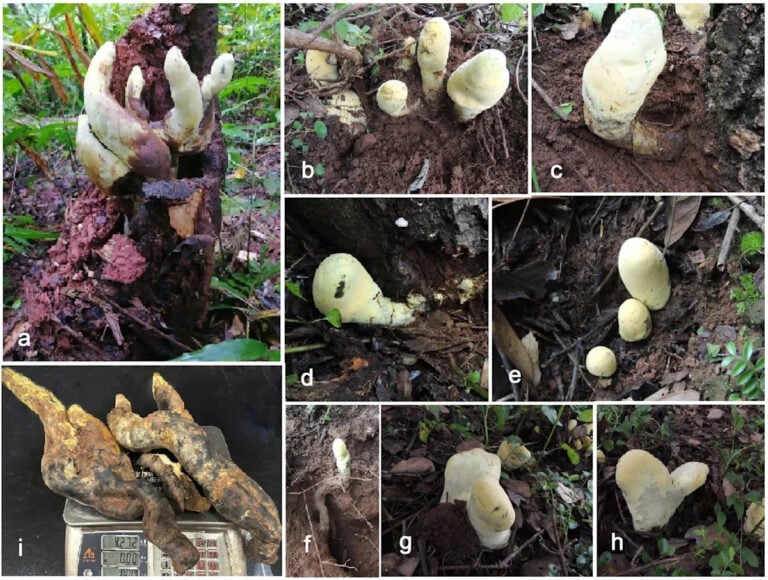
Researchers in southwestern China discovered a nearly 5-pound fungus so unique it required a new family
Researchers in southwestern China have discovered a towering new fungus species, Dianjunus rex, that grows up to 50...
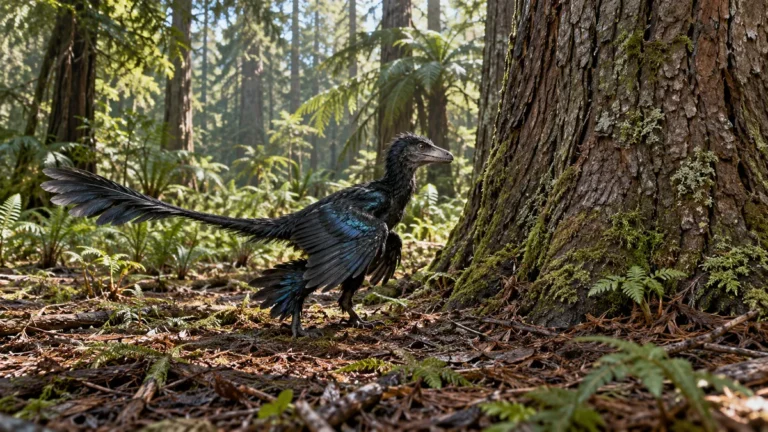
Microraptor was a very small, feathered dinosaur with wings on its legs as well as its arms
Discovered in northeastern China, Microraptor is a diminutive, feathered dinosaur renowned for its four wings and shimmering plumage,...
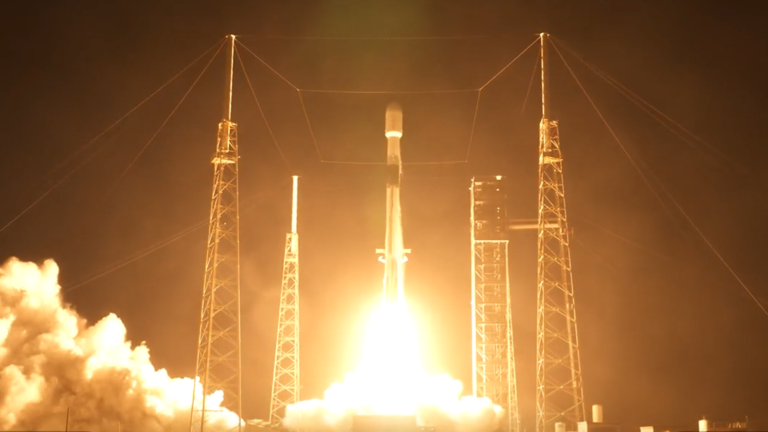
SpaceX Launches Starfall Return Capsule for Second Time
SpaceX launched the uncrewed Starfall reentry capsule for the second time on October 20, 2026, from Cape Canaveral...
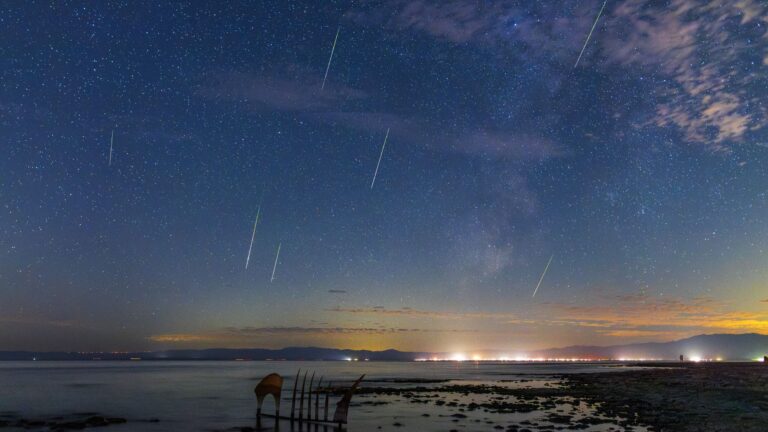
Orionid Meteor Shower Peaks October 21-22, 2026
The annual Orionid meteor shower reaches its peak during the pre-dawn hours of October 21-22, 2026.