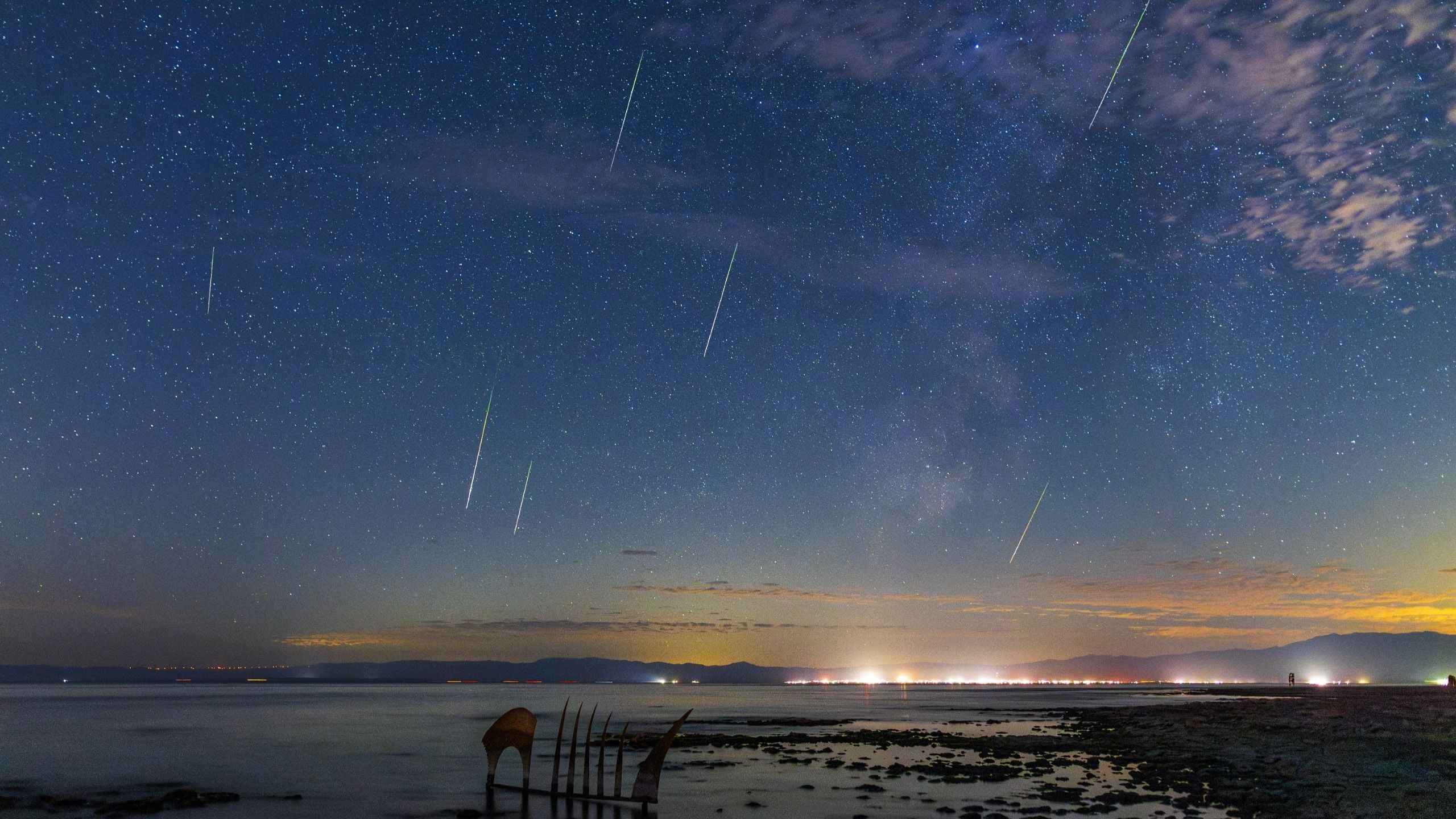
The annual Orionid meteor shower reaches its peak during the pre-dawn hours of October 21-22, 2026. Stargazers worldwide can spot up to 20 fast-moving shooting stars per hour under dark skies, though a bright waxing gibbous Moon will wash out fainter streaks until it sets.
The night sky offers a busy season for meteor enthusiasts. Right between major annual displays, the dependable Orionids arrive every autumn as Earth crosses the debris path left behind by Halley’s Comet, reaching peak activity around Oct. 21-22.
Best Times for Orionid Meteor Shower Viewing
A bright waxing gibbous Moon lights up the evening sky, drowning out dimmer meteors, while the shower remains active from early October through early November and the optimum viewing window occurs during the pre-dawn hours of the peak nights.
The sky darkens significantly once the Moon dips below the horizon. Observers can enjoy a brief window of several hours of dark skies before dawn breaks, during which time a patient viewer under dark skies may spot about a meteor every 4 to 5 minutes.
The Orionid meteor shower is active from around October 2 to November 7. Stargazers can view the event from both the Northern and Southern Hemispheres. While an 82% waxing gibbous Moon in Aquarius will lighten the sky around the peak and make fainter meteors harder to see, the moon will set around 3 a.m., leaving nearly 3 hours of dark skies ideal for meteor-watching before the start of dawn.
In ideal conditions, the Orionids could produce about 10 to 20 meteors per hour, while individual observers might spot as many as 15 to 20 meteors per hour in a dark sky window. Te Whatu Stardome notes that viewers may need to be patient and wait up to half an hour to see them.
Halley’s Comet and High-Velocity Debris
Over the past 100,000 years, Halley’s Comet has probably circled the sun well over a thousand times, leaving a fresh trail of debris on every visit. Each October and May, Earth brushes close to Halley’s orbit. The comet orbits around the Sun but is only visible to the naked eye from Earth every 74 to 79 years, with an orbital period of 75.4 years. This celebrated visitor is due back in 2061.
As the comet travels, it leaves behind a long trail of debris. Some of that dust meets our atmosphere at a breathtaking 41 miles (66 km) per second, lighting up as the streaks we call shooting stars. These mostly sand-sized particles strike at high velocity (66 kilometers per second), just slightly slower than the Leonids at 71 km/s, the fastest of the annual showers. About half of these meteors leave glowing trails that linger longer than those of equally bright meteors, and Halley’s composition may be the reason. The shower can also occasionally produce fireballs, which are exceptionally bright meteors.
The shower is an ancient one. In their 1989 paper The Age of the Orionid Meteor Stream, J. Jones et al. hypothesized that the present Orionids originated during the comet’s close approach to Jupiter around 23,000 years ago. Western astronomers weren’t aware of the shower until the 1830s. American amateur scientist Edward C. Herrick called attention to a possible new shower after observing a strong increase in meteor numbers in mid-October 1839 and again in 1840. Astronomers Adolphe Quetelet and Johann Benzenberg recorded similar activity around the same time and are regarded as independent co-discoverers.
Shooting stars must always be watched in the open air: observations through a window can not be trusted.
Edward C. Herrick, American amateur scientist
Spotting the Radiant
The meteors earn their name because they appear to fan out from a vanishing point located in the constellation Orion, specifically near the upraised club above Betelgeuse. However, stargazers do not need to stare directly at the constellation. Meteor showers always come from a single point in the sky, called the radiant point, and observers should keep an eye out for meteors coming from just below Orion’s belt.
Meteors can streak across almost any part of the night sky.
Researchers Validate Space-Based Methane Detection
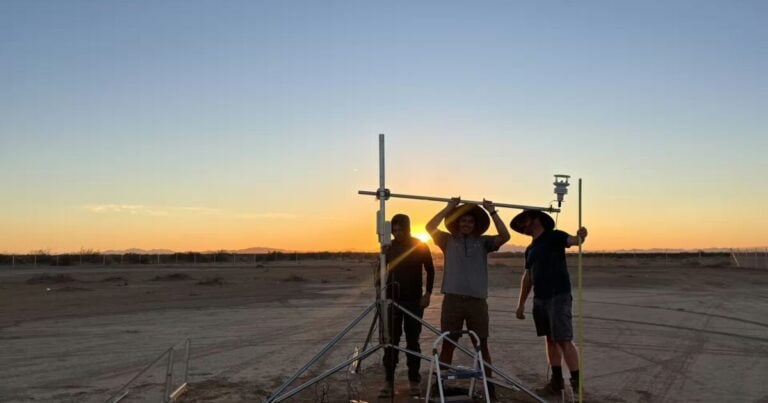
Researchers have completed the largest controlled test of space-based methane monitoring, publishing results in October 2026 showing that...

Voyager Probes Approach One Light-Day Distance After Decades
Nearly half a century after launching to explore the outer solar system, the Voyager probes are still operating...
Natural History Museum Uncovers New Dinosaur Species in Century-Old Fossil
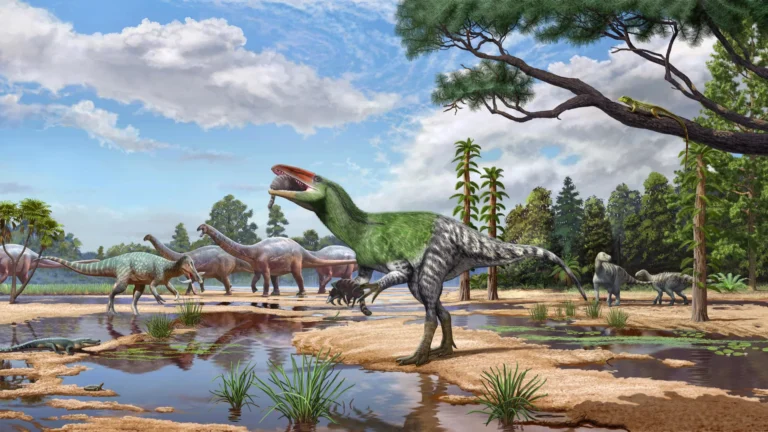
Researchers have identified Europe’s first megaraptoran dinosaur, named Invictibellatrix amberina, from a fossil skull fragment acquired by London’s...

Dr. Ramya Anche to head NASA’s $20 Million PUFFINS Space Telescope Mission
Bengaluru-born astronomer Dr. Ramya Anche has been selected as principal investigator for NASA’s $20 million PUFFINS space telescope...