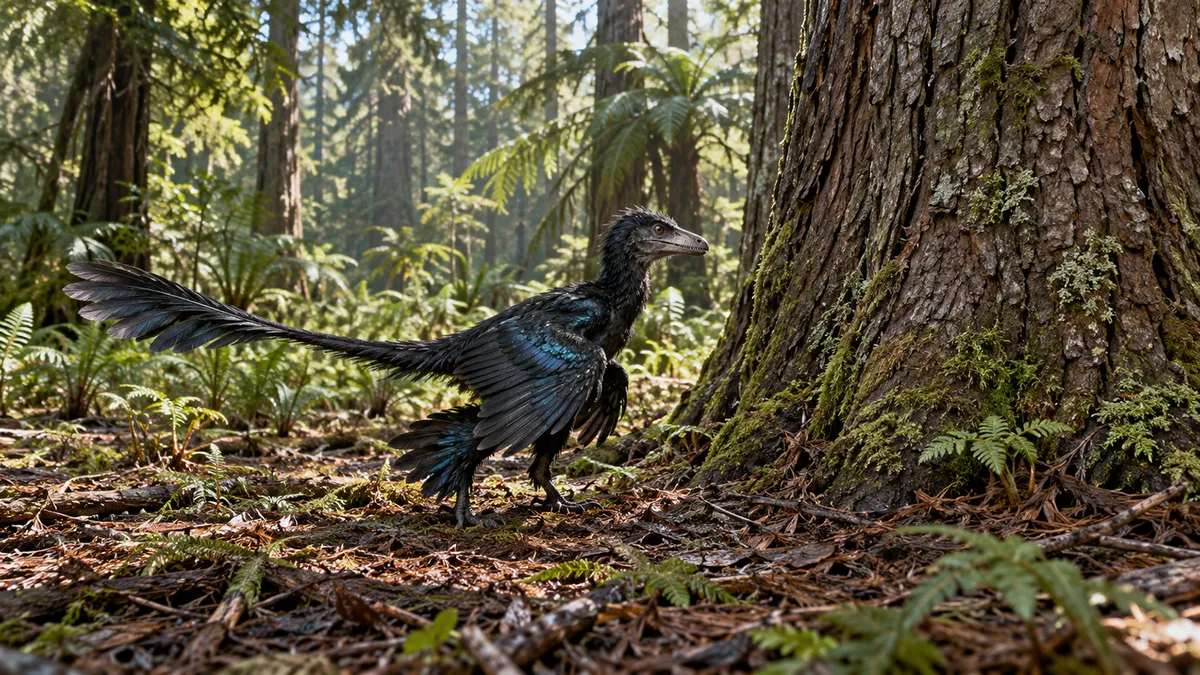
Discovered in northeastern China, Microraptor is a diminutive, feathered dinosaur renowned for its four wings and shimmering plumage, offering critical insights into the evolution of avian flight. This prehistoric creature, which lived approximately 120 million years ago during the Early Cretaceous period, has become a cornerstone in paleontological research.
Four Wings and Shimmering Feathers
Microraptor is distinguished by its unique anatomical configuration: long flight feathers extended from both its forelimbs and hindlimbs, earning it the moniker four-winged dinosaur.
These feathers, preserved in exceptional fossils, reveal sophisticated structures nearly identical to those of modern birds, contradicting earlier assumptions that dinosaur feathers were simple, hair-like coverings. A 2012 discovery of pigment cells in a fossil showed that Microraptor likely had glossy black feathers, a trait absent in modern nocturnal birds, challenging earlier theories about its possible nighttime hunting habits.
The dinosaur’s shoulder joint lacked specialized features seen in birds, suggesting it could not perform the powerful upstroke necessary for sustained flapping flight. However, experiments indicate it may have glided between trees, using its hind wings to generate aerodynamic forces. Researchers debate whether it could achieve powered flight, with some models suggesting a sideways leg posture for optimal gliding.
Microraptor's Size and Habitat Found
Measuring 77–90 centimeters (2.5–3 feet) in length, Microraptor was smaller than a modern housecat, weighing roughly 1 kilogram (2.2 pounds). It inhabited the lush, forested environments of the Jehol Biota, a region characterized by coniferous forests, lakes, and streams under a temperate climate. Fossils of Microraptor have been found in the Jiufotang Formation of Liaoning Province, where exceptionally preserved remains include traces of its diet and even a prehistoric lizard, Indrasaurus, discovered in its belly.
Diet and Ecological Role
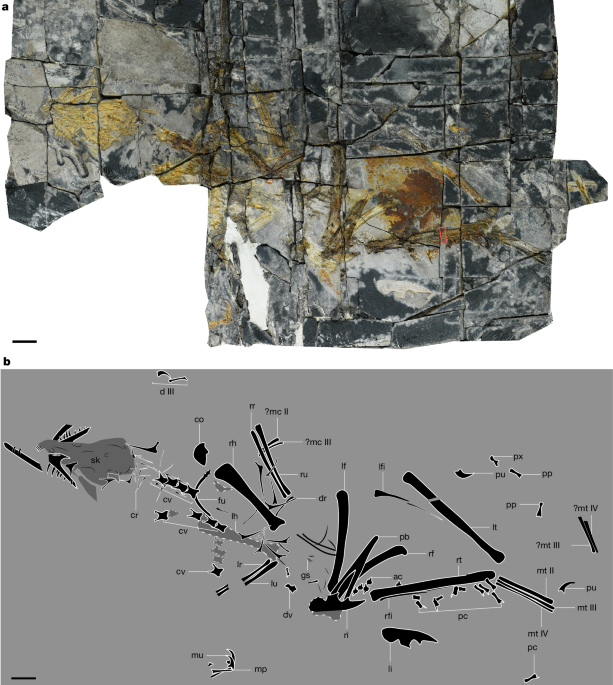
Analysis of Microraptor fossils reveals a varied diet. Skeletal remains show evidence of mammal bones, bird remains, and fish scales in its stomach, indicating it was an opportunistic feeder. The 2019 discovery of a complete, previously unknown lizard species in its digestive tract highlights its role as both predator and scavenger. This adaptability, combined with its arboreal lifestyle, positions Microraptor as a key link between non-avian dinosaurs and early birds.
Fossil Record and Controversies
Microraptor belongs to the Dromaeosauridae family, which also includes Velociraptor. Its classification as a non-avian dinosaur, despite its bird-like features, reflects the distinct hip structure that differentiates dinosaurs from pterosaurs, which were flying reptiles but not dinosaurs.
Evolutionary Link to Birds
As a close relative of modern birds, Microraptor provides critical evidence for the transition from dinosaurs to avian species. Its four-winged configuration and feathered body suggest an evolutionary strategy centered on gliding, a hypothesis supported by the discovery of multiple four-winged dinosaur species. This adaptability highlights the diversity of prehistoric life and the complex pathways of evolutionary innovation.

Despite ongoing debates about its flight capabilities, Microraptor remains a focal point in understanding how flight emerged in dinosaurs. Its exquisitely preserved fossils continue to inform research, bridging gaps in the evolutionary narrative between reptiles and birds.
Keep reading

SpaceX Launches Starfall Return Capsule for Second Time
SpaceX launched the uncrewed Starfall reentry capsule for the second time on October 20, 2026, from Cape Canaveral...

Orionid Meteor Shower Peaks October 21-22, 2026
The annual Orionid meteor shower reaches its peak during the pre-dawn hours of October 21-22, 2026.
Researchers Validate Space-Based Methane Detection
Researchers have completed the largest controlled test of space-based methane monitoring, publishing results in October 2026 showing that...

Voyager Probes Approach One Light-Day Distance After Decades
Nearly half a century after launching to explore the outer solar system, the Voyager probes are still operating...