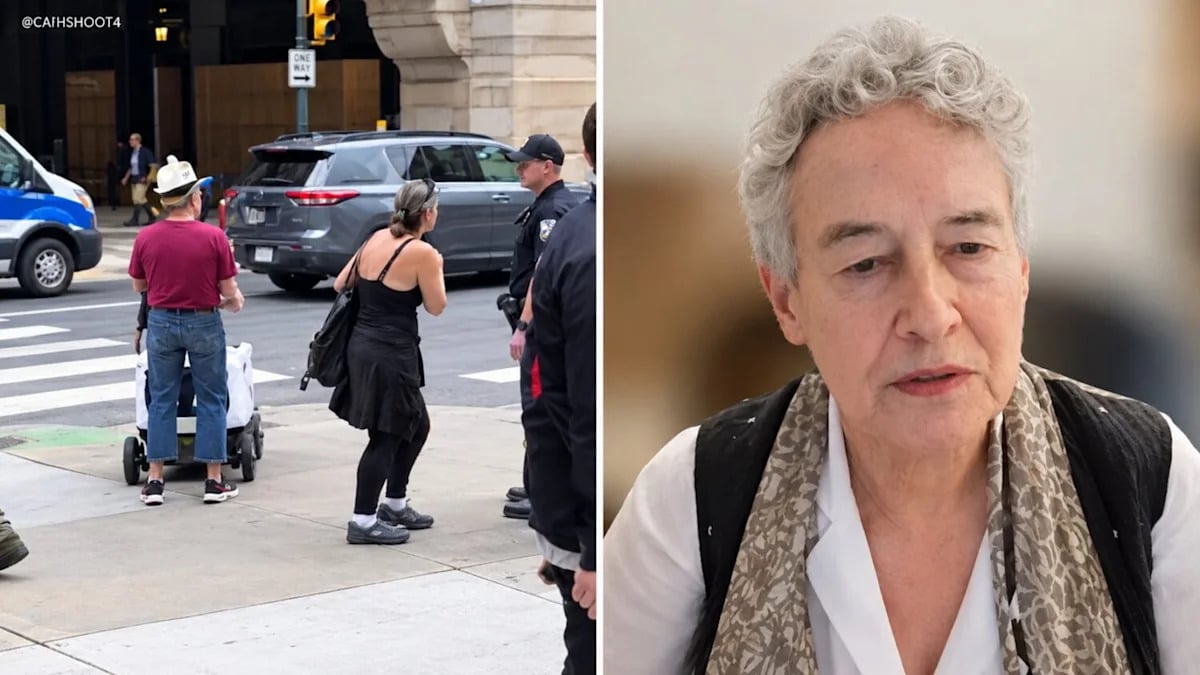
A 78-year-old professor emeritus at the University of Pennsylvania was arrested in Center City Philadelphia after repeatedly blocking an Uber Eats delivery robot. Carolyn Marvin faces a disorderly conduct charge following the October 14, 2026 confrontation, vowing to contest the citation on First Amendment grounds as local robot deliveries spark labor debates.
The sidewalk standoff near Reading Terminal Market began when Carolyn Marvin spotted an autonomous delivery machine operating on the 1200 block of Filbert Street. Fresh from receiving a flu shot appointment, the retired Annenberg School of Communication professor emeritus stepped directly into the path of the device and refused to move as police arrived around 1:16 p.m. on Wednesday, October 14, 2026.
Woman blocks a delivery robot and refuses to move in Philadelphia. “I have no regrets. These things are taking peoples jobs.” pic.twitter.com/L81yNI0Q2k
Witnesses filmed the scene as three Philadelphia police officers surrounded the 78-year-old resident and issued multiple commands to step aside. When she declined to clear the path, officers placed her in handcuffs and served her with a criminal violation notice for disorderly conduct.
Carolyn Marvin and the Labor Protest Against Sidewalk Robots
Marvin’s sidewalk blockade was not an isolated impulse. Since Uber Eats launched its fleet of autonomous delivery machines developed by Avride in Center City in March 2026, she has made a regular practice of standing in front of them whenever she encounters them during her day.
Her opposition centers on employment concerns and the rapid expansion of automated delivery systems in crowded urban corridors. She argues that technology companies deploy the machines to reduce operational costs at the expense of human workers.
I oppose ruthless corporations casting aside human workers they don’t want to pay — in this case delivery folks at the bottom of the wage pile — to enrich their bottom line. These real people are workers with no defense against these corporations except our care for their situation.
Carolyn Marvin, professor emeritus at the University of Pennsylvania
Before retiring, Marvin taught a course titled History and Theory of Freedom of Expression
at Penn, examining the boundaries between speech and action. While she views her current demonstrations as civic participation rather than an extension of her academic syllabus, she maintains that her actions fall under constitutionally protected free speech.
I think it’s my First Amendment right to publicly demonstrate on a sidewalk to protest against delivery robots.
Carolyn Marvin, resident of West Philadelphia
How Philadelphia Residents and Authorities Respond to Autonomous Delivery Fleets
Public reception of the roving delivery bots has been sharply divided since they appeared on local sidewalks. While some customers utilize the app-tracked delivery hatches for lunch orders, other residents have expressed frustration, with past social media footage showing pedestrians kicking, toppling, or blocking the machines.
Ashley Baldwin, a West Philadelphia resident who previously witnessed one of Marvin’s demonstrations, recalled checking on her during an earlier encounter when she thought a robot had struck her. Marvin replied at the time, No, I have to stop this. They’re trying to take over the world.

The mechanical fleet relies on onboard cameras, lidar, and ultrasonic sensors to move through pedestrian pathways, supported by remote operators who can intervene when necessary. Under Pennsylvania’s personal-delivery-device framework, the machines must yield to pedestrians. State law grants primary authority over operating authorizations to the Pennsylvania Department of, leaving Philadelphia city officials with limited local regulatory power over where the robots travel beyond addressing specific safety hazards.
Legal Uncertainty and What Lies Ahead for the Center City Robot Fleet
Legal observers note that the October arrest marks the first time law enforcement intervened in Marvin’s ongoing protests, turning a pattern of civil disobedience into a formal court matter. Uber declined to comment on the incident or the broader operational impact of the demonstrations.
A retired Penn professor has been blocking Uber Eats robots for months. This week, she got arrested for it. https://t.co/msFyxQWiFH
Marvin confirmed she plans to contest the disorderly conduct charge in court, testing whether passive sidewalk resistance to automated commercial hardware receives constitutional protection. Meanwhile, city officials and urban planners face unresolved questions regarding how municipal infrastructure should accommodate private delivery devices that depend on public sidewalks to complete their routes.
Despite her brush with law enforcement, Marvin intends to continue confronting the machines whenever she sees them, hoping the public friction will encourage broader conversations about labor displacement and artificial intelligence.
It allows me to talk to people about what’s going on. It’s always very interesting conversations that we have, and I think it’s good to have those kinds of conversations in public space.
Carolyn Marvin, via PhillyVoice
More on Uber Eats
from my recollection of her work, the through line would be technological determinism — and i greatly admire her putting her whole self into the argument
I'm so proud that whenever one of these crazy cases hits in Philly I have to check with my sister to see if it's her client https://t.co/pULplA641N
Keep reading

Publishers Pivot to AI, Subscriptions, and Team Reorgs
Publishers are aggressively rewriting their strategies to survive the Google Zero post-search era by launching LLM subscriptions, reorganizing...

Google DeepMind’s Gemini 4 agents defeat Minecraft’s Ender Dragon after 605 deaths
Four autonomous artificial intelligence agents powered by Google's Gemini 4 Argon model have successfully completed Minecraft from scratch...

Alfozan Received Extensive Saudi Backing
Federal prosecutors allege an ex-OpenAI engineer accused of planting a hidden audio recording device in a San Francisco...

Musk and Anthropic Pledge Public Share Giveaways
Elon Musk and artificial intelligence developer Anthropic have pledged major financial equity giveaways, committing company shares to the...