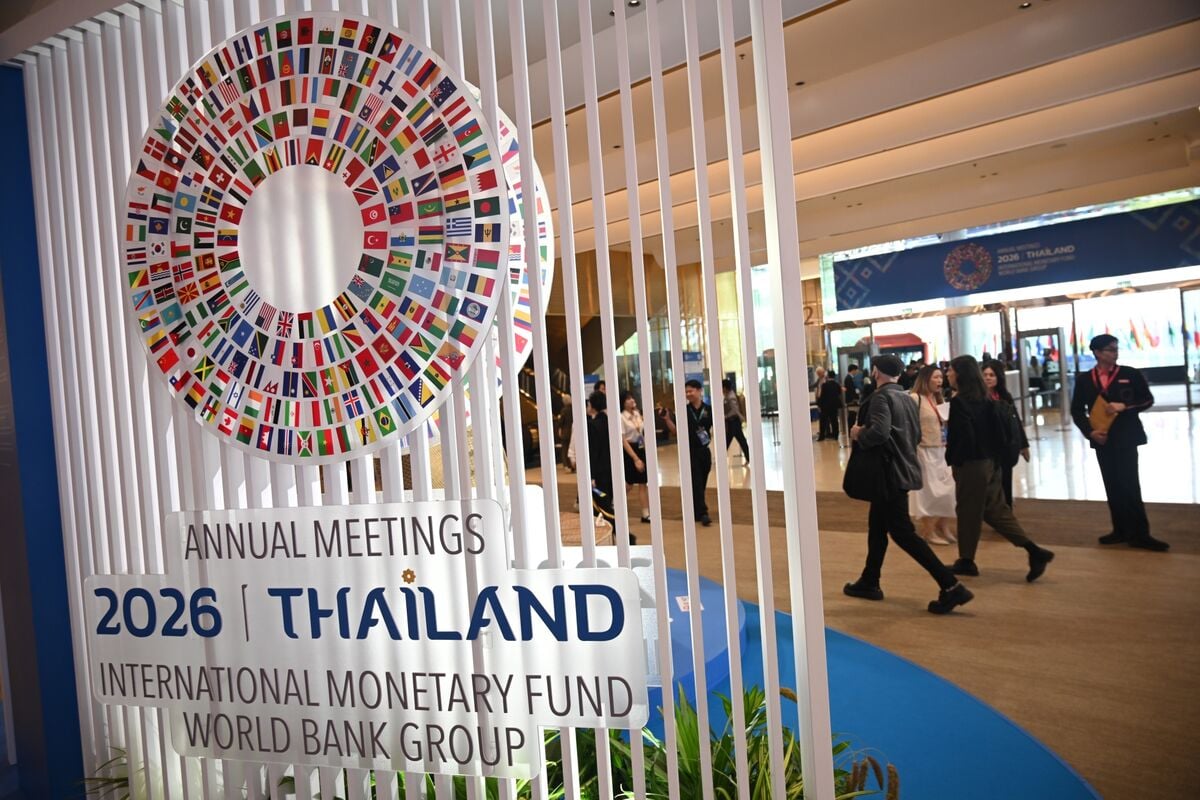
Global finance leaders wrapping up the annual IMF and World Bank meetings in Bangkok on October 18, 2026, warned that mounting government debt, geopolitical tensions, and an unbalanced artificial intelligence boom threaten global stability, while regional economies face energy shocks and currency shifts.
Debt Piles, Geopolitical Friction, and AI Disruptions Dominate Bangkok Talks
The world’s financial elite concluded a week of high-stakes discussions at the Queen Sirikit National Convention Center on October 18, 2026, marking the first time Thailand has hosted the International Monetary Fund and World Bank Group meetings in 35 years. Against a backdrop of heavy security, sporadic street protests, and gridlocked traffic, delegates spent the week in Bangkok debating the most pressing risks to the global economy.
Discussions centered on an unbalanced artificial intelligence expansion, prolonged energy shocks, and record-high sovereign debt piles. Kevin Gallagher, director of Boston University’s Global Development Policy Center, noted that mounting debt in the Global North and global imbalances could trigger the next financial crisis.
IMF and World Bank Projections on Artificial Intelligence and Economic Growth
Artificial intelligence emerged as a central theme across multiple panels, with international leaders addressing both the productivity gains and the workforce disruptions tied to rapid technological change. International Monetary Fund Managing Director Kristalina Georgieva described AI as a slow-moving tsunami
that is already transforming labor markets and reshaping government taxation strategies. Georgieva noted that advanced Asian economies could see their gross domestic product drag from aging populations offset by up to one percentage point through AI-driven productivity, which would also boost growth by 0.5 to 1 percentage point, alongside a 0.2 to 0.8 percentage point potential gain for emerging Asian economies.
The technological build-up, however, is widening gaps between nations. The IMF issued warnings about economies poorly positioned to leverage the global AI supply chain, while praising countries equipped to benefit. World Bank President Ajay Banga emphasized that job creation in the AI era depends heavily on foundational infrastructure and governance. For emerging markets, it’s important to focus on affordable, small AI that enhances productivity across sectors such as education, healthcare, and agriculture,
Banga said. A cumulative 8.3% expansion was recorded in world trade between 2023 and 2025, driven by a notable surge in AI-related goods trade that was propelled by investments from prominent regional manufacturers like Taiwan and South Korea.
Regional Resilience, Energy Dependence, and Local Currency Transactions
Asia-Pacific economies maintained notable resilience despite external pressures, though energy price volatility remained a critical vulnerability. To counteract global uncertainty and reduce reliance on third-party dominant currencies, Bank Indonesia Destry Damayanti pushed for the broader adoption of local currency transactions in trade and investment.
In addition to currency diversification, Thailand highlighted its domestic digital infrastructure. Bank of Thailand Governor Vitai Ratanakorn pointed to the country’s PromptPay network—which now boasts over 83 million registered accounts—as evidence that digital financial tools effectively drive inclusion when built on trust from inception.

Diplomatic Friction and Pakistan’s Multilateral Milestones
Geopolitical tensions also surfaced on the meeting floors, with Russia and Ukraine emerging as central flashpoints. Pakistani officials, led by Finance Minister Muhammad Aurangzeb, held discussions with investors and global institutions including the IMF, World Bank, and major credit rating agencies. Pakistan was officially nominated to chair the Boards of Governors of the IMF and the World Bank Group in 2027, returning to the post for the first time since 1953. Furthermore, Aurangzeb assumed the chairmanship of the Governing Council of the Borrowers’ Platform, an initiative designed to help developing nations coordinate and address sovereign debt challenges collectively.
Tomorrow, the 2026 IMF-World Bank Group Annual Meetings open in Bangkok, Thailand, at the Queen Sirikit National Convention Center. Join us for a week of high-level dialogue on the global economy. Watch live and follow the program. https://t.co/P0G26yEM7S #IMFMeetings pic.twitter.com/vGLzRYpTBe
More on World Bank Group
Worth a look

Israel Flight Diverted to Bulgaria After Bomb Threat
An Austrian Airlines flight carrying 57 people from Tel Aviv to Vienna diverted to Sofia, Bulgaria, on October...
Pakistan to Head International Monetary Fund and World Bank
Pakistan has been selected to chair the Boards of Governors of the International Monetary Fund and the World...
US Seeks Europe’s Support for Tariffs on India, China Over Russian Oil
Treasury Secretary Scott Bessent revealed that European allies refused a Washington request to impose secondary tariffs on China...

British billionaire Manchester United Co-owner INEOS Founder Arrives in Victoria Falls for Private Holiday
British billionaire and Manchester United co-owner Sir Jim Ratcliffe arrived in Victoria Falls on a Saturday for an...