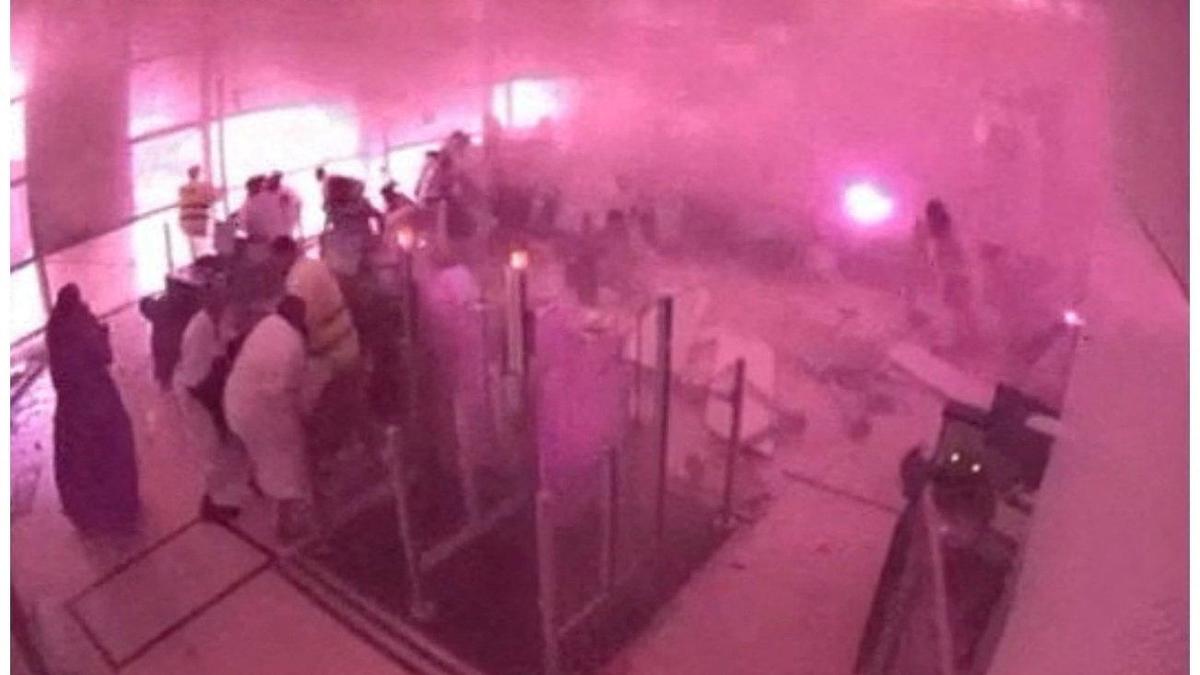
Riyadh’s international airport attacks killed 14 people and left skies over the Saudi capital largely empty on October 12, 2026, as officials vowed a resolute response to Houthi drone and missile strikes.
Terminal attacks at King Khalid International Airport killed 14 people and wounded more than 300 others over Saturday and Sunday. The civil aviation authority reported that a Pakistani national died in an attack on a terminal on October 11, following a strike the previous day that killed 13 people and injured over 300. An Indian national later succumbed to his injuries at a hospital, the Indian Embassy confirmed.
Authorities extended the closure of the facility as safety procedures got underway. The European Union Aviation Safety Agency widened its warning regarding Saudi airspace in response to the ongoing drone and missile attacks.
Prince Abdulaziz bin Salman Vows a Decisive Retaliation
Saudi Energy Minister Prince Abdulaziz bin Salman Al Saud addressed delegates at the inauguration of the 25th WPC Energy Congress in Riyadh on October 12 despite the deteriorating security situation outside. He warned that the kingdom would not let the attacks pass without a firm reckoning.
For Saudi Arabia, these circumstances have tested our infrastructure, our institutions, our people, and our resilience.
Prince Abdulaziz bin Salman, Saudi Energy Minister
The minister added that energy security can’t be taken for granted and emphasized that the kingdom’s response to the recent escalation would be equally serious. Authorities reported an attack on King Fahd International Airport in Dammam in the country’s east, while the Saudi-led coalition said its air defences intercepted and destroyed a ballistic missile.
Yemen Civil War Escalation and the Houthi Maritime Blockade
Houthi military spokesman Yahya Sarea claimed responsibility for the barrage in a video statement, asserting that the forces launched missiles and drones at Riyadh and Dammam airports alongside two oil and gas facilities in the Eastern Province. Sarea stated the operations came in retaliation for 124 Saudi air strikes over the previous 24 hours in Yemen. The Houthi leadership reiterated a maritime embargo and warned all airlines and travelers against using Saudi airspace and transit hubs, designating them as a theatre of operations for our forces.

The Houthis ousted the government from Sanaa in 2014, followed by the 2015 intervention of the Saudi-led coalition. An informal four-year ceasefire began to unravel in July when the Houthi movement declared a naval embargo against Saudi Arabia. Houthi fighters seized control of ground overlooking the Bab al-Mandab Strait at the southern entrance to the Red Sea last month.
World Leaders React to Houthi Attacks
United Nations Secretary-General António Guterres stated he was deeply shocked by the violence and reminded parties that attacks on civilian infrastructure violate international law. U.S. President Donald Trump announced in Washington that he was considering joining Saudi Arabia in military strikes against the Houthi movement, even as the U.S. military continued to provide intelligence and targeting support to the coalition. Iranian officials expressed deep concern over the escalation and urged diplomatic engagement, while Israeli Prime Minister Benjamin Netanyahu denounced the assault as a horrific terrorist attack.
Thomas Juneau, a security analyst at Ottawa University, observed that while Saudi air defences frequently intercept incoming projectiles, Saudi Arabia is so large that it’s simply impossible for them to consistently defend themselves against every drone or missile.
The Saudi-led coalition formally characterized the Riyadh airport strike as a full-fledged war crime and vowed decisive action. Retaliatory Saudi air strikes in the Houthi-held Sanaa governorate resulted in at least one civilian death, according to Houthi health officials, while pro-government ground forces backed by coalition air power pressed forward with a new offensive to recapture contested territory.
More on Saudi Arabia

Sudan Customs Extends Vehicle Clearance Deadline to December 3
Sudan Customs has extended the customs clearance deadline to December 3, 2026, for vehicles at ports granted exemptions...
Trump Weighs Yemen Strikes After Houthi Attacks Close Saudi Airport
Saudi Arabia closed Riyadh's international airport and reported 12 deaths and 309 injuries after a Saturday missile strike,...

China’s Gold Reserves Grow as Consumer Imports Hit Record Levels
China extended its gold accumulation program in September, boosting official reserves by 23 tonnes while global central banks...
Baltic States Urge EU-Wide Ban on Russian Grain Transit
Lithuania, Latvia, and Estonia have petitioned European Union leaders for a bloc-wide ban on Russian grain transit, aiming...