
China extended its gold accumulation program in September, boosting official reserves by 23 tonnes while global central banks maintained a buying trend driven by long-term reserve diversification objectives.
The People’s Bank of China expanded its bullion holdings for the 23rd consecutive month, official data showed, recording its largest monthly purchase in three years as bullion prices declined.
Official data showed that by the end of July, China’s gold reserves reached nearly 76.08 million troy ounces.
Where China Ranks Among Global Sovereign Gold Holders
China currently stands as the fifth-largest official gold holder globally, sitting directly behind the United States, Germany, Italy, and France according to the figures cited in the report. Italy holds approximately 2,452 tonnes, and France maintains around 2,437 tonnes according to the figures cited in the report.
With total holdings reaching 2,410 tonnes, China trails France by just 27 tonnes and Italy by 42 tonnes according to the figures cited in the report. Market observers note that if accumulation continues at a similar trajectory, the nation could overtake both European countries in official gold rankings according to the figures cited in the report.

Beijing Seeks Less Dependence on US Treasuries
Analysts point to deliberate structural motivations behind Beijing’s sustained buying program. Treasuries as a reserve asset.
The weaponization of the U.S. dollar and the related desire to be less dependent on U.S. Treasuries as a reserve asset.
Carsten Menke, analyst at Julius Baer Group
Western asset freezes imposed on Russia following its 2022 invasion of Ukraine showed that foreign-held reserves can be restricted during geopolitical friction.
Aakash Doshi, head of gold strategy at State Street Investment Management, noted that consumer gold imports in China hit a record in the first eight months of this year.
Chinese Gold Imports Hit Record Levels
Beyond the central bank, Chinese households and corporate entities have embraced gold as an essential safe haven. Domestic customs data reveals that China spent a record $158.8 billion importing more than 1,000 tonnes during the first eight months of 2026, easily surpassing the $96.5 billion and 886 tonnes recorded across all of 2025 customs data show. That exceeds the $96.5 billion and 886 tonnes imported in all of 2025.

On the broader international stage, official-sector demand remained resilient through the late-summer reporting period.
- Poland added 8 tonnes in August, leading year-to-date sovereign purchases and bringing its total reserves toward its targets, while continuing the precious metal’s accumulation alongside other emerging-market participants.
- Uzbekistan purchased 8 tonnes, bringing its annual accumulation to 50 tonnes and placing its gold holdings at 90 percent of its total reserves The Central Bank of Uzbekistan bought 8 tonnes this month.
- Kazakhstan acquired 7 tonnes in August, pushing its yearly accumulation to nearly 36 tonnes The National Bank of Kazakhstan bought 7 tonnes in August.
- Turkey returned as a net buyer, picking up 3 tonnes in August following three consecutive months of net sales Turkey returned as a net buyer in August, purchasing 3 tonnes.
Gold Prices Fall Ahead of US Policy Dates
Despite strong structural demand, macroeconomic headwinds weighed on bullion prices during the transition into autumn. Gold prices pulled back more than 8% in September to approximately $4,176 an ounce after in January hitting a record above $5,500, pressured by rising U.S.
With the U.S. Consumer Price Index release scheduled for October 14, 2026, and the Federal Open Market Committee rate decision following on October 28, 2026 Two dates now loom for anyone trying to read the policy backdrop, market participants continue to weigh monetary policy uncertainties against persistent central bank accumulation.
Related reading
- Baltic States Urge EU-Wide Ban on Russian Grain Transit
- Ethiopian Federal Forces and Intelligence Officials Enter Mekelle
- Rockford News First: Area may break Monday heat record before Friday freeze (world-today-news.com)
- 4.0°C Above Normal: Japan's El Niño Record Depends on Which Index You Read (daybreakwire.com)

Baltic States Urge EU-Wide Ban on Russian Grain Transit
Lithuania, Latvia, and Estonia have petitioned European Union leaders for a bloc-wide ban on Russian grain transit, aiming...
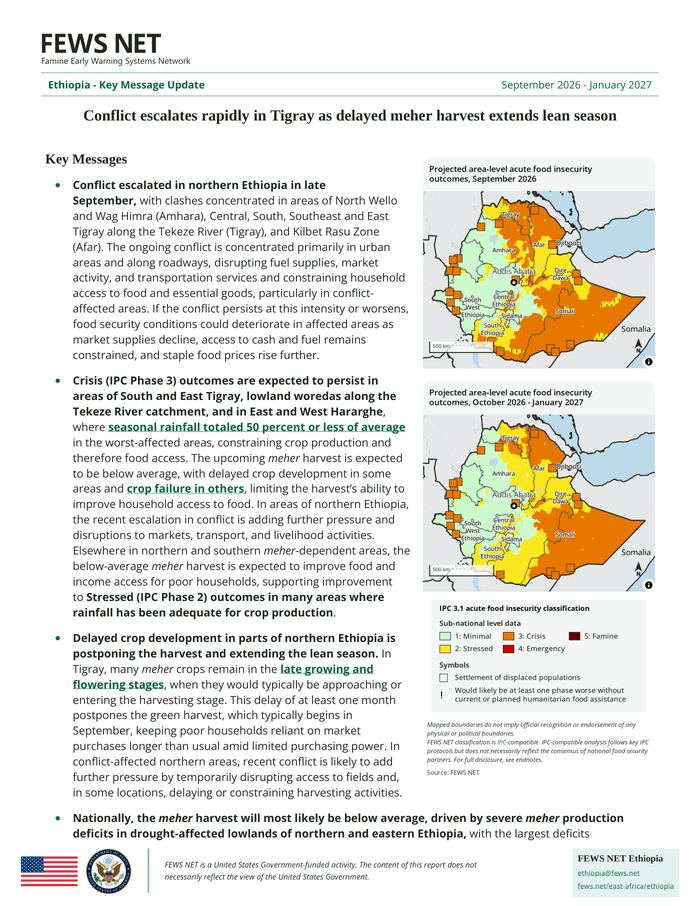
Ethiopian Federal Forces and Intelligence Officials Enter Mekelle
Ethiopian federal forces and intelligence officials entered Mekelle on October 11, 2026, following the withdrawal of rebel groups...
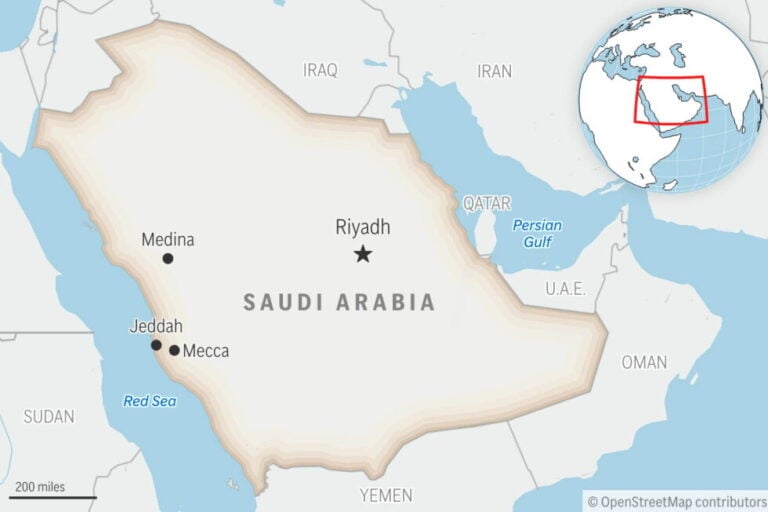
12 Killed in Missile Strike on King Khalid International Airport
Twelve people were killed and more than 300 wounded in a missile strike on Riyadh’s international airport on...

Court Releases Abhijeet Dipke and CJP Leaders in New Delhi on October 11
Following a massive security clampdown and the detention of thousands in New Delhi, a local court ordered the...