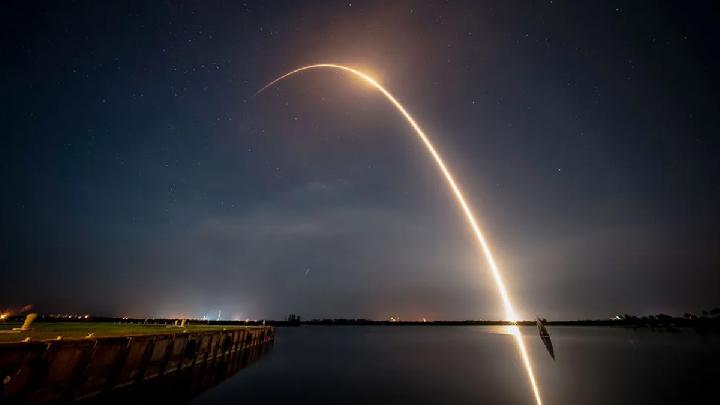
Following a January 2025 deep-space mission, the upper stage of a SpaceX Falcon 9 rocket collided with the moon on August 5, 2026. Traveling at roughly 5,400 mph, the 4-ton spent hardware struck near Einstein Creator, prompting international orbiters to hunt for impact evidence.
How a 2025 Deep-Space Mission Led to a Lunar Impact
When a Falcon 9 rocket lifted off from the Kennedy Space Center in Cape Canaveral, Florida on January 15, 2025, it carried a heavy payload consisting of Firefly Aerospace’s Blue Ghost lunar lander and ispace’s Resilience lander. While the Blue Ghost spacecraft achieved a successful touchdown, becoming the first private vehicle to do so, the mission required an extraordinary amount of propellant to reach its high, moon-crossing orbit.
Because the second-stage booster used nearly all of its fuel during the launch, it lacked the reserves necessary to execute a deorbit burn back into Earth’s atmosphere, where spent Falcon 9 upper stages usually burn away or drop safely into the ocean. Instead, the 40-foot-long, 4-metric-ton cylinder remained adrift in space, trapped in a long loop around Earth and the moon.
Julianna Scheiman, SpaceX director of Nasa science and Dragon programs, explained during a press conference that for high-energy missions, the company must perform alternative maneuvers to ensure the second stage remains safe per regulatory rules. Yet, once the hardware was left behind, natural forces took over. Over the course of the following year and a half, a combination of solar activity and gravity quietly nudged the dead booster onto an inevitable collision course with the lunar surface.
The Collision at Einstein Creator and Ground-Based Detection
Early on August 5, 2026, the upper stage slammed into the moon at approximately 5,400 mph (8,690 kph), equivalent to seven times the speed of sound. Independent tracking experts, including retired astrophysicist Jonathan McDowell, had tracked the object’s decaying orbit and confirmed its trajectory toward the sunlit western limb of the moon.
Because the impact occurred on the sunlit side of the moon, direct visual confirmation of the flash from Earth proved exceptionally difficult. Stargazers such as Dutch astronomer Marco Langbroek pointed their equipment at the targeted zone during the appointed hour but captured no immediate visual record of the initial strike. Nevertheless, institutional instruments managed to register the chemical signature of the collision. Astronomers at the European Southern Observatory’s Very Large Telescope reported detecting a sodium and lithium gas plume lasting between five and ten minutes after the impact.
Carl Schmidt of Boston University expressed absolute certainty regarding his team’s findings, noting that the European Southern Observatory’s Very Large Telescope detected a stream of sodium and lithium stretching for miles into space following the event.
Orbital Probes Race to Photograph the New Crater
While ground telescopes continue sorting through data, space agencies are relying on dedicated lunar orbiters to document the aftermath. NASA spokesperson Rob Garner, stationed at the Goddard Space Flight Center in Maryland, outlined how the agency plans to assess the site. NASA’s Lunar Reconnaissance Orbiter and NASA’s ShadowCam instrument on the Korea Pathfinder Lunar Orbiter will examine before-and-after imagery as their respective orbits carry them over the region.
Scientists estimate that the high-speed impact blasted out a crater up to 89 feet (27 meters) wide, with other space agency models projecting dimensions roughly 18 meters wide and four meters deep. Getting clear photographic confirmation, however, depends heavily on lighting conditions and orbital schedules, meaning final visual proof from these spacecraft may take several days to reach Earth.
Growing Concerns Over Rising Lunar Traffic and Debris
Unintentional lunar crashes involving spent rocket hardware remain rare but are drawing increased scrutiny as space agencies and private companies ramp up lunar exploration. A Chinese rocket stage struck the moon unintentionally in 2022 following a lunar mission, and analysts believe many more discarded segments have landed on the lunar surface over the decades without scientific detection.
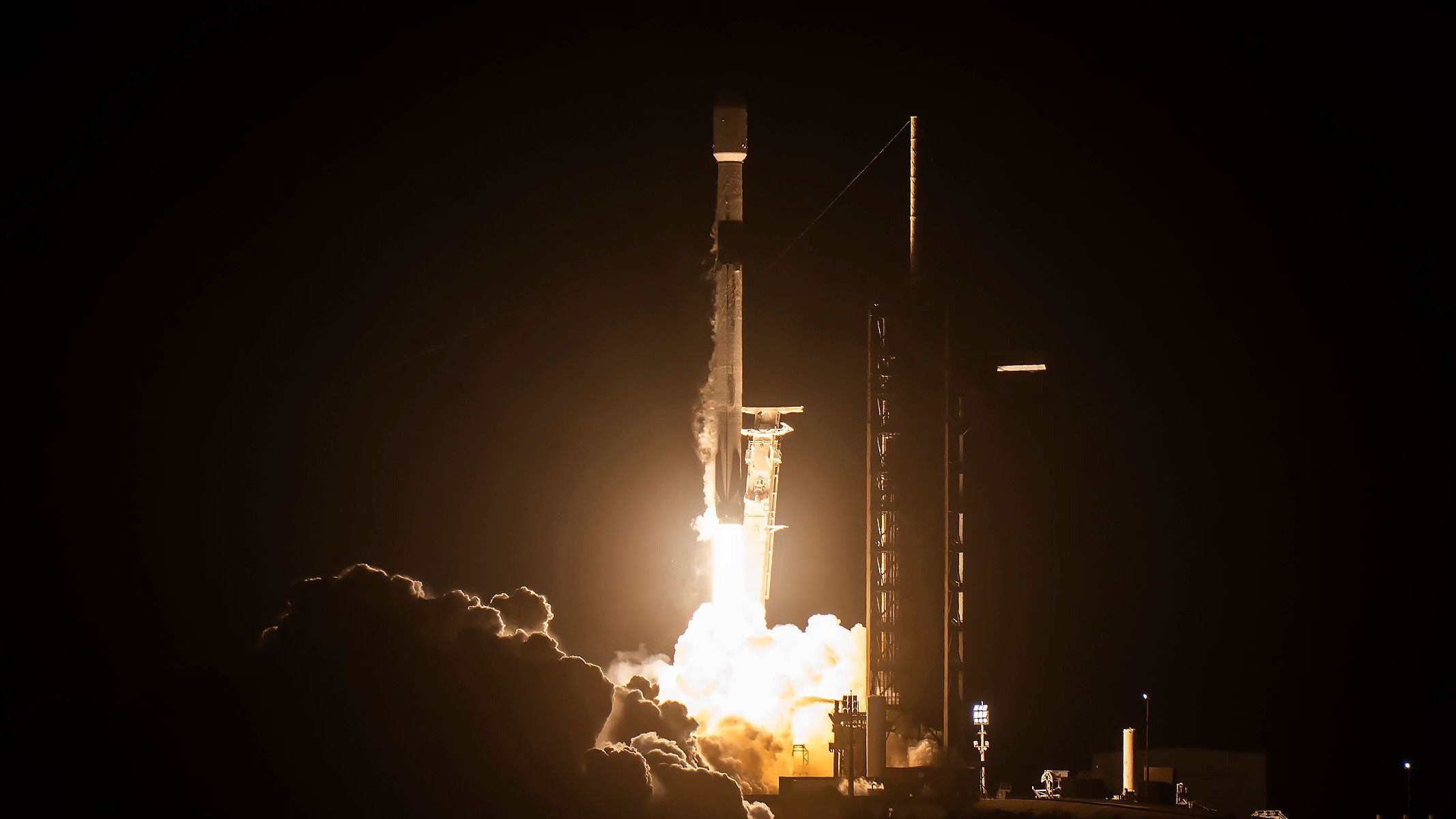
Researchers emphasize that the spent Falcon 9 stage posed no threat to Earth. Bill Gray, the creator of astronomy software who first calculated the collision trajectory in April, confirmed that the impact doesn’t present a danger to anyone
on Earth. However, Gray and other tracking experts have raised broader questions regarding the carelessness surrounding leftover space hardware.
With NASA planning an influx of robotic craft to lay the groundwork for a sustainable lunar base, and with SpaceX and Blue Origin slated to supply human-rated landers for upcoming Artemis missions, the moon’s neighborhood is becoming crowded. McDowell warned that as traffic intensifies, uncontrolled impacts throwing up dust across hundreds of miles will become entirely unacceptable. According to Julianna Scheiman, SpaceX is actively discussing preventive measures with NASA to mitigate future collision risks.
Financial Headwinds Coincide with the Lunar Strike
The timing of the lunar collision coincided with financial pressures on the ground for Elon Musk’s aerospace company. Following the release of its first quarterly earnings report as a publicly traded company, SpaceX shares slumped after investors were unnerved by a sixfold increase in capital expenditures to $18.4 billion, driven largely by massive spending on artificial intelligence infrastructure.
Market analysts quickly drew parallels between the two events.
Chris Beauchamp, chief market analyst at IG
AJ Bell investment director Russ Mould echoed that sentiment, noting that the company’s heavy outlays exceeded analyst consensus and noting a distinct lack of meaningful cash flow compared to other participants in the artificial intelligence spending race. The stock finished the session down 13.6%, falling well below its $135 initial public offering price as markets braced for the expiration of the first major investor lockup period.
Worth a look

Sand Hoppers Move Hundreds of Tons of Sand on California Beaches
Inch-long beach crustaceans known as sand hoppers dig fresh burrows nightly along Southern California shores, moving an estimated...

Scientists Discover 13 Fatty Acids in Cat Urine That Form Unique Scents
Researchers in Japan, Germany, and Spain have discovered 13 unusual branched-chain fatty acids in domestic cat urine that...

Google Patents Filing Details New Text Classification Method for Office Systems
While traditional office automation approaches historically relied on multi-label document categorization based solely on body text, newly surfaced...
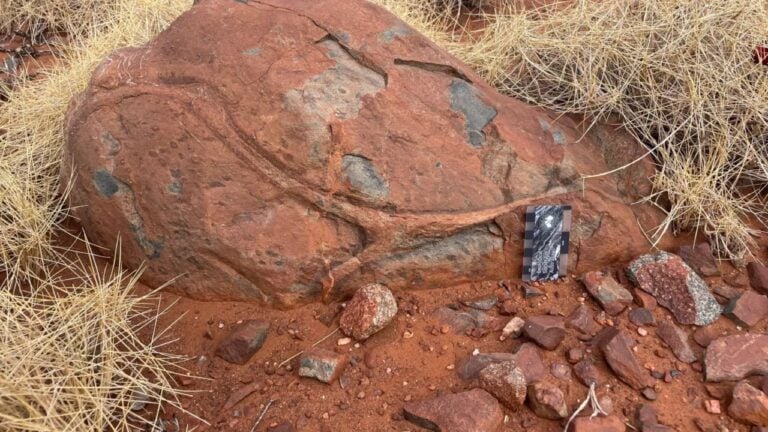
Ancient rocks from Western Australia suggest Earth was already dragging surface water into its mantle and using it to generate volcanoes 3.1 billion years ago — through a primitive recycling process that may have preceded modern plate tectonics
Geologists examining ancient volcanic formations in Western Australia have discovered evidence that water was influencing Earth's interior and...