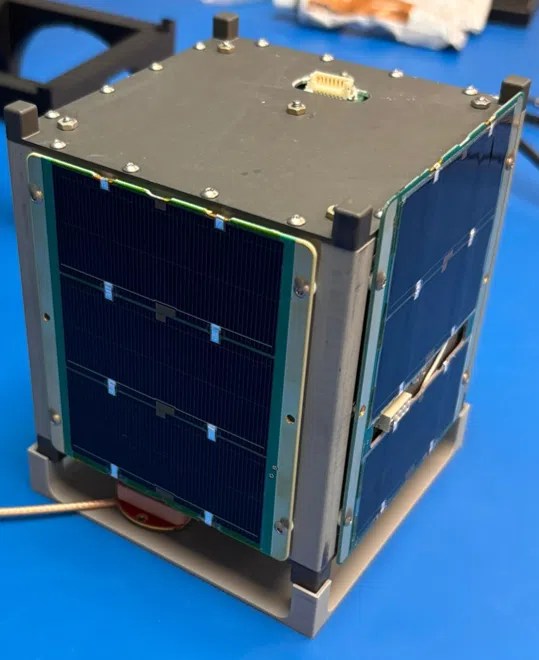
Florida-based startup City Labs successfully launched its BOHR satellite on July 7, marking the first commercial demonstration of a nuclear-powered betavoltaic system in orbit. The mission, which launched on a SpaceX Falcon 9, tests a tritium-based power source designed to provide long-duration energy for small-scale electronics in space environments.
City Labs validated the NanoTritium power source on the BOHR CubeSat

The BOHR, or Betavoltaic Orbital High-Reliability, satellite is a 1U CubeSat—a modular, softball-sized spacecraft that reached low Earth orbit as one of 81 payloads on the Transporter-17 mission. While the satellite utilizes conventional solar panels for its primary operations, the mission’s core objective is to validate the company’s proprietary NanoTritium power source as a standalone payload.
Unlike the radioisotope thermoelectric generators (RTGs) used on deep-space probes like NASA’s Voyager, which convert heat from radioactive decay into electricity, City Labs’ technology uses a semiconductor to convert beta particles directly from decaying tritium into usable current. The power output is measured in nanowatts to microwatts, a capacity insufficient for running a satellite bus but potentially transformative for low-power sensors or secure communication keys that must remain active for years. As City Labs CEO Peter Cabauy noted, “BOHR demonstrates that safe, compact, and regulatory-approved nuclear power systems are ready for routine commercial deployment.”
The FAA authorized the commercial nuclear payload under the 2019 National Security Presidential Memorandum-20
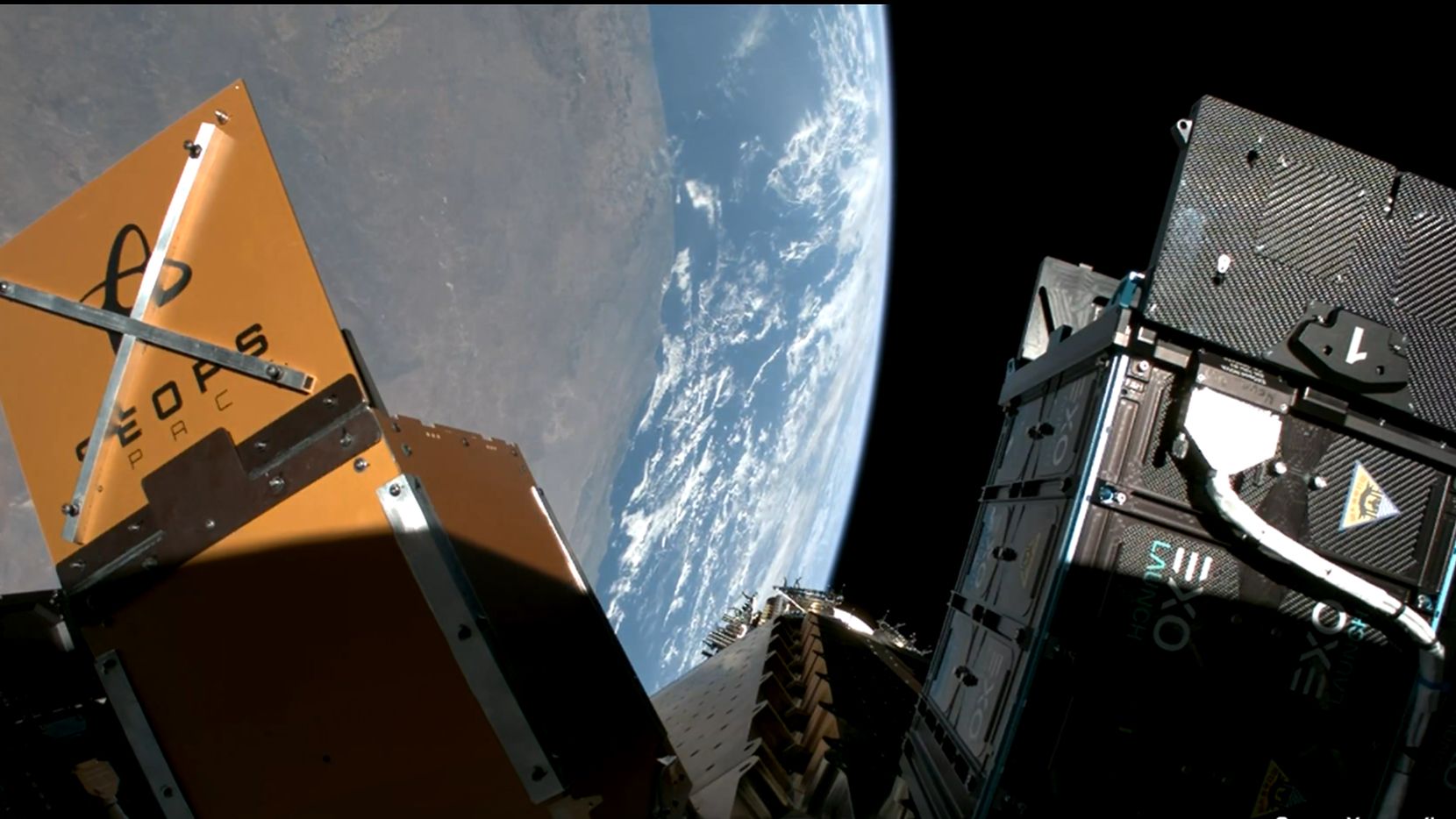
Beyond the technical demonstration, the mission is significant for its regulatory precedent. It is the first commercial nuclear payload authorized under the Federal Aviation Administration (FAA) process established by the 2019 National Security Presidential Memorandum-20. Before this framework, launching nuclear material required high-level, case-by-case interagency reviews—a process designed for large-scale NASA science missions rather than the commercial space industry.
The FAA issued its authorization for BOHR on September 30, 2025, following a safety analysis that was independently validated by Sandia National Laboratories. By establishing this documentation, City Labs has created a template for other commercial entities interested in flying small-scale nuclear payloads. As the sources note, this pathway addresses the long-standing industry argument that regulatory uncertainty has been the primary barrier to commercial nuclear space applications.
Tritium enables safe integration within standard commercial launch environments
Tritium, a radioactive isotope of hydrogen with a half-life of roughly 12 years, is central to the company’s safety claims. According to the Nuclear Regulatory Commission, the beta particles emitted by tritium have low energy and cannot penetrate skin, nor do they travel significant distances through air. This low-radiation profile allows for handling and integration within standard commercial launch environments, distinguishing it from the more restrictive protocols required for plutonium-238.
The company has emphasized that its systems are engineered for safe handling, transportation, and integration within standard commercial launch environments. This capability is expected to be vital for missions in environments where solar power is limited, such as the permanently shadowed regions of the lunar south pole.
The Air Force Research Laboratory supports the 2027 tritium-powered Radioisotope Heater Unit demonstration
The BOHR mission is part of a broader strategy supported by various government contracts, including funding from the Pentagon’s Operational Energy Innovation Directorate and the Air Force Research Laboratory. City Labs plans to follow this test with an in-orbit demonstration of a tritium-powered Radioisotope Heater Unit (RHU) in 2027. Unlike the electricity-generating betavoltaic battery on BOHR, the RHU is intended to generate heat to protect sensitive electronics from freezing during the lunar night.
As the sources note, the company’s long-term goal is to move toward operational systems that can support persistent payload operations on the lunar surface. While the current technology is limited to micro-power applications, City Labs envisions scaling the tech to eventually support more demanding lunar infrastructure. For now, the company expects to collect and analyze flight data regarding the payload’s performance over the coming weeks and months.
The launch represents a shift in how the industry approaches nuclear power in space. While the sources highlight that this is still a long way from the large-scale nuclear reactors required to power a permanent Moon base, it serves as a critical first step. By utilizing a rideshare model on a Falcon 9, City Labs has demonstrated that small nuclear components can be integrated into the existing commercial launch market without the logistical burden of dedicated, high-security missions. The success of this pathfinder mission will likely determine the pace at which similar power systems are integrated into the next generation of commercial and national defense satellites.
Find more reporting in our Science section.

ESA’s Hera Spacecraft Spots Target Asteroid Didymos
Two years after launch, the European Space Agency’s Hera spacecraft has successfully spotted its target binary asteroid system...
Delegates to Vote on Abolishing Leap Second to Protect Systems
Delegates meeting near Versailles this week will vote on abolishing the leap second, driven by Earth's recent speed-up.
Researchers find quantum systems retain statistical traces of initial states
Researchers at Harvard University, Tampere University, and TU Dresden published findings in Physical Review X on October 11,...
NASA Releases Artemis II Lunar Science Data and Farside Images
NASA released nearly a terabyte of Artemis II science data and reports on Wednesday, featuring 11,000 images, audio...