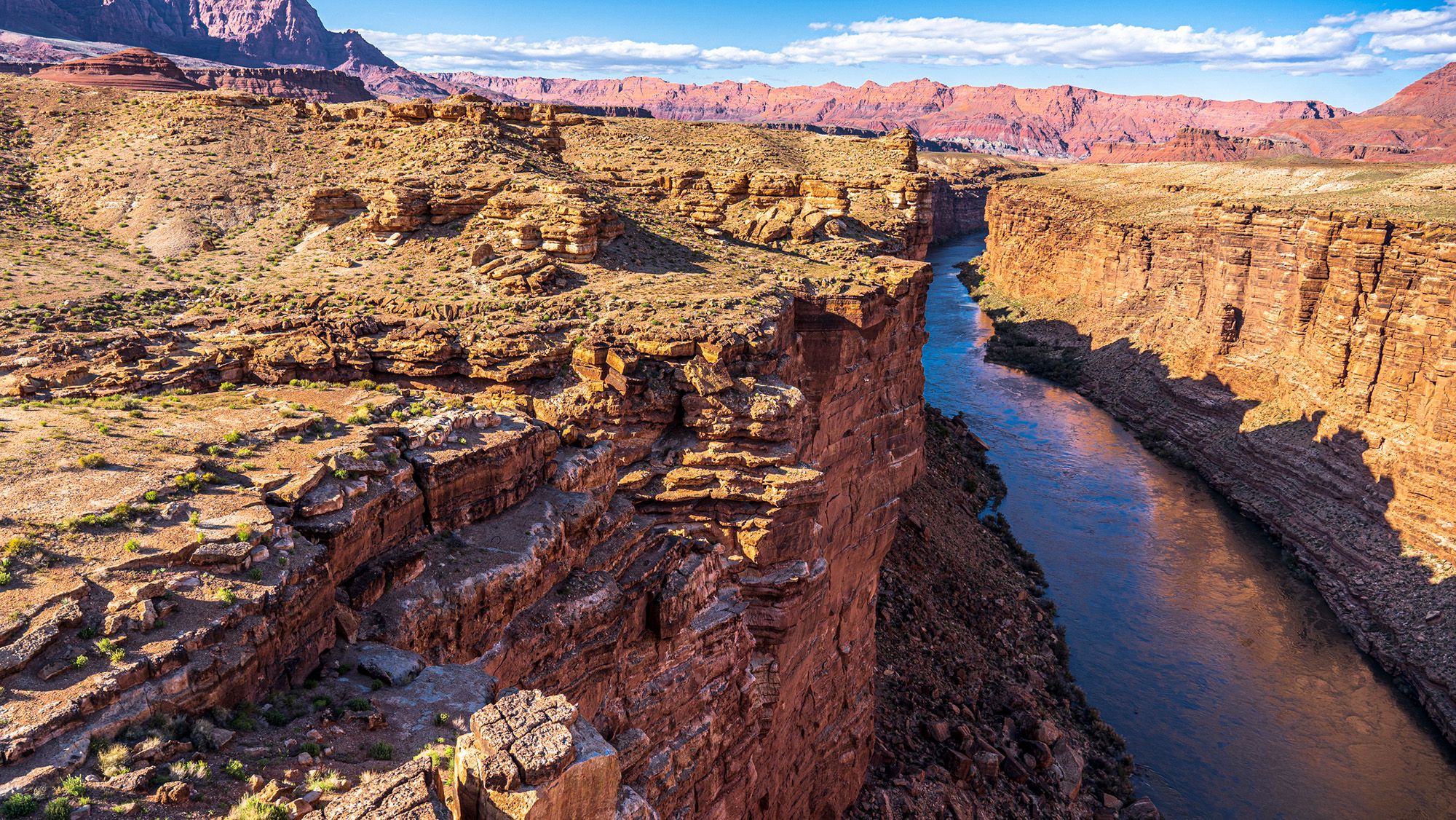
“Imagine a book where a huge section in the middle has been ripped out.” “Our research suggests these pages weren’t lost by chance,” said Nicolas Flament, a geoscientist at the University of Wollongong in Australia.
A study published November 4 in Nature ties the billion-year gap in Earth’s rock record to slow, heat-driven mantle convection that lifted and later dropped ancient continental cores.
PhD candidate Santosh Dhungana and Flament ran mantle convection models on Australia’s Gadi supercomputer. Each run used about 13 million cells and required roughly 75,000 CPU hours.
The models consistently showed that the ancient continental blocks Laurentia (now much of North America), Baltica (parts of northern Europe), and North China rose between about one billion and 540 million years ago, then sank during the Phanerozoic eon.
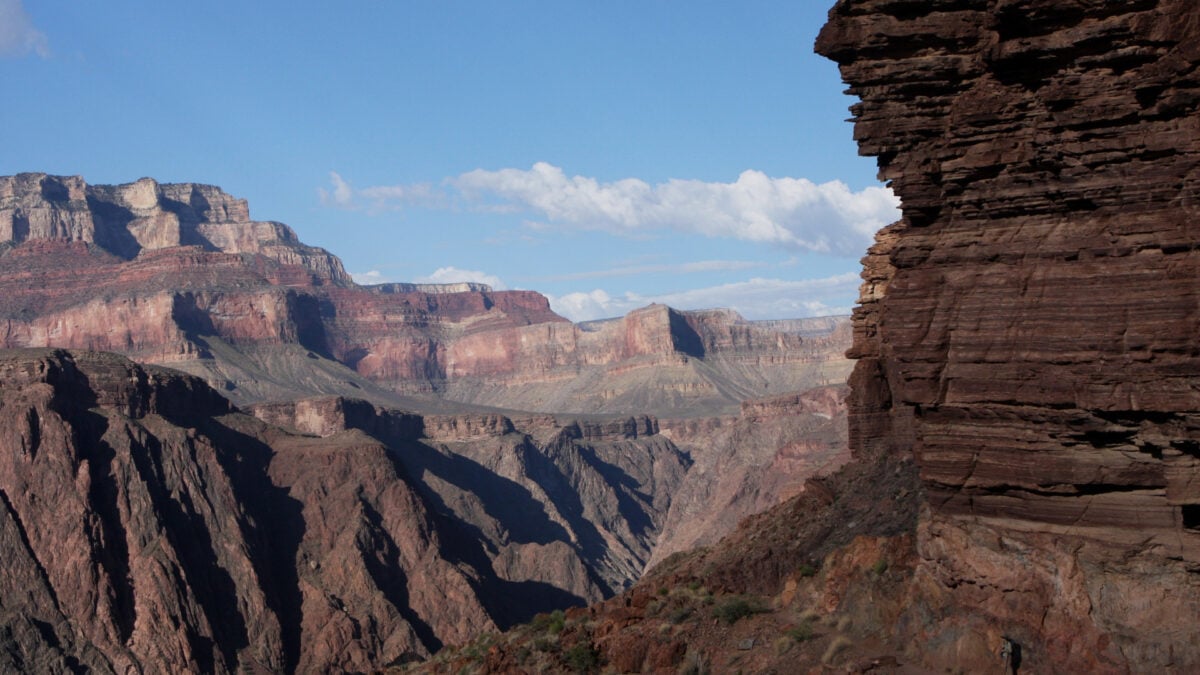
“We don’t see that pattern in the North China data,” said Nicholas Christie-Blick, coauthor Nicholas Christie-Blick, a geologist at Lamont-Doherty Earth Observatory, which is part of the Columbia Climate School, and professor emeritus of Earth and Environmental Sciences.
The models show no distinct pulse of rapid cooling during the Cryogenian.
The uplift interval overlaps the Neoproterozoic Era, which preceded the Cambrian explosion around 540 million years ago. Researchers have speculated that erosion of entire continents during the Great Unconformity altered seawater chemistry, potentially helping create the environment in which complex life diversified.
The data do not show a distinct pulse of rapid cooling during the Cryogenian ice ages, a timeframe during which some scientists have argued massive ice sheets caused the erosion responsible for the Great Unconformity.
Geologist John Wesley Powell first identified the Great Unconformity at the Grand Canyon in the 1870s, noting how sedimentary rocks from the Cambrian sat directly above much older igneous and metamorphic rocks.

The study, titled “The deep Earth origin of the Great Unconformity,” was authored by Santosh Dhungana, a PhD candidate in Environmental Futures at the School of Science, University of Wollongong, and Nicolas Flament, an Associate Professor and ARC Future Fellow in Environmental Futures at the School of Science, University of Wollongong. The research was funded by the Australian Research Council.
Flament agreed that the geological changes had significant knock-on effects for the environment in which complex life evolved.
Continents sit on top of the mantle and get pushed up and down by its motion. This prolonged uplift would have exposed rock to erosion. The era was followed by the Cambrian period, when animal life diversified dramatically. During the Phanerozoic eon, which spans the past 540 million years, the continental cores gradually sank.
Worth a look

University of Arkansas 3D-Prints Bricks From Simulated Moon Dust, Study Finds
University of Arkansas researchers have 3D-printed interlocking bricks from simulated lunar dust without any binder, a first step...

Mars and Jupiter Seen in Sky Over China’s Heilongjiang
Mars and Jupiter reached their closest apparent separation in the night sky on Sunday appearing as a spectacular,...

Scientists Discover Dragonball Organelles in Deep-Sea Mollusc
Deep inside an enigmatic ocean-floor animal, researchers have uncovered a tiny organelle that has no known counterpart anywhere...
SLU Researchers Simulate Quantum Behaviors Using Classical Light Dynamics
Researchers from Saint Louis University and two German institutions have demonstrated that classical nonlinear light dynamics can induce...