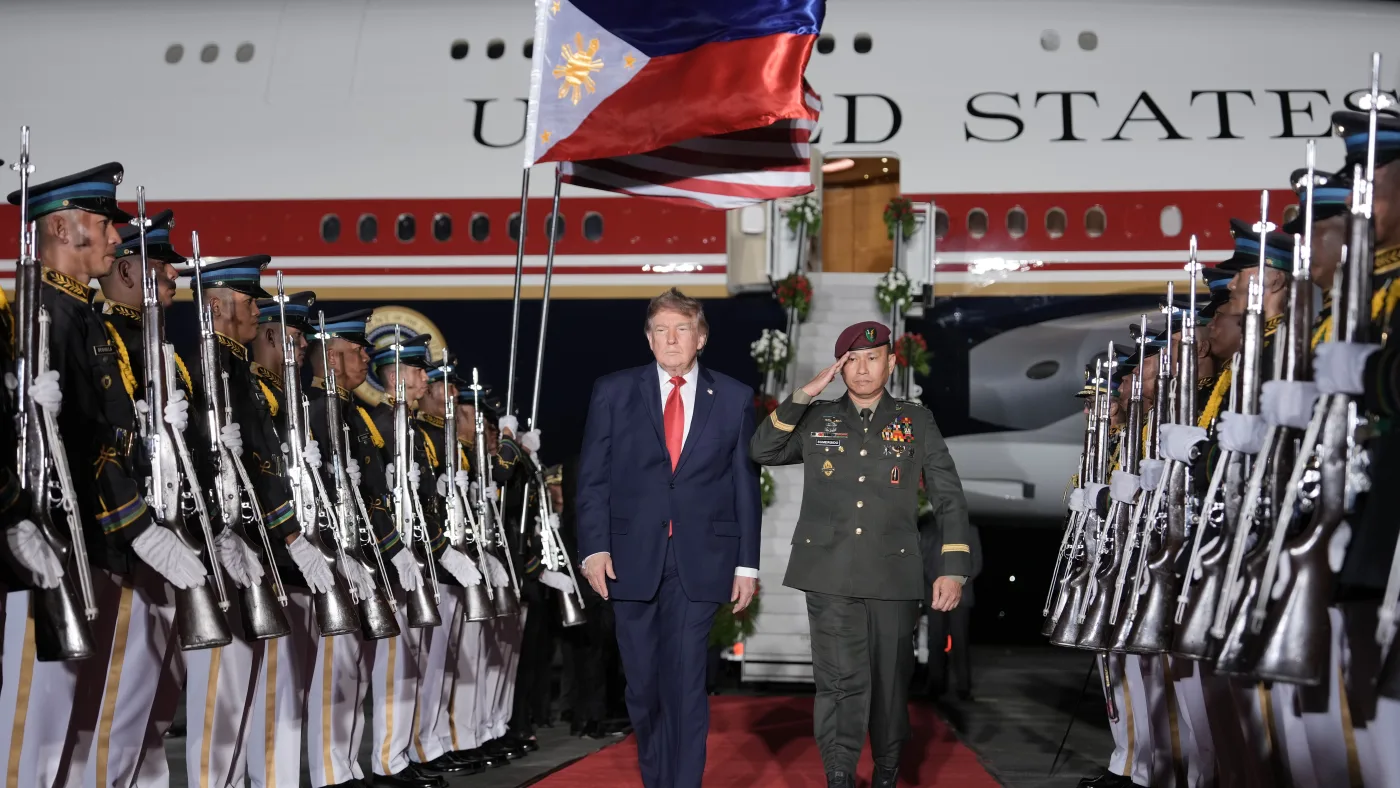
President Donald Trump arrived in Manila on Tuesday for the 49th ASEAN summit, landing as the closing ceremony began and protesters burned his effigy.
Air Force One touched down at Ninoy Aquino International Airport at 5:33 p.m. local time. A child offered Trump the U.S. and Philippine flags; he mistook the gesture for a handshake before accepting them. A marching band played “YMCA” as he walked to a waiting helicopter.
The visit marks Trump’s first foreign trip since his party’s midterm losses.
Quad Meeting Opens Summit
Trump’s first official engagement was a Quadrilateral Security Dialogue meeting with the leaders of Australia, India and Japan. The session was the grouping’s first since he returned to the White House.
The four nations expressed “grave concerns” about economic coercion, including arbitrary export restrictions on critical minerals, without naming China directly. Japan and the U.S. have complained that Beijing effectively shut off rare-earth exports to Japan for nearly a year.
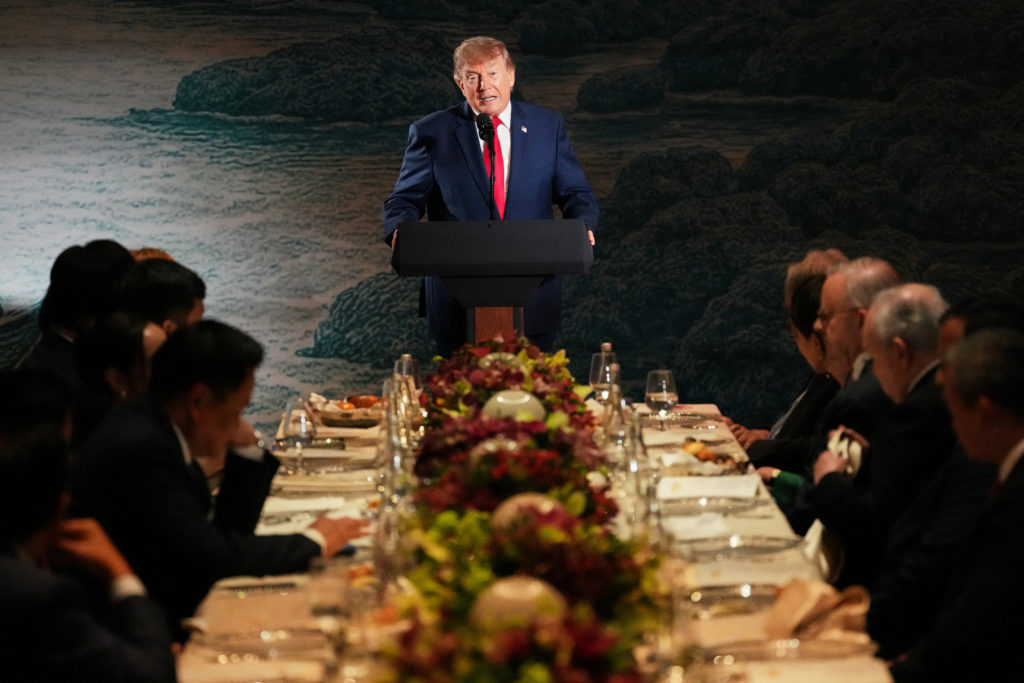
President Donald J. Trump delivers remarks at ASEAN dinner. "As we strengthen those bonds even further and work to build an incredible future for our people – the entire world." 🇺🇸 pic.twitter.com/Lr9RR1l5Lu
Trade Deal Advances With Thailand
Trump also moved toward finalizing a trade agreement with Thailand. He said Bangkok would eliminate all tariffs on U.S. exports and buy an additional $2.6 billion in American goods and pharmaceuticals. The U.S. is Thailand’s largest export market, accounting for 24% of its shipments this year. An earlier Trump administration statement said Thailand would also spend more than $18 billion on U.S. products.
Nuclear Summit With Xi and Putin Awaits
The Manila stop precedes Thursday's first-ever trilateral meeting in Shenzhen with Chinese President Xi Jinping and Russian President Vladimir Putin, held on the sidelines of the APEC summit. The White House said the discussion will center on decreasing nuclear proliferation, though officials differed on whether Ukraine would be raised. Trump called denuclearization a “tough subject” and said Iran would also be discussed.
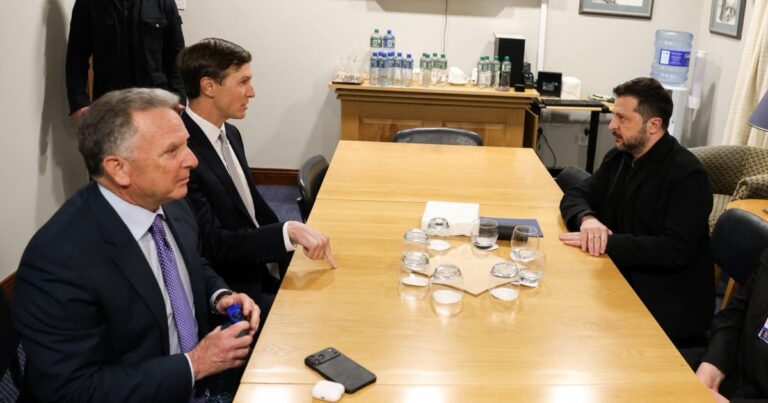
President Donald J. Trump, Australian Prime Minister @AlboMP, Prime Minister @narendramodi of India, and Japanese Prime Minister @takaichi_sanae meet for a Quad Leaders’ Summit in Manila, reaffirming their commitment to peace, stability, and prosperity. pic.twitter.com/xzPyP5A4o6
Trump floated a possible meeting with North Korean leader Kim Jong Un in Shenzhen, saying Kim “would like to” come but “we'll see what happens,” suggesting any encounter would depend on Xi. The president also said he would be open to a one-on-one with Putin but did not know if it had been scheduled.
Protests and Alliance Anxiety
About 1,500 left-wing demonstrators rallied in Manila’s Liwasang Bonifacio square, waving red flags and a banner reading “Resist U.S. war and plunder!” They burned an effigy of Trump and demanded the Marcos administration pursue an independent foreign policy. “The Philippine government should not deal with such a loser,” protest leader Teddy Casiño told the Associated Press. Nearly 23,000 police and SWAT personnel were deployed.
Some Filipinos welcomed Trump’s presence as reassurance against Chinese pressure in the South China Sea. “It's like being bullied in our own backyard,” said Anna Bunag, a homemaker in Quezon City, citing water-cannon incidents against Philippine coast guard vessels.
A Pew Research Center survey released in July showed more Filipinos trust Trump than Xi to “do the right thing” in world affairs, though trust in the U.S. has declined for some.
"The Philippines in April said it would join America’s Pax Silica initiative, its effort to build tech supply chains without Chinese content. The initiative has so far produced nothing concrete for the Philippines." https://t.co/cb2VfrfShk
Analysts noted the Trump administration’s national security strategy omits the “iron-clad” commitment to the Philippines that appeared in the Biden strategy. Gregory Poling, director of the Southeast Asia Program at the Center for Strategic and International Studies, said Trump’s return to Manila — his first since 2017 — signals the Philippines is “viewed uniquely positively by the Trump administration among all the Indo-Pacific partners.”
Rare Earths and AI Tensions Rise
At the Quad meeting, Trump claimed the U.S. is “making rare earths at a level that we've never made before” and “moving at a pace that nobody believes is possible,” seeking to project independence from Chinese supply dominance. The rare-earth issue is expected to feature prominently in Shenzhen, where China's control over critical minerals gives it substantial influence.
Meanwhile, new U.S. curbs on China’s access to advanced AI chips threaten to complicate a fragile trade-war truce set to expire in January. China’s foreign ministry accused Washington of “economic coercion” over the restrictions. Trump, who has campaigned to rename artificial intelligence “super intelligence,” told Southeast Asian leaders at a dinner that the U.S. has “the world's most powerful SI ecosystem” and leads “by a lot.”
Trump meets Philippine President Ferdinand Marcos Jr. on Wednesday before departing for Shenzhen. The last sitting U.S. president to visit China for a multilateral event was Barack Obama at the 2016 G20 summit in Hangzhou.
Trump to leaders at ASEAN summit: "You've done a fantastic job running your countries, your levels of popularity. It isn't easy." pic.twitter.com/EG7hQClSU6
More on Thailand
United States President Donald Trump has arrived in Asia for a multi-stop diplomatic tour featuring regional summits in the Philippines and a historic trilateral meeting in China with Russian President Vladimir Putin and Chinese President Xi Jinping. Trump arrived in Manila to… pic.twitter.com/qRIYKP8oXr
President Trump and Thailand's prime minister signed a joint trade statement on the sidelines of the ASEAN Summit in Manila, the Philippines, on Tuesday, saying the formal agreement will be finalized "in the coming weeks." Follow live updates: https://t.co/UaT9eB5AAi
- Trump Backs Return of Ex-Nvidia Boss as Bring Jensen Back Campaign Launches
- Wife of Assassinated ex-Haitian Leader Registers for Presidential Election
- Andy Burnham delays long-term UK-EU relationship options until after summit (newsarchyuk.com)
- Trump Arrives in Philippines to Kick off Asia Trip (world-today-news.com)
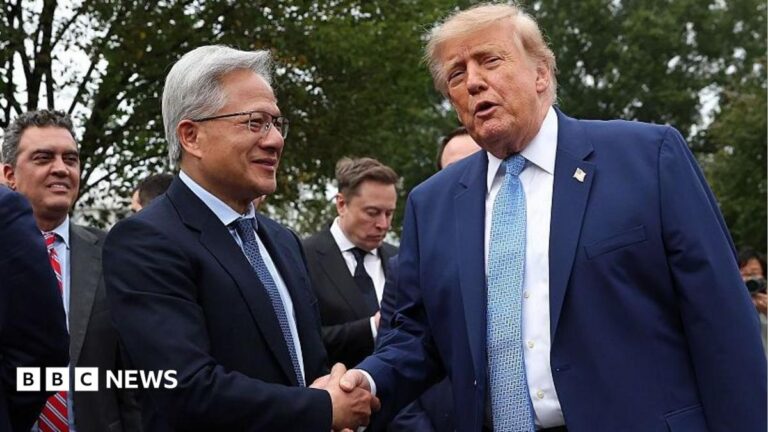
Trump Backs Return of Ex-Nvidia Boss as Bring Jensen Back Campaign Launches
President Donald Trump backed a campaign to reinstate Jensen Huang as Nvidia CEO on Monday, even as the...

Wife of Assassinated ex-Haitian Leader Registers for Presidential Election
Martine Moise, the widow of assassinated former Haitian president Jovenel Moise, has registered as a candidate for next...
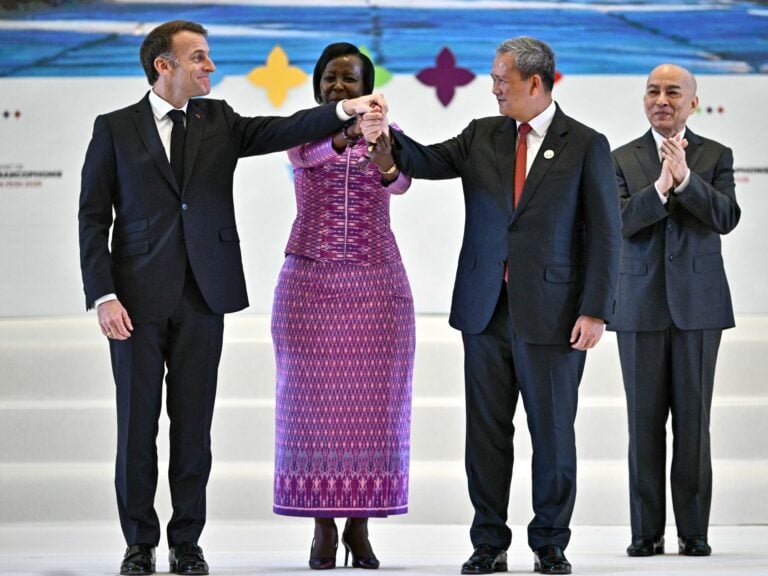
OIF Summit in Phnom Penh Faces DRC Threat to ‘Leave’ the Group
The Organisation internationale de la Francophonie (OIF) opened its three-day summit in Phnom Penh on Saturday.