
Democrats Flip the Senate in Deep-Red Upsets as Two Races Hang on a Knife’s Edge
Democrats flipped the US Senate and House of Representatives in a massive rebuke of Republicans. Within hours of the first polls closing, the party had flipped both chambers of Congress, with wins in states Republicans had come to rely on, including Texas and Kansas. Democrats had already secured control of the Senate, but two seats still hang in the balance: Alaska and Mississippi, where vote counts were still underway.
The Senate majority is already decided. What remains open is the size of it — and whether Democrats can hold a seat in Mississippi that no member of their party has won since 1982.
Mississippi: Fewer Than 50 Votes Separate Colom and Hyde-Smith
In traditionally Republican Mississippi, the race is down to the wire. Democrat Scott Colom held fewer than 50 votes over incumbent Republican Cindy Hyde-Smith with roughly 96% of expected votes reported. Not many touted the state as a battleground. With cost-of-living and healthcare among the main focuses of the election, Hyde-Smith may have been hurt by her opposition to the Affordable Care Act. The historical weight sits heavily on the contest: Mississippi has not elected a Democrat to the Senate since 1982. Hyde-Smith’s own political path adds a layer of irony, since in her early days in politics she successfully ran as a Democrat for the Mississippi State Senate.
Taking back Congress is only the beginning. The real test is what we do with that power to deliver for the American people. pic.twitter.com/5xGp3MMUq9
Alaska: Sullivan Clinging to a 1,500-Vote Lead With 28% Still to Count
In Alaska, incumbent Republican Dan S. Sullivan led Democrat Mary Peltola by just over 1,500 votes, but the state had reported only about 72% of its total votes so far. Democrats had viewed Alaska as a possible pickup heading into the elections, as Peltola held a slim advantage in the last days before voting.
How the Map Turned: Texas, Kansas and the Young-Voter Shift
A high-ranking official in the Republican Party described the night as a bloodbath.
Tonight, the American people sent a clear message — they want a politics that brings people together rather than divides them, and leaders who offer concrete solutions to the challenges they face. These results were only possible because outstanding candidates stepped forward in…
What a Democratic Congress Can Actually Do
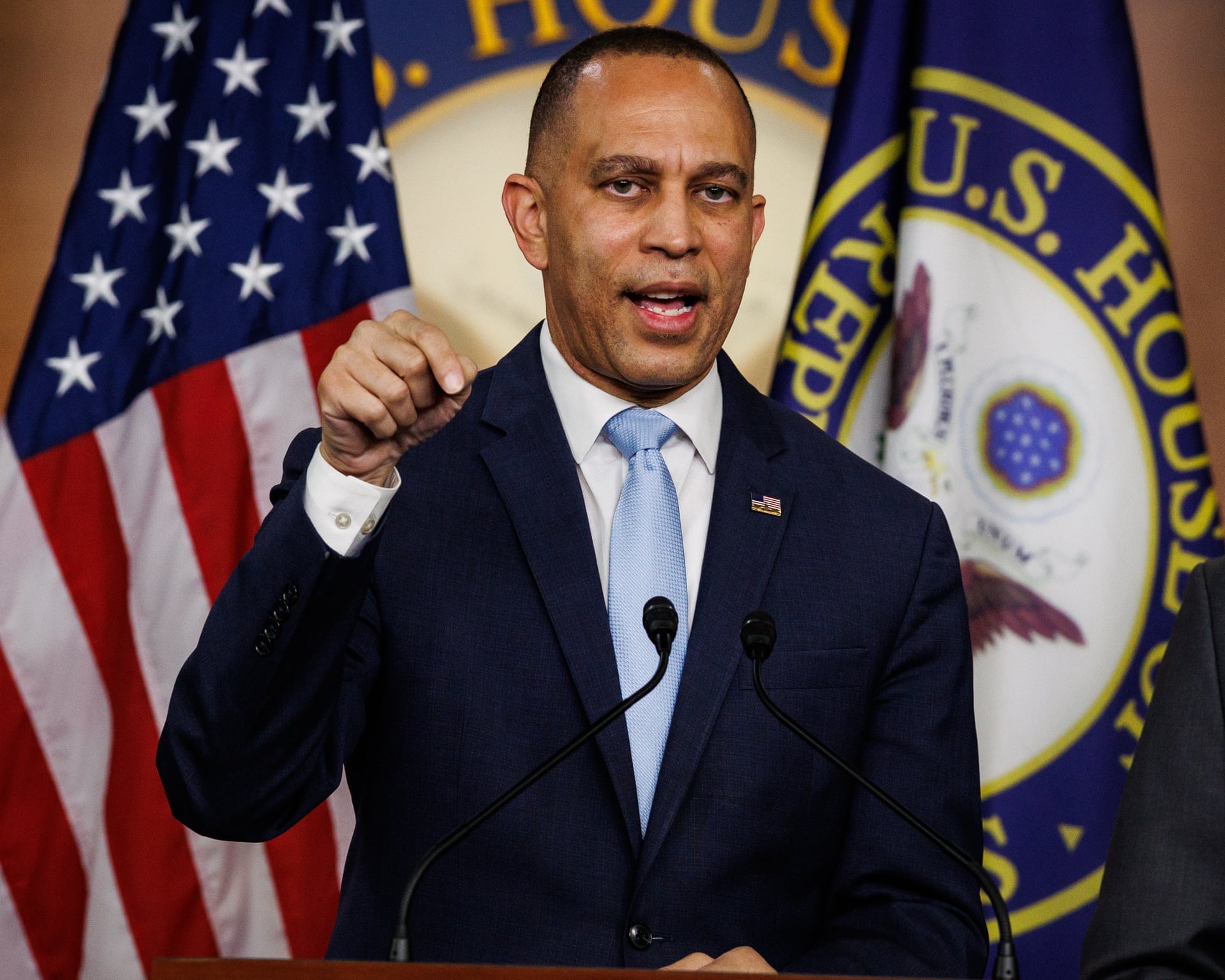
Control of both chambers changes the final two years of Trump’s presidency. In the House, Hakeem Jeffries is poised to become majority leader after Democrats passed the 218-seat threshold, stripping Republicans of the ability to pass legislation without Democratic support. The oversight agenda is already taking shape: Robert Garcia, the top Democrat on the House oversight committee, has ranked Trump family corruption first on his list of priorities, and Representative Jamie Raskin has requested information on the business dealings of Jared Kushner and Donald Trump Jr. Jason Crow said he would begin with the Pentagon, pointing to reports that defense funds were directed to companies tied to the Trump family. On impeachment, Jeffries says Democrats have ruled nothing out, while the current Republican House majority leader, Steve Scalise, predicts an attempt on “Day 1”.
The precedent is recent. Midway through Trump’s first term in 2018, Democrats captured the House of Representatives in a sweeping blue wave, and House committees rapidly opened dozens of investigations into his businesses, his management of the Russia probes and potential conflicts of interest. Slightly more than a year following the 2018 midterms, the House voted largely along party lines to impeach Trump; he was subsequently acquitted in the Republican-controlled Senate, and in 2021, Trump faced a second impeachment – and acquittal – for inciting the January 6 attack on the US Capitol.
The Affordability Mandate
Democrats now face the harder task of governing on the issues that carried them. Given how pressing the cost of living has become, attention is expected to center on reducing everyday expenses. Democrat Debbie Dingell told NBC that voters are sending a message that they dislike where the country is headed, and while people may not be enamored with Democrats, “we’ve a job to do” — and failure to deliver over the next two years will bring another strong warning from them. That warning frames everything now: the two undecided Senate seats will determine whether Democrats govern with a comfortable margin or a razor-thin one, and in Mississippi, whether a 44-year drought for Democratic Senate candidates finally ends.
Both races remain uncalled. The Alaska count continues with more than a quarter of votes still outstanding, and in Mississippi the margin is narrow enough that every remaining ballot could decide whether the state sends its first Democratic senator to Washington since 1982.
On Election Day, the American people spoke loud and clear: they are done with the corruption, incompetence, and callousness coming from the White House and the capitulation of Republican leaders. As I traveled the country to campaign for Democrats up and down the ballot, I…
More on Democrats
Last night, Americans made a clear call for accountability and affordability. A body politic cannot recover until its harms have been treated and its wounds have been healed. Crimes against our people and our Constitution must be answered for. The historic abuses of the last two… pic.twitter.com/AD8ZpCcZE9
Related reading

Indonesia Warns of New Threats to Malacca Strait Security: Strategist
The Malacca Strait funnels roughly 24 percent of global trade and 20 percent of global energy flows through...

Democrats Seize Senate Control With Seven New Faces
Democrats Seize Senate Control With Seven New Faces From Republican Strongholds Control of the United States Senate has...

Rebecca Gayheart Recalls Eric Dane’s Final Days and ALS Battle
On Nov. 3, 2026, Rebecca Gayheart told Maria Shriver on TODAY that she had no idea her late...

China expands overseas mining stakes to secure critical minerals
China's $8.8 Billion Mining Spree Marks Highest Spending Since 2018 Chinese mineral acquisitions abroad reached $8.8 billion in...