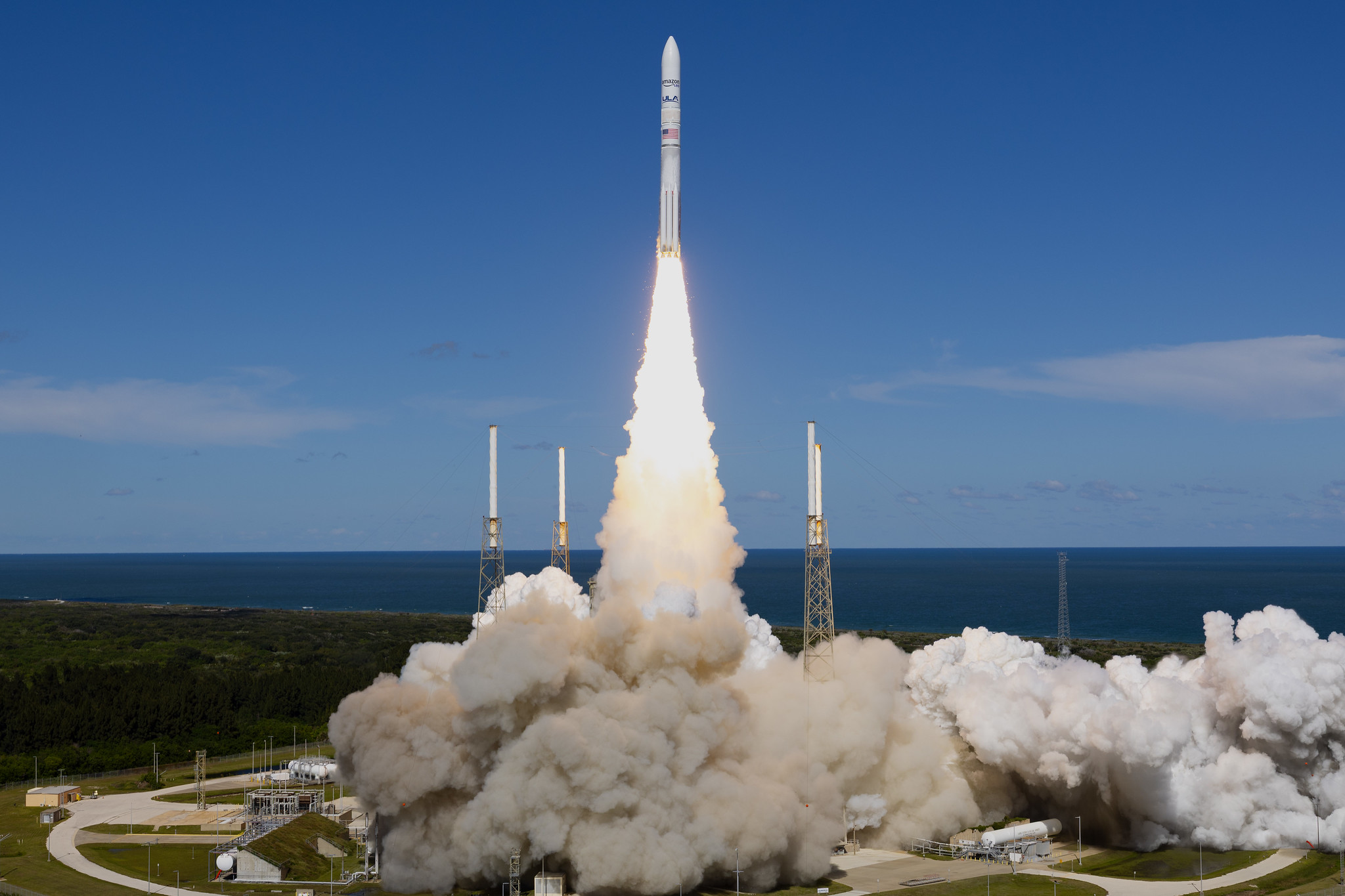
United Launch Alliance lost its first mission in its history on Sunday, destroying 40 Amazon Leo satellites and grounding the rocket the Pentagon and Jeff Bezos both need to fly.
ULA confirmed Wednesday that “inadequate fuel supply from the vehicle to the BE-4 engines” caused the Vulcan Centaur’s first stage to underperform seconds after liftoff from Cape Canaveral, Ars Technica reported. The Boeing–Lockheed Martin joint venture said the Blue Origin–built engines themselves performed normally, a finding that clears the path for New Glenn’s return to flight as soon as January.
“ULA has completed an initial integrated review of flight data from the Leo 1 launch anomaly that occurred last Sunday”
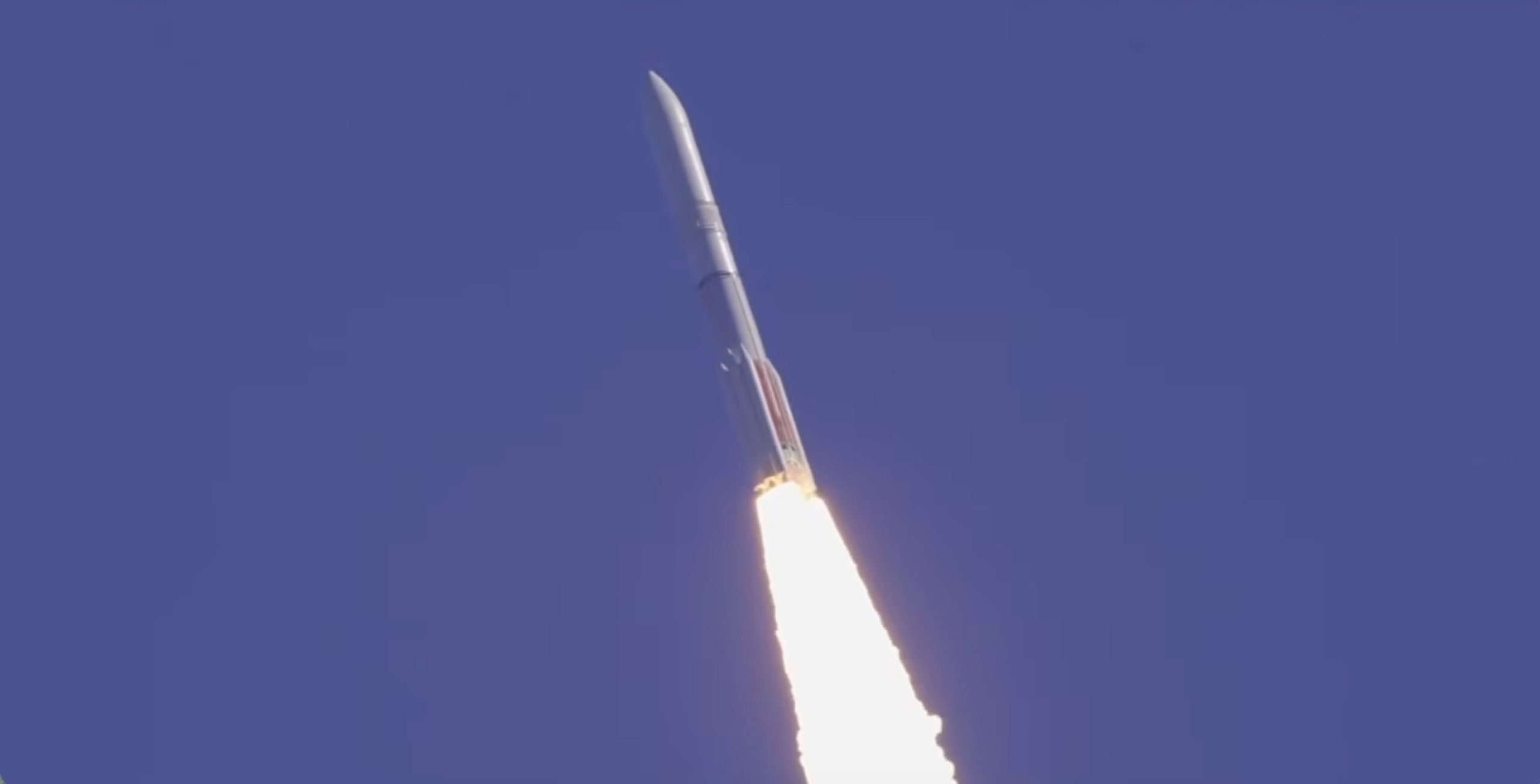
The Centaur V upper stage fired on time but could not overcome the velocity deficit left by the booster. Telemetry was lost roughly ten minutes into flight. It was Vulcan’s fifth launch since its January 2024 debut and the first to use six solid rocket boosters, which ULA said performed cleanly.
Based on data received by our Launch Director, we confirm that the Vulcan vehicle launched from Space Launch Complex 41 suffered an anomaly 10 minutes into the flight and failed to deliver the Amazon mission to orbit. Every flight generates data, and every flight teaches us…
First failure breaks ULA’s perfect record
The loss marks the first total mission failure in the company’s history, ending its record of successful mission deliveries since its formation in 2006, DW.com noted. Previous Vulcan flights in October 2024 and February 2026 each lost a solid-rocket-booster nozzle but successfully delivered their payloads to orbit. Sunday’s anomaly originated in the liquid-fueled core stage, not the strap-ons.
“We did complete the boost phase of flight,” Peller said. “We separated the upper stage, our Centaur V, which ignited its RL10 engines, and it was continuing on downrange… but the booster had left Centaur off in such a low-energy state… that Centaur wasn’t designed for and couldn’t make up for that performance deficit.”
Sorry to hear this. Hope you are back to flight soon.
Blue Origin cleared; New Glenn targets January
Blue Origin’s New Glenn, which uses seven BE-4s, suffered a catastrophic ground-test failure in May traced to a main oxygen valve. Blue Origin retrofitted the valve on both New Glenn and Vulcan engines. ULA’s preliminary finding that the fuel-supply issue was “not from the performance of the engines” means the retrofit was not implicated, Ars Technica reported.
“Together, ULA and Blue Origin identified that the low booster thrust was the result of inadequate fuel supply from the vehicle to the BE-4 engines, not from the performance of the engines.”
Leo deployment stalls; Ariane 6 up next
Amazon has booked 38 Vulcan flights — more than 1,500 satellites — making the rocket its primary workhorse. Sunday’s mission was the first of that block. Amazon’s next manifest slot is an Arianespace Ariane 6 carrying 36 satellites from French Guiana, targeted for November 23.
There is risk with any launch, and that’s especially true for inaugural missions like LV-01. ULA has been a trusted partner for Amazon, and we believe they’ll learn from this mission and deliver on their long-term plans for Vulcan. Full statement from @ulalaunch below. https://t.co/lS2GEioSak
Amazon said in a statement, “There is risk with any launch, and that’s especially true for inaugural missions like LV-01.” “ULA has been a trusted partner for Amazon, and we believe they’ll learn from this mission and deliver on their long-term plans for Vulcan.”
Space Force launch monopoly tightens
Vulcan and New Glenn are the only two rockets certified alongside SpaceX’s Falcon 9 and Falcon Heavy for the Space Force’s National Security Space Launch Phase 3 Lane 2 program. With both ULA and Blue Origin grounded, the Space Force reassigned six NSSL missions to SpaceX in October, Breaking Defense reported.
Clayton Swope, deputy director of the Aerospace Security Project at CSIS, told Breaking Defense that the situation is the same as it has been for the last several years and that hope exists for the problem to be fixed but there is no magic wand here.
The FAA will oversee ULA’s mishap investigation and must approve the final report and any corrective actions. Peller said ULA is “committed to working through that investigation as quickly as we can,” but no return-to-flight date has been set.
Multiple sources say the anomaly that impacted today's Vulcan launch occurred in the booster stage, not the Centaur V upper stage or SRBs. I don't yet know if the booster stage issue was caused by the BE-4 engines, the propellant management system, or another problem.
Why the fuel-supply finding matters
For Amazon, the Ariane 6 flight on November 23 is the next tangible milestone. Whether Arianespace can absorb a meaningful share of Vulcan’s 38-launch manifest remains unclear. SpaceX’s Falcon 9, meanwhile, is no longer accepting new commercial bookings, DW.com reported, leaving few near-term alternatives for heavy payloads.
NASA officials expressed support for the investigation in a response on X to ULA’s public statement on the anomaly: “The team at NASA is available to assist in all matters related to the investigation and remediation effort,” the agency said.
Appreciate you quickly keeping the public and your partners informed. The team at @NASA is available to assist in all matters related to the investigation and remediation effort. Artemis, Moon Base, and the nation need ULA. We are in your corner and here to help. https://t.co/FzYcLudZs2
ULA’s next Vulcan flight was expected within weeks of a successful LV-01. That cadence is now on hold pending the FAA-mandated investigation.
Disclaimer: The information provided in this article is for educational and market analysis purposes only and does not constitute financial, investment, or legal advice. Always consult with a certified financial professional before making investment decisions.
Follow the latest Vulcan Leo 1 status updates on our mission page: https://t.co/gZb3gTjRxG pic.twitter.com/TcMwsobiLj
More on Blue Origin
The investigation into the Vulcan launch failure remains in the very early stages, but here's what we are hearing.https://t.co/0O68NuHq3g
Indiana Rallies Past No. 20 Arkansas 81-76 at Madison Square Garden
Indiana rallied for an 81-76 victory over No. 20 Arkansas at Madison Square Garden on Tuesday night. On...

ASU Researchers Urge Arizona to Build Safety Net for Communities Facing Coal Plant Closures
When a coal plant shuts down in rural Arizona, the loss isn't measured only in megawatts — it...

Jawando Names Police Chief; 2017 Audit Flags Fraud Concerns
Montgomery County Executive-elect Will Jawando announced his choice for county police chief on Monday, naming Takoma Park Police...
BLM Deerwood Ranch Open House Leads to Nine Wild Horse and Burro Adoptions in Wyoming
She drove up the dirt road to Deerwood Ranch on a Saturday in late September just to look,...