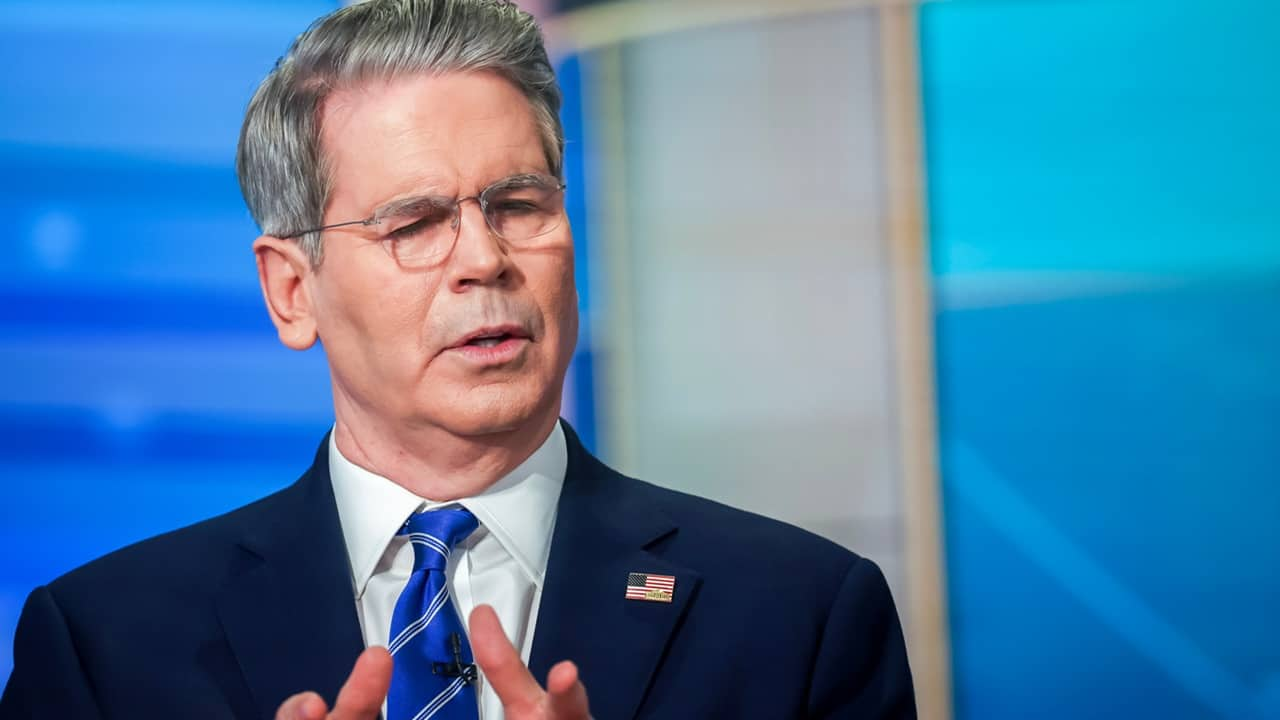
Treasury Secretary Scott Bessent revealed that European allies refused a Washington request to impose secondary tariffs on China and India over Russian energy imports. The disclosure accompanied a temporary 60-day US sanctions pause signed by President Donald Trump under the Lindsey O. Graham Sanctioning Russia and Iran Act of 2026.
Washington’s push for coordinated economic pressure on Moscow met resistance in European capitals earlier in the year, according to administration officials. The United States Treasury Department sought joint action to curb energy purchases from nations supporting Russia’s wartime economy, but European partners declined to participate in secondary trade restrictions against Beijing and New Delhi.
So we have asked, in the spring, I asked our European allies to join us in putting secondary tariffs on China, on India. They refused. So why should the US bear the burden?
Scott Bessent said during an appearance on television news.
Executive Order Pauses the Lindsey O. Graham Sanctioning Russia and Iran Act of 2026
The revelation about allied friction emerged alongside a major shift in trade enforcement. President Donald Trump signed an executive order putting on hold a sweeping sanctions package targeting the Russian economy, telling Congress the suspension served the national interest. The temporary pause applies to provisions under the Lindsey O. Graham Sanctioning Russia and Iran Act of 2026, which was signed into law in mid-September with heavy bipartisan backing in the House and Senate.
That legislation authorized secondary tariffs of up to 100 per cent on goods imported from the five largest buyers of Russian crude oil and natural gas, putting major importers like India and China directly in the crosshairs. The sixty-day window gives the executive branch room to evaluate the global economic fallout before deciding whether to implement the penalties. Secretary of State Marco Rubio noted that the administration needed to examine the energy requirements of India, which imports over 88% of its crude oil.
I think the president wants to take the 60-day period of time to sort of analyse what imposing both sanctions and tariffs will mean to the global economy, and even to the US economy.
Marco Rubio, US Secretary of State.
Treasury Secretary Points to European Energy Shipments
Bessent directed sharp criticism at European nations for continuing to purchase substantial volumes of Russian energy. The Treasury chief pointed specifically to transport records from Russia’s Yamal liquefied natural gas facility during the first half of the year.
Citing 140 cargo shipments departing the terminal, Bessent stated that 136 of those vessels traveled directly to European ports in Belgium, Spain, France, and the Netherlands. Those deliveries carried a combined valuation exceeding eight billion dollars.
The Europeans have given Russia and Vladimir Putin more money than they've given the Ukrainians. They continue to gorge on Russian energy.
Scott Bessent, US Treasury Secretary.
Bessent added that while the United States imported four billion dollars in Russian goods—including 1.8 billion dollars in agricultural fertilizer—European nations imported more than ten times that amount. He also highlighted a decision by the United Kingdom in May to waive its own embargo on diesel and jet fuel manufactured using Russian crude.
Political Backlash and Congressional Division
The executive order halting enforcement sparked immediate controversy in Washington, dividing lawmakers who had overwhelmingly united to pass the sanctions framework. Senator Lindsey Graham, representing South Carolina, joined critics in objecting to the temporary exemption of Russia from a legislative package championed by and named after her late brother Lindsey Graham.
Indian-American members of Congress who had opposed the original bill voiced strong disapproval from opposing angles, arguing that the administration’s unpredictable approach undermined legislative authority while leaving allies uncertain.
Trump is doing exactly what we warned: undermining Congress' authority, abandoning Ukraine, and letting Putin off the hook.
Suhas Subramanyam, Congressman, via Firstpost.
Amid the domestic debate, President Trump defended the pause during remarks at his Mar-a-Lago estate near Miami, characterizing the intervention as a necessary step on the world stage. “It’s a very good decision, and it’s going to be a decision that’s good for the country, and I think good for the world because we’re really at a world stage,” Trump said.
>

British billionaire Manchester United Co-owner INEOS Founder Arrives in Victoria Falls for Private Holiday
British billionaire and Manchester United co-owner Sir Jim Ratcliffe arrived in Victoria Falls on a Saturday for an...
Houthi Strike on Saudi Airport Kills 12
Following months of escalating regional conflict sparked by joint US-Israeli operations on February 28, a recent Houthi airport...
Iranian Fishermen Collect Floating iPhones, Perfumes After Ship Sinking in Strait
Following the sinking of the Singapore-flagged container ship GFS Pride in the Strait on October 14, viral social...

Netanyahu Faces Ejection as Arab Israelis Cast Votes
Israel's Palestinian minority faces a pivotal moment ahead of the October 27 Knesset elections.