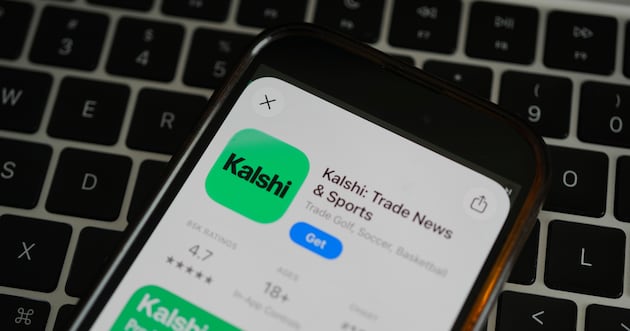
A state investigator used an undercover Visa debit card to bet on a college football game, winning $4.13 when the University of Utah beat Utah State by 36 points. That small win is now a central piece of evidence in a high-stakes legal war. Utah has filed criminal charges against the prediction market platform Kalshi and its co-founders, alleging the company illegally promoted gambling within the state, Deseret News reported.
The move escalates a jurisdictional clash between state sovereignty and federal regulation. While Utah views Kalshi as an illegal gambling operation, the Commodity Futures Trading Commission (CFTC) has sued the state of Utah to block the enforcement of these anti-gambling laws, arguing that federal authority over derivatives markets overrides state statutes.
Criminal charges target founders and profits
Utah is not merely seeking fines; it is pursuing felony charges. The state has charged Kalshi and its co-founders, Tarek Mansour and Luana Lopes Lara, with one count of pattern of unlawful activity—a second-degree felony—alongside 12 counts of online gambling promotion (third-degree felonies) and one count of general gambling promotion.
The evidence stems from a sting operation conducted in September 2026. Investigator Scott Eggerman created an account using a local phone number and bank account to pose as a Utah resident. Over 11 days, Eggerman placed a dozen bets on MLB and NFL games, as well as local matches involving Real Salt Lake and the University of Utah. The charges highlight that Kalshi collected fees ranging from 3 cents to 78 cents on these transactions.
The financial stakes for the state are significant. In a 63-page civil complaint, Utah alleges that Kalshi generated between $30.5 million and $61.1 million from Utah-based accounts between February 2026 and October 19, 2026. The state is now moving to claw back those profits and is demanding a court-approved geolocation provider to ensure the platform can no longer be accessed within state borders.
The clash over ‘prediction markets’
At the heart of the dispute is a fundamental disagreement over what Kalshi actually is. To Utah, the platform is a sportsbook. To Kalshi, it is a federally regulated financial exchange, akin to the stock market, where users trade “event contracts” on real-world outcomes.
“Gambling is illegal in Utah, whether you place the bet, run the game, or promote it. Calling it a ‘prediction market’ doesn’t change what it is, and being federally registered doesn’t put a company above the law,” Utah Attorney General Derek Brown said in a statement.
Kalshi disagrees, asserting that as a national derivatives market overseen by the CFTC, it answers to federal law rather than the veto of a single state. A spokesperson for the company characterized Utah’s actions as “crazy overreach” and “playing politics,” noting that they intend to fight the charges in court similarly to how they handled a previous case in Arizona.
Federal preemption and the Arizona precedent
This isn’t the first time Kalshi has faced a state’s wrath. Arizona filed criminal charges against the platform in March, marking the first such prosecution of a CFTC-registered operator. However, that effort hit a wall when a federal judge issued an injunction to block the prosecution, a ruling Arizona is currently appealing.
Utah’s strategy shifted after a ruling from U.S. District Judge Robert J. Shelby in August. Shelby determined that Utah’s anti-gambling laws do apply to the sports betting contracts Kalshi offers, concluding that federal law does not automatically preempt the state’s ability to enforce its own statutes. This ruling provided the legal green light for Utah to move its case into state court.
Now, the federal government has stepped in. The CFTC is arguing that its regulatory scheme over commodity futures, options, and swaps provides “exclusive jurisdiction,” which should shield federally regulated exchanges from state-level gambling prohibitions.
Who loses if the state wins?
If individual states can successfully categorize CFTC-registered event contracts as illegal gambling, platforms like Kalshi may be forced to use geolocation providers to enforce state laws.
The legal deadlock remains tight. While Kalshi looks to federal preemption for safety, Utah is leaning on a district judge’s ruling that the state’s laws still have teeth. The Utah Attorney General’s Office has declined to comment on the federal lawsuit filed by the CFTC, leaving the next move to the courts.
Keep reading

Baltimore City Worker Killed in Crossfire: Layla Bailey Remembered
Forty-six rounds of ammunition were fired into a crowd at a West Baltimore gas station on the night...
Maine Senate Race: Collins and Jackson Clash Over Energy Costs
Maine’s Senate race between incumbent Republican Susan Collins and Democrat Troy Jackson has centered on a clash over...

Louisiana Amendment 4: Lifetime Term Limits for Governors
Louisiana voters will decide on November 3, 2026, whether to establish a lifetime limit on the number of...

City of Frankfort Approves Update to 35-Year-Old 911 Agreement
The City of Frankfort and Franklin County are moving to overhaul a 911 services agreement that hasn't been...