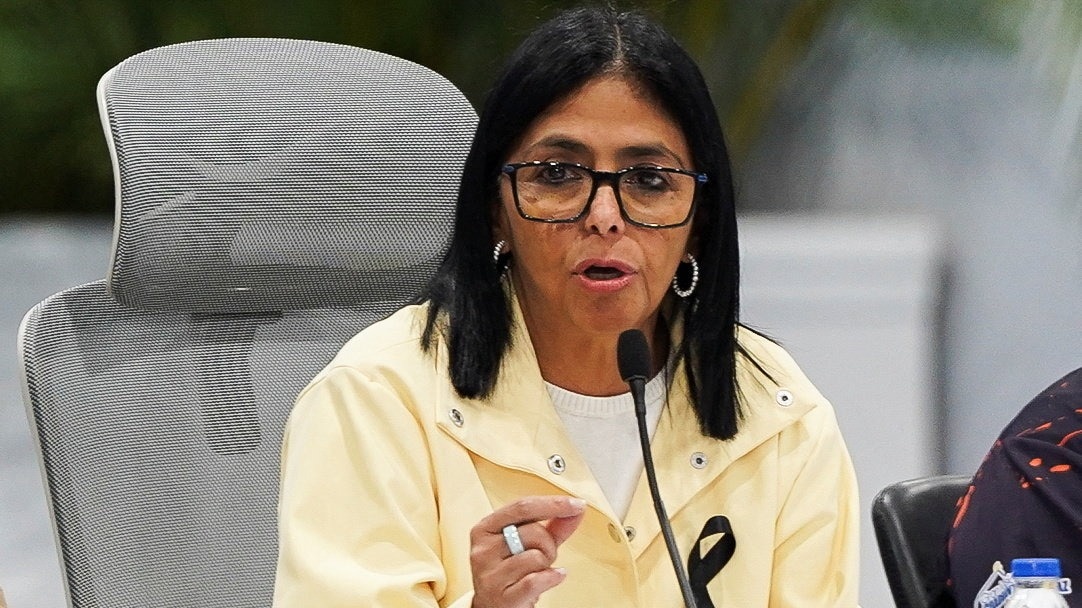
Venezuela’s interim president, Delcy Rodriguez, announced a 25-year energy agreement with the U.S. that aims to boost oil production to 1.5 million barrels per day while asserting the country retains sovereignty over its resources, according to multiple reports.
The Deal’s Framework and Revenue Projections
Venezuela’s interim President Delcy Rodriguez described the 25-year bilateral energy agreement with the U.S. as a “historic” project to revive the nation’s battered oil sector. The deal, announced after President Donald Trump’s public remarks, targets an increase in crude output to 1.5 million barrels per day (bpd), with a broader plan to develop 17 strategic oilfields and eight additional greenfield blocks, according to Reuters. Rodriguez emphasized that the agreement would generate approximately $209 billion in revenue for the Venezuelan state, based on a benchmark oil price of $65 per barrel. Under the arrangement, $19 from each barrel produced and sold to the U.S. would flow directly to Caracas, as reported by samaa.tv.
The U.S. is set to gain majority control of over 65 billion barrels of Venezuela’s proven oil reserves through partnerships with private companies, though Trump provided few details on the operational framework, according to indiatoday.in. Rodriguez reiterated that Venezuela would maintain ownership of and sovereignty over its resources while leveraging foreign capital, technology, and expertise to rebuild an industry weakened by sanctions, underinvestment, and mismanagement, as noted by Reuters.
Venezuela's interim president says US energy deal will last
Sovereignty Claims and Domestic Reactions
Rodriguez explicitly stated that the agreement would not compromise Venezuela’s control over its natural resources, declaring, One thing must be absolutely clear: Venezuela retains ownership and sovereignty over its resources, according to Reuters. This assertion came amid pro-government protests in Caracas against U.S. involvement in the country’s energy sector, with demonstrators gathering in downtown areas to oppose the deal, as reported by indiatoday.in.
Rodriguez acknowledged that crude prices could fluctuate, adding that the $209 billion estimate was contingent on stable market conditions, according to samaa.tv.
Implications for Venezuela’s Economy and Global Energy Markets
The agreement is positioned as a critical step toward reversing Venezuela’s economic decline, which saw a significant contraction between 2014 and 2021 due to hyperinflation, sanctions, and collapsing oil production, as reported by Reuters. Rodriguez argued the deal would help shape the country’s future by attracting private investment and boosting government revenue, according to indiatoday.in. The U.S. has also framed the arrangement as a way to diversify its crude supply, potentially lowering domestic fuel prices, as noted by Reuters.
We retain sovereignty over resources
Venezuela, which holds the world’s largest proven oil reserves, currently produces around 1.25 million bpd—far below its potential—due to years of underinvestment, according to indiatoday.in. The new framework includes plans to sign agreements next week granting oil exploration and production rights to U.S. firms, with Chevron among the companies expected to transition its Venezuelan joint ventures into the updated energy model, as reported by samaa.tv.
Additional Details from the Agreement
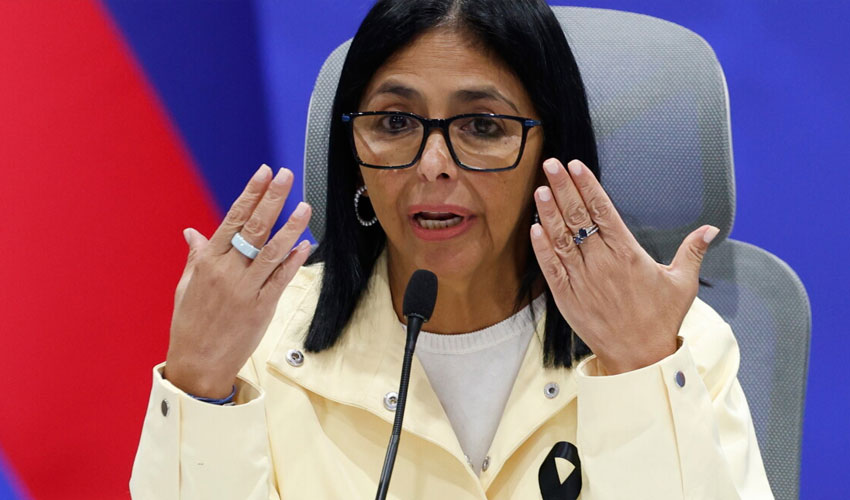
The 25-year bilateral project envisages the development of 17 strategic oilfields with a production target of more than 1.5 million barrels per day, as stated by Rodriguez in a televised address, according to Source 3. She added that the production target was only an initial objective, while the broader plan also includes the development of eight new oil blocks. Rodriguez emphasized that the figure of 1.5 million bpd relates solely to the bilateral agreement between Venezuela and the U.S., as mentioned in Source 2.
The agreement’s revenue projections are based on a benchmark oil price of $65 per barrel, with Rodriguez stating that the $209 billion estimate could fluctuate depending on market conditions. She also noted that roughly $19 from each barrel produced and sold under the arrangement would flow directly to Venezuela, providing a significant boost to government revenue, as detailed in Source 2.
Venezuela says it retains sovereignty after landmark US oil
Protests and Public Sentiment
Dozens of pro-government groups gathered in downtown Caracas to protest against the U.S. presence in Venezuela, according to Source 2. These demonstrations highlighted tensions surrounding the agreement, as some citizens expressed concerns about foreign influence over the nation’s natural resources. Rodriguez welcomed the agreement, stating it would bolster economic growth and increase government revenue, as reported by Source 2.
Future Steps and Corporate Involvement

Venezuelan officials are preparing to sign agreements next week granting new oil exploration and production rights to several companies, including U.S. firms. Two sources close to the negotiations indicated that Chevron was among the companies expected to finalize talks to transition its Venezuelan operations under the new framework, as noted in Source 2. This development underscores the involvement of major international energy corporations in the agreement’s implementation.
Rodriguez reiterated that the agreement would preserve Venezuela’s sovereignty over its natural resources while leveraging foreign capital and expertise to revitalize the energy sector. She emphasized that the deal would address years of sanctions, underinvestment, and mismanagement that have hindered the country’s oil industry, as stated in Source 3.
Nyesom Wike Unveils 2027 Cross-Party Campaign Strategy in Abuja
Federal Capital Territory Minister Nyesom Wike unveiled a cross-party mobilization strategy, declaring himself field commander for President Bola...
Traffic Diversions Set as Zanu-PF Annual Conference Begins in Chinhoyi
Thousands of delegates converge on Chinhoyi for the ruling party’s annual conference, triggering strict traffic diversions on major...
An Coimisiún Pleanála Refuses Creeslough Service Station Planning
An Coimisiún Pleanála has refused planning permission for a service station adjacent to the Creeslough tragedy site in...
Minister for Communications O’Donovan hospitalized
Minister for Communications Patrick O’Donovan was hospitalized after becoming unwell during an EU Presidency event in Limerick on...