
The 53-Seat Stalemate and the Fractured Knesset
Israel is bracing for weeks of political uncertainty following a historic parliamentary election that left both major political blocs short of a governing majority. With 91 per cent of the vote counted, the current results show Prime Minister Benjamin Netanyahu’s right-wing bloc projected to secure 53 seats in the 120-member Knesset, according to The Irish Times. Netanyahu’s primary opponent, former military chief Gadi Eisenkot and his Yashar party, are on track for 48 seats, while Arab-led parties have surged to a record 19 seats.
Neither grouping has managed to reach the 61 seats required to form a majority government. The gap between the exit polls broadcast on Tuesday night and the ongoing actual count has upended early expectations. Television exit polls had initially projected a slight edge for the anti-Netanyahu opposition bloc, leaving the remainder of the mandates to Arab parties. Instead, Netanyahu’s Likud party has emerged as by far the largest single party in the parliament, complicating any straightforward path to power for his rivals.
Absentee Ballots and the Final Tally
The definitive composition of the Knesset remains on hold pending the final tally of absentee ballots. Election officials are processing roughly 500,000 to 600,000 votes cast by military personnel, diplomats, and individuals in hospitals and prisons, representing about 15 mandates, per reporting from The Irish Times and RTE.ie. While final results are anticipated by Friday evening, military votes traditionally favor right-wing factions with minimal spillover into Arab or ultra-Orthodox tallies, meaning the current projections are unlikely to shift dramatically.
This prolonged deadlock unfolds against a backdrop of severe domestic and regional strain. Voters went to the polls after three years of inconclusive wars across multiple fronts, including Gaza, Lebanon, and Syria, alongside direct military exchanges with Iran. Key domestic disputes, such as the military exemption for the fast-growing ultra-Orthodox population, have deepened existing societal divisions between secular and religious Israelis.
Foreign Interference Probes and Domestic Accusations
The electoral landscape has grown increasingly volatile amid aggressive allegations of voter fraud and foreign interference. Central Elections Committee Chairman Justice Noam Sohlberg instructed Shin Bet chief David Zini to investigate suspicions that foreign entities, including Qatar and Turkey, funneled illicit funds into Israel to boost voter turnout in the Arab sector, The Jerusalem Post reported. Law enforcement officials intercepted envelopes containing cash and voting slips for the Ra’am party during the inquiry.
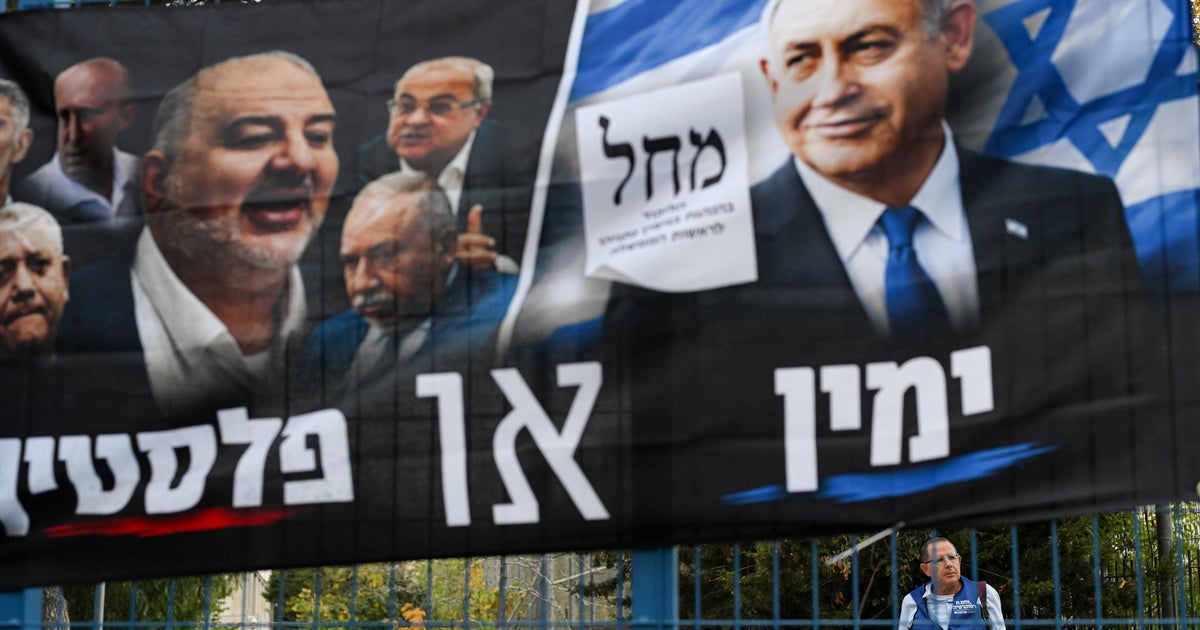
In response to the unprecedented turnout and surging mandate count for Arab-led parties, Netanyahu’s Likud party accused political opponents of attempting to “steal” the election, submitting hundreds of testimonies regarding alleged polling station irregularities to election authorities. Escalating the political rhetoric further, far-right National Security Itamar Ben Gvir publicly called for the immediate arrest of Arab party leaders over unproven accusations of foreign financial backing, according to RTE.ie.
Coalition Calculations and the Prospect of New Elections
With a governing majority out of reach for both primary camps, political figures have begun maneuvering for potential coalitions. Yair Golan, leader of the centre-left Democrats and a junior partner in Eisenkot’s bloc, initiated formal coalition talks by meeting with Eisenkot and Yair Lapid, the number two leader of the B’Yachad party, The Irish Times reported. Golan remains the sole opposition leader openly advocating for cooperation with parties representing Palestinian citizens of Israel.

Such a pact faces steep structural hurdles. While the opposition bloc could theoretically form a minority government backed by a Knesset safety net from Arab parties, doing so would require pre-election vows to be broken and relies on a public legitimacy that is currently absent. Meanwhile, President Yitzhak Herzog has urged political leaders to keep an open mind and avoid driving the nation toward a second election.
For Netanyahu, however, a prolonged deadlock and subsequent spring elections present distinct strategic advantages. Operating as caretaker prime minister, Netanyahu could campaign without the risk of small right-wing factions wasting votes below the electoral threshold, while benefiting from the likely absence of tens of thousands of diaspora voters and a lower Arab sector turnout. Amidst these calculations, UN human rights chief Volker Türk publicly appealed to incoming leadership to abandon its current course of warfare and respect international law.
Related reading
Dewan Rakyat passes Budget 2027 at policy stage – The Edge Malaysia
Malaysia’s sweeping fiscal roadmap cleared its initial parliamentary hurdle on Thursday as the Dewan Rakyat passed the Supply...

SMU Creates Master of Public Governance and Leadership for Asia
Singapore Management University announced the creation of a new master's degree aimed at training public leaders to manage...
Report Links Trump Business Ventures to Foreign Policy Decisions
Democracies must keep a check on leaders' conflicts of interest as US institutions fail to handle executive corruption...

North Korea Fires short-range ballistic missiles, South Korea says
North Korea fired a barrage of about 10 short-range ballistic missiles off its eastern coast into the Sea...