The $615 Million Wichita School Bond Math That District Promos Leave Out
If this gets voted down November 3rd, we’ll still come back for another bond issue,
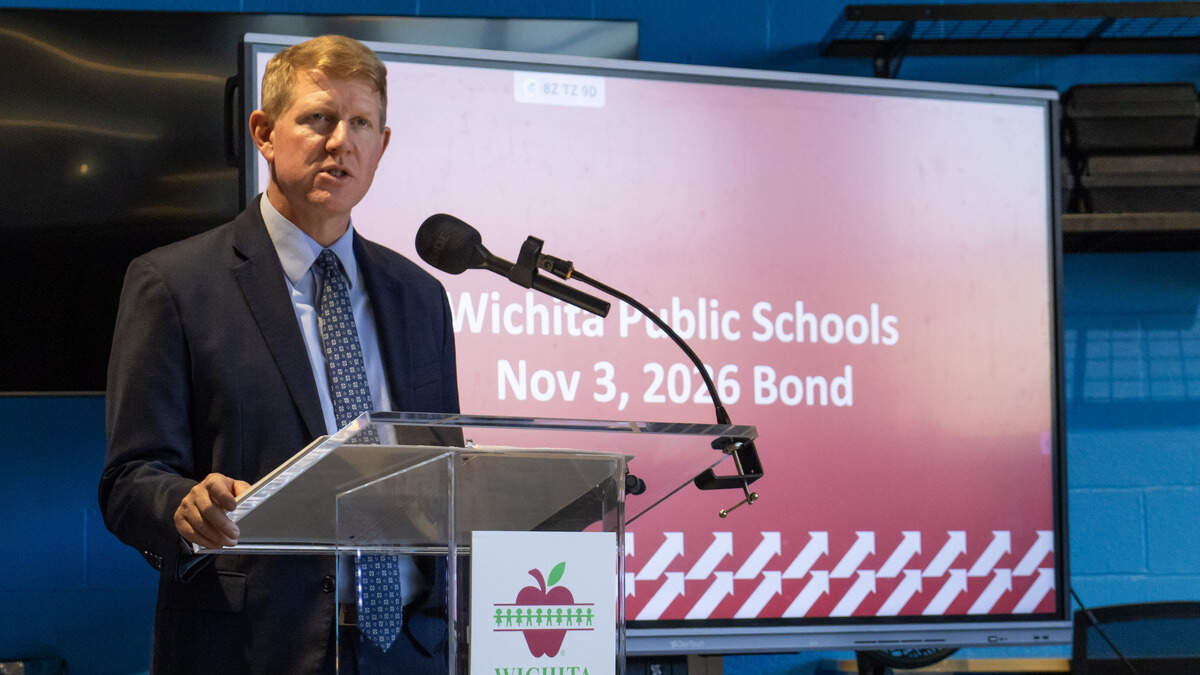
Kelly Bielefeld, superintendent for Wichita Public Schools, warned at a recent news conference. We have to have a bond issue to survive as a school district. There’s just no other way around it.
As voters head to the polls on November 3, to decide a proposed $615 million school bond issue, district promotional materials have claimed that the new spending would cost the average homeowner about $4 a month. But that figure obscures the true financial impact of the two-question ballot measure, according to a detailed financial analysis published by the Wichita Eagle.
While the district points to a modest monthly increase of $4.16 for a home appraised at $200,000, that projection falls far short of what local property taxpayers will actually pay over the life of the debt. Figures calculated by the Wichita Eagle show that this same property owner will probably incur between $3,532.80 and $5,185.58 in additional property taxes across a 20-year span assuming both Proposition 1 and Proposition 2 are approved.
The actual monthly hit will climb well above $4.16. If home values remain flat, the combined bond measures would cost $176.64 annually, or $14.72 each month. If local property values follow historical growth trends, the annual cost would start at $176.64 and eventually cost $353.28, driving the monthly burden up to $29.44.
Proposition Breakdown and the Tax-Neutral Debate
The total $615 million price tag is split across two separate ballot questions. Proposition 1 asks voters to approve $407 million funded by a 5.5-mill tax rate, while Proposition 2 seeks $208 million backed by a 2.18-mill tax rate, based on district estimates published in the September 23 edition of the Wichita Eagle. Bielefeld has defended the two-question structure as a direct response to community feedback following the narrow failure of a $450 million bond proposal in February 2025.
Question 1 is a lower amount than the previous bond,
Bielefeld said at a recent news conference. So the total amount for both questions is more, but the last bond was $450 million and Question 1 is $407 million. So we had heard, you know, that number is pretty big, you need to go lower. We also heard we want something that is tax flat, tax neutral, mill-rate neutral, however you want to say it. So we honored that, and that’s why we have two questions was really because of community feedback.
The district maintains that if only Proposition 1 passes, property taxes would remain flat. Yet this assertion leaves out the fact that if citizens vote down the fresh measure, the current bond issue mill levy for the district is scheduled to run out by 2029, which would lead to a reduction in property taxes.
If Proposition 1 passes alone, a homeowner with a $200,000 property would likely pay an extra $2,530 to $3,713.64 over the next 20 years. That translates to $10.54 a month if property values stay flat, or starting at $126.50 a year and topping out at $253 annually—or $21.08 a month—if values follow historical growth trends.
What the Money Buys and Where the Funding Stands
In a departure from previous financing initiatives, residents in the area are anticipated to shoulder the entire burden of paying back the bonds without any projected financial assistance from federal or state authorities. Past bonds relied on outside aid; USD 259 has spent more than $870 million on bond and interest payments since 2008, which included state and federal assistance. The federal Build America Bonds initiative, which was established through a stimulus measure from the Great Recession era enacted in 2009 by President Barack Obama, concluded in 2010. The state Legislature has eliminated state aid funding for future bond issues at Wichita Public Schools, leaving local property owners responsible for the entirety of the newly projected costs.

Pennsylvania and IDMe – IDMe Help Center
Pennsylvania DLI Integrates ID.me for Claimant Verification The Pennsylvania Department of Labor & Industry (Pennsylvania DLI) has integrated...

Portland man unveils giant 9-by-13-foot flannel shirt – KPTV
What are pants without a shirt in ‘Shirtzenpantz’ right? Ethan, a representative for Shirtzenpantz, told KPTV regarding the...
Oklahoma City council approves first hyperscale data center. That doesn’t mean there will be more
The Oklahoma City Council voted to approve a data center development, with city leaders warning that the green...

Collins rallies voters in Columbus in Georgia U.S. Senate race – WTVM.com
Collins targets Ossoff over inflation and hurricane relief in Columbus Republican U.S. Rep. Mike Collins rallied voters at...