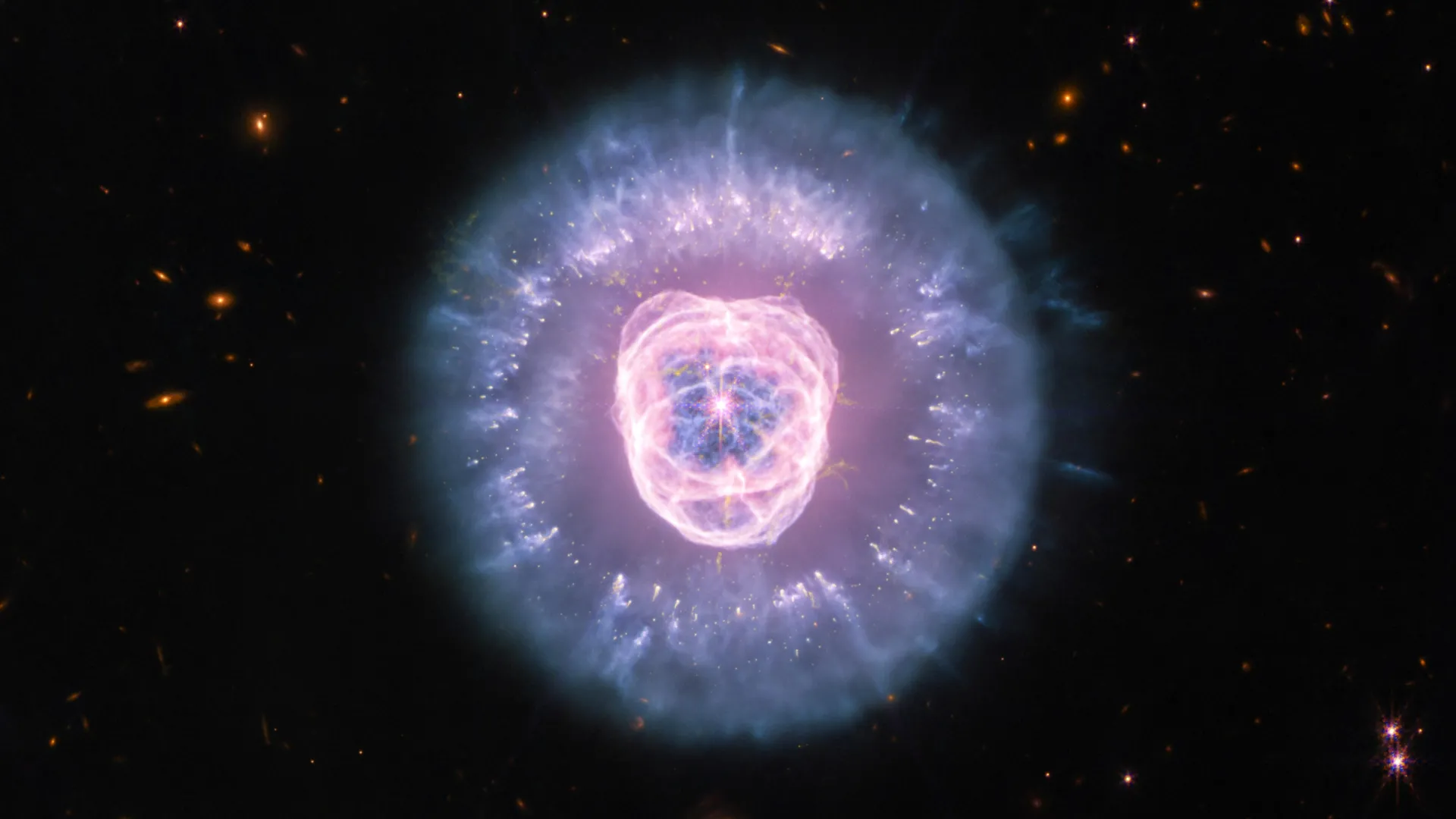
The James Webb Space Telescope has captured new images of NGC 2392, a planetary nebula commonly known as the Lion Nebula, revealing the cosmic object in striking infrared detail. Released by NASA, the images depict the celestial marvel in a level of detail that astronomers were yet to see, providing a significantly sharper view than previous observations.
James Webb Space Telescope Captures New Images of the Lion Nebula
First discovered by the astronomer William Herschel in 1787, the object was historically called the Eskimo Nebula. The Hubble Space Telescope previously observed the nebula in visible light in 2000, highlighting its lion-like appearance and a mane made up of hazy structures resembling comet tails. Utilizing its Near-Infrared Camera (NIRCam) and Mid-Infrared Instrument (MIRI), the James Webb Space Telescope (JWST) has now provided an even sharper look using its advanced infrared capabilities.
Anatomy of a Dying Star
Located roughly 6,000 light-years from Earth in the constellation Gemini, the nebula is formed by the shrunken core of a dying lower-mass star surrounded by expanding gas and dust. When a lower-mass star reaches the point where core nuclear reactions can no longer support it, the star becomes unstable, begins to pulsate, and sheds its outer layers into space.
At the center of the Lion Nebula is an extremely hot stellar core called a white dwarf, which resembles a small button nose in the lion-shaped appearance. According to PetaPixel, the white dwarf is effectively “cooking” the surrounding material from the inside out, generating the energy and radiation responsible for driving the complex structures surrounding it.
Glowing Mane of Gas and Dust
Intense radiation from the central white dwarf is creating a growing bubble of ionized gas that makes up the lion’s recognizable face. As this bubble expands, it sweeps outward and destroys dust in its path, though scientists are still working to understand why the swept-up gas forms complicated arrangements of rings and shells.
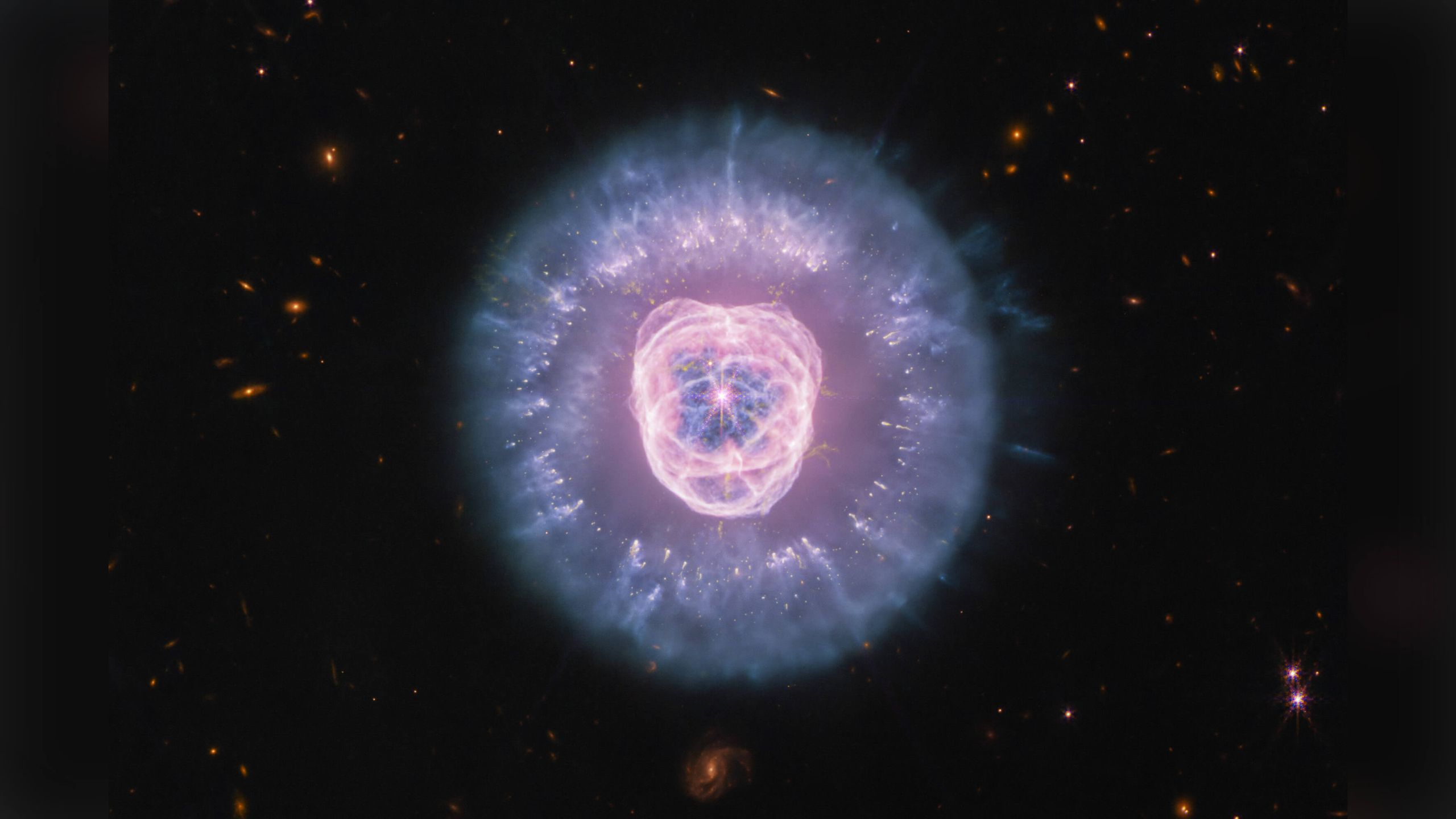
The lion’s mane corresponds to the inner region of a dust shell illuminated by the central white dwarf. Within this region are compact clumps of dust that act as comet-like tails. These dense clumps manage to withstand radiation from the stellar core, blocking some of that radiation and shielding material located behind them.
Future Evolution on Cosmic Timescales
According to NASA, it has taken the nebula thousands of years to reach its current shape. While Webb’s observations capture the nebula at a single moment in its long evolution, the consequences of the star’s death are ongoing, and the nebula’s components will continue changing as gas and dust migrate away from the stellar core.
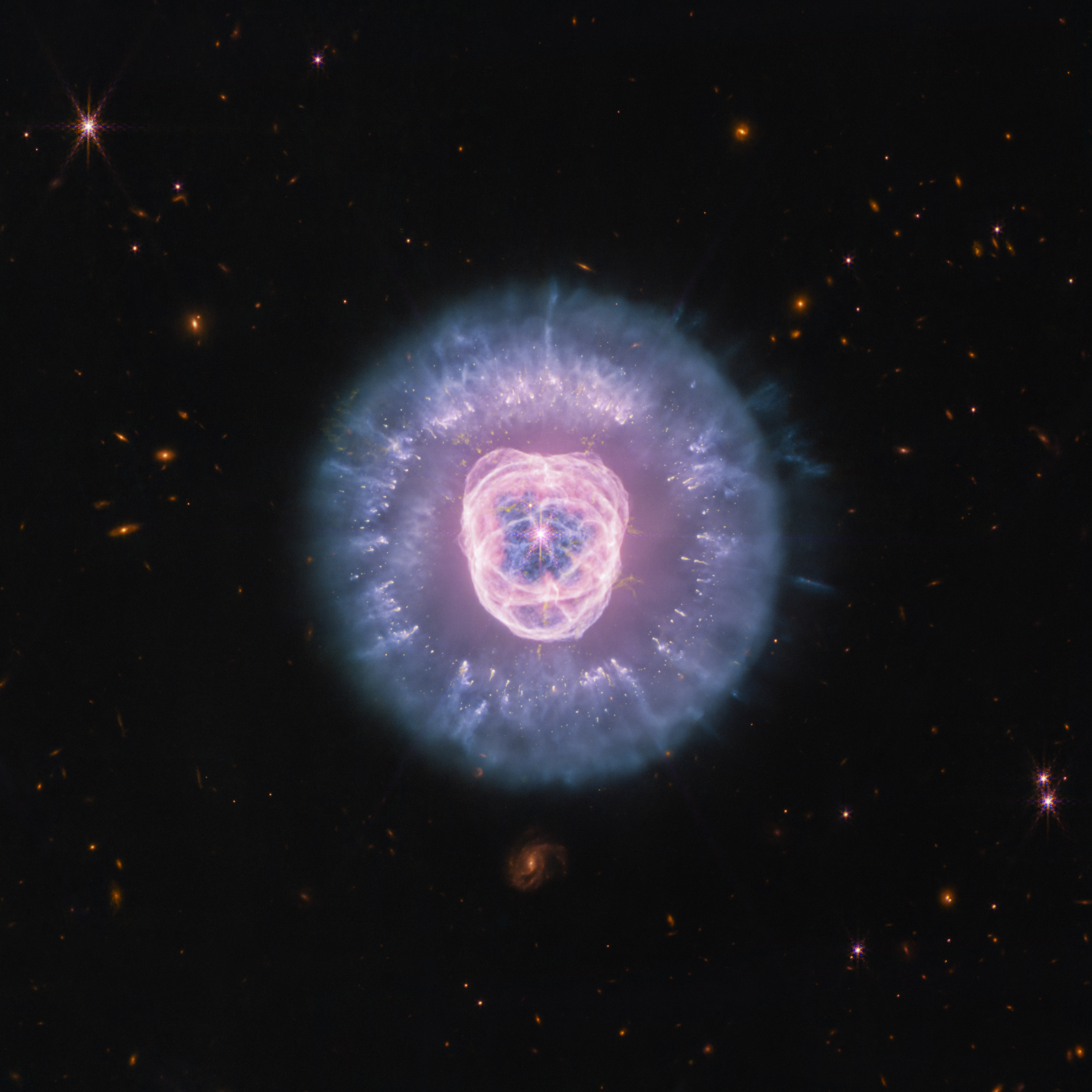
Astronomers estimate that the Lion Nebula will eventually disperse entirely in approximately 10,000 years, which the space agency describes as a relatively brief, short period in astronomical terms.
The international partnership operating the telescope consists of NASA, the European Space Agency (ESA), and the Canadian Space Agency (CSA).
Worth a look
Researchers Discover Kayrasaurus changliensis Dinosaur Species in China
Researchers in China have discovered a new therizinosaurian dinosaur species named Kayrasaurus changliensis, which measured approximately 11.8 feet...

NASA Names Four Astronauts for SpaceX Crew-14 Mission to ISS
NASA has assigned four astronauts from three space agencies to the SpaceX Crew-14 mission, targeting a Falcon 9...
Black Hole Shock Waves Spark Star Formation in Nearby Galaxies
Astronomers studying nine local galaxies have discovered that shock waves from active supermassive black holes consistently travel perpendicular...
UBC Researchers Discover Two New Sea Spider Species in the Salish Sea
Researchers at the University of British Columbia have discovered two new species of sea spiders, Callipallene pilosuspedes and...