
Space Artifacts Fetch Millions as Collectors Bid on Apollo-Era Memorabilia and Meteorites
Interest in space-related collectibles is surging as collectors and investors compete for limited supplies of Apollo-era memorabilia and rare extraterrestrial rocks. Driven by anniversaries of the Golden Age of Space, recent space exploration milestones, and the upcoming Artemis program, the market for these items has seen prices rise significantly since the mid-2000s.
The Booming Market for Apollo-Era Memorabilia
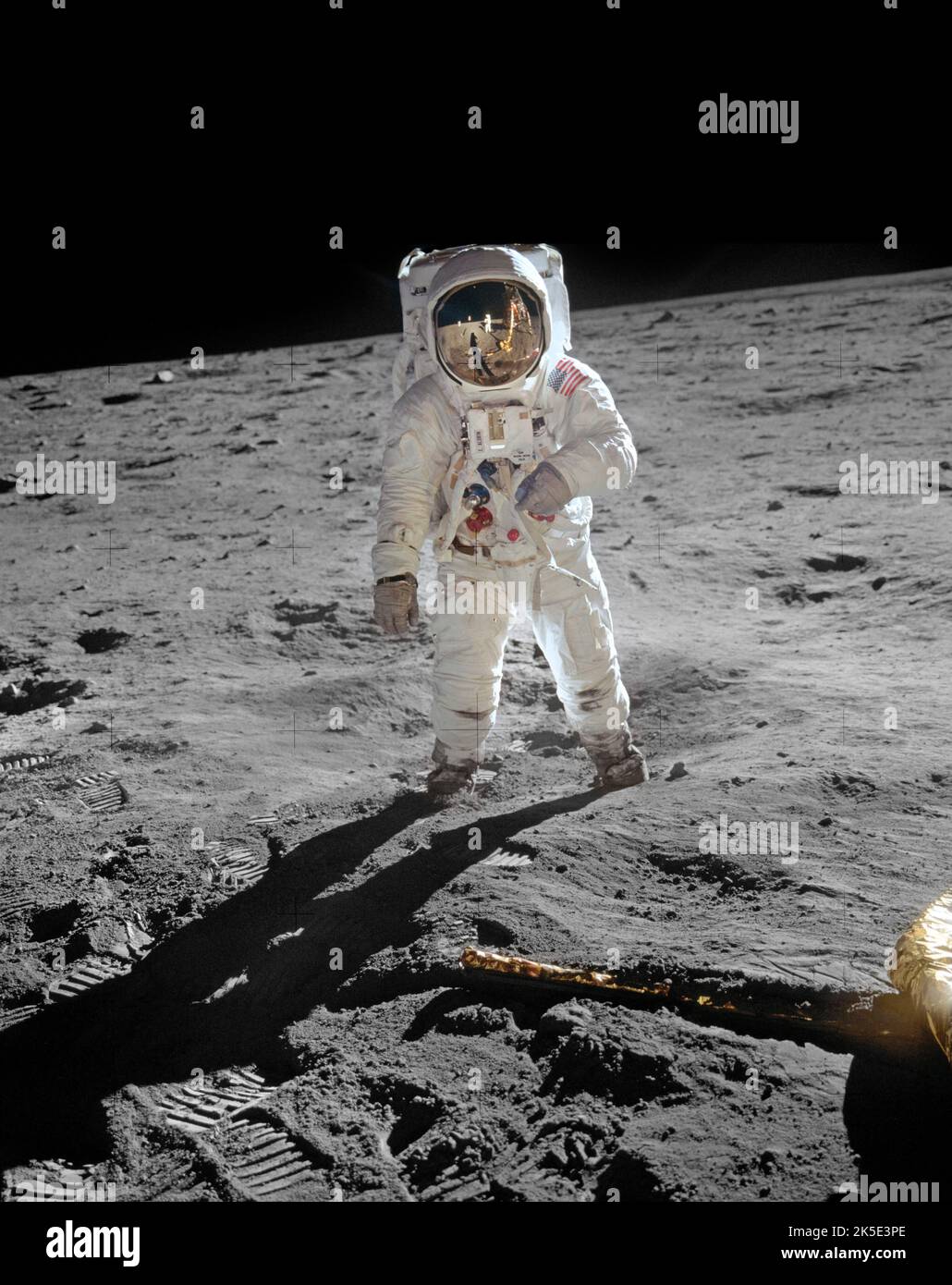
The market for items from the 1950s to the 1970s is particularly robust. According to Adam Stackhouse, a senior specialist in the History of Science & Technology at Bonhams, the supply of important mission artifacts is limited, as many significant pieces were acquired by the Smithsonian Museum.
Ownership of these items became more accessible in September 2012, when the U.S. government passed a bill granting former NASA astronauts full ownership rights over mementos they kept from their missions. Additionally, the 400,000 NASA employees working during the Apollo program were able to acquire souvenirs once the program concluded.
Provenance remains the most critical factor for buyers. Collectors are advised to trace the history of an item, as items used during Apollo missions—particularly Apollo 11—remain in highest demand. Notable sales include:
* Apollo 11 sample bag: Used to collect lunar rocks, this item sold for $1.8 million in 2017.
* Neil Armstrong’s gold medal: A medal carried in the astronaut’s personal kit sold for $2 million in 2019.
* Lunar module information sheet: Used by Buzz Aldrin to land the “Eagle,” this sold for $44,800 at Bonhams.
* Buzz Aldrin’s star chart: Sold for $38,400.
* Buzz Aldrin’s 1966 “space selfie”: Sold for $19,125 in 2022.
Meteorites: From Science Curiosities to Multi-Million Dollar Assets

Beyond man-made artifacts, the market for meteorites—specifically those originating from Mars or the Moon—has transitioned from a niche scientific interest to a high-stakes investment field.
The rarity of these rocks is extreme; the total known weight of all meteorites is less than the world’s annual gold output. Among these, only a few hundred specimens are confirmed to be from Mars. This scarcity drives high prices. In July 2025, Sotheby’s sold NWA 16788, a 54-pound Martian meteorite, for $5.3 million. This specific rock accounts for approximately 6.5% of all known Martian material on Earth.
While high-profile sales generate headlines, the market is varied. Christie’s reported that their meteorite auctions have included lots ranging from $400 to several thousand dollars, indicating a broad base of collectors rather than exclusively high-end investors.
Drivers of Value and Future Trends
Several factors contribute to the escalating values in the space market:
* Scarcity and Rarity: For both man-made artifacts and meteorites, limited supply relative to global demand drives price appreciation.
* Emotional and Historic Connection: Items that were “flown” are considered most valuable because they provide a direct link to historic missions.
* Scientific and Commercial Utility: Martian meteorites are studied for insights into the planet’s history, composition, and potential for past life. Researchers are also investigating these materials for applications in radiation shielding, advanced alloys, and construction, fueling a vision for In-Situ Resource Utilization (ISRU) to support future space exploration.
Legal and Practical Considerations for Collectors

The commercialization of space materials is not without complexity. International law, specifically the 1967 Outer Space Treaty, prohibits nations from claiming sovereignty over celestial bodies, but it remains ambiguous regarding the ownership of space materials found on Earth. This lack of clarity has led to ongoing discussions among policymakers regarding ownership rights and equitable access.
For those interested in the market, experts offer the following guidance:
* Authenticity is Paramount: Buyers must verify the identity of any meteorite or artifact before purchasing.
* Document Provenance: For man-made items, ensure there is a clear chain of custody.
* Consult Experts: If a potential meteorite is discovered, it should be precisely documented and authenticated by a reputable expert before being handled excessively.
Find more reporting in our Science section.
ALMA Captures Unprecedented Images of Betelgeuse’s Turbulent Surface
Astronomers using the Atacama Large Millimeter/submillimeter Array have captured images of Betelgeuse, revealing a corrugated surface and surprisingly...
Iron Waste and Magnetized Water Improve Sustainable Concrete Performance
Researchers examining sustainable construction alternatives report that combining industrial iron processing waste with dynamically prepared magnetized water can...
NIST Researchers Develop Scalable Superconducting Single-Photon Detectors
Researchers at the National Institute of Standards and Technology have developed a wider superconducting single-photon detector architecture using...
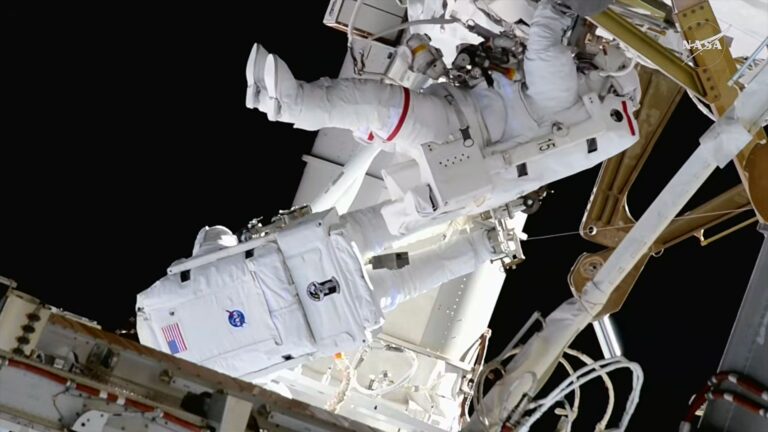
Menon and Adenot Replace Failed ISS Antenna During Spacewalk
On August 25, 2026, NASA astronaut Anil Menon and ESA astronaut Sophie Adenot ventured outside the International Space...