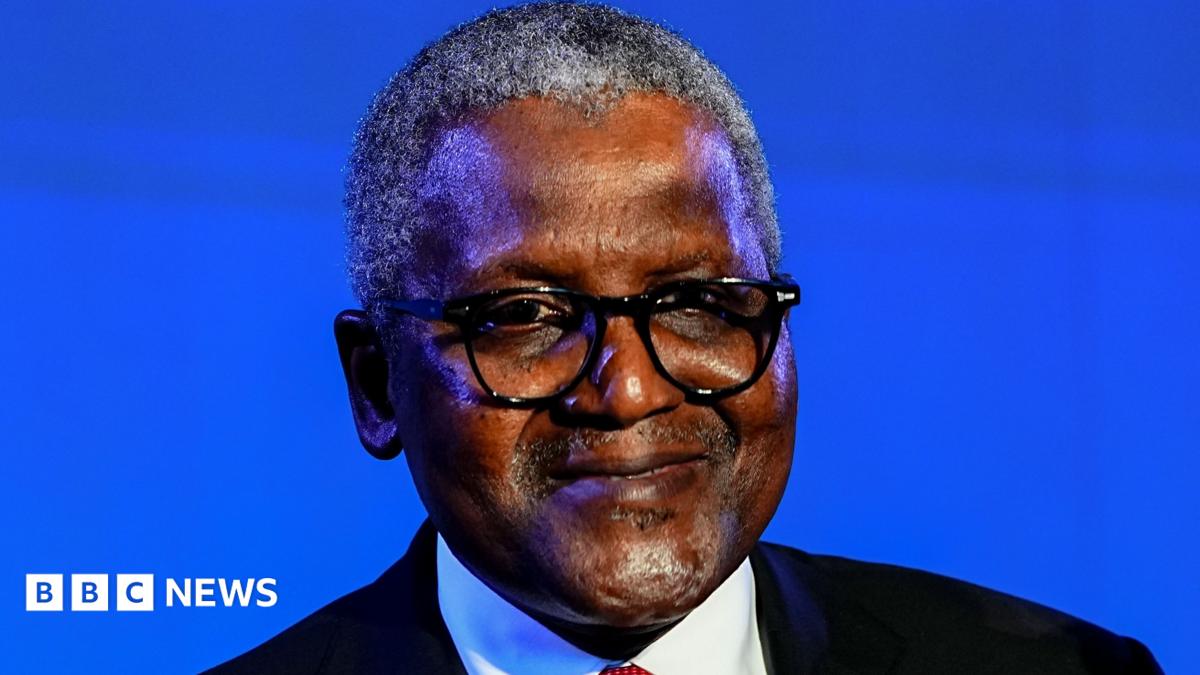
Nigerian billionaire Aliko Dangote and Kenyan President William Ruto are set to break ground on a $16 billion oil refinery in Lamu. The industrial project aims to process 700,000 barrels of crude daily, creating 60,000 construction jobs despite local land compensation protests ahead of the November 1 launch.
Lamu Industrial Scale and Economic Projections
The upcoming facility on Kenya’s northern coast represents East Africa’s largest industrial project by processing capacity. Upon completion, the installation is expected to process 700,000 barrels of crude oil a day, surpassing the scale of any existing infrastructure in the region. East Africa currently operates no domestic oil refineries, making this venture a major shift for regional processing capabilities.
Construction is scheduled to begin on November 1, with the operational launch targeted for 2030. The scale of the investment overshadows previous major undertakings, eclipsing the $5.1 billion Standard Gauge Railway as Kenya’s largest infrastructure project since independence.
During the height of construction, the project is projected to generate 60,000 jobs.
Are we going to bring robots?
Aliko Dangote, via BBC
Land Protests and Regional Sourcing Debates
Ahead of the groundbreaking ceremony, local residents staged street demonstrations to demand additional compensation for land utilized by the development. Dangote rejected the grievances during his interview, asserting that his enterprise utilized only the specific acreage provided by the government and attributing the friction to outside interests.
“To come and say some people are demonstrating, demonstrating about what? Have you ever seen people demonstrating against themselves in terms of development?”
Aliko Dangote, via BBC
The billionaire characterized the unrest as maneuvers driven by local marketers and international actors. Beyond the local protests, critics have questioned the logic of constructing a massive refining facility in Kenya given that the nation does not produce crude oil. Observers suggested neighboring Tanzania or Uganda as more intuitive alternatives, particularly as both advance toward oil exports through the East African Crude Oil Pipeline.
Energy and Petroleum Minister Opiyo Wandayi defended the site selection by noting that refining operations do not rely exclusively on neighboring extraction sites. Pointing to global trade realities, Wandayi explained that facilities acquire inputs directly from open global markets. Dangote reinforced this perspective by referencing global trading hubs.
“Singapore doesn’t produce a single drop of oil, yet they have a lot of refineries.”
Aliko Dangote, via BBC
Power Infrastructure and Dangote Industrial Pipeline
To support heavy industrial demands, the Lamu development incorporates a 1,000-megawatt power plant designed to supply both Dangote’s operations and secondary industries establishing themselves in the zone. Dangote highlighted deficient electricity access as a primary bottleneck holding back industrialization across the continent, particularly in resource-rich nations that traditionally export raw materials without domestic processing.
The venture forms part of a much broader infrastructure portfolio. Dangote maintains approximately $50 billion worth of projects in his pipeline, featuring ambitions to deploy 10,000 megawatts of generation capacity across Africa by 2030, with a potential to double that output based on demand.
While consumers in Kenya hope the local facility might eventually lower high domestic fuel prices, fuel costs will remain tied to international crude markets. For Dangote, the Lamu initiative marks his largest proposed investment outside Nigeria, supplementing his domestic refinery—which also boasts a 700,000 barrel-per-day capacity—as part of a broader expansion strategy funded in part by floating 4.1 million ordinary shares to raise up to $2.1 billion.
Keep reading
China Factory Activity Returns to Growth in September as AI Demand Rises
China's official manufacturing purchasing managers' index rose to 50.1 in September, ending a two-month contractionary streak as easing...

Gold Hits Seven-Week Low as Treasury Yields and Crude Oil Prices Surge
Gold hovered near a seven-week low on September 29, 2026, stabilizing after a sharp four per cent rout...

Namibia Presents Kunene Water Project to Global Investors
Namibia has presented its Kunene water project and desalination initiatives to global investors at the UN General Assembly,...